Magazine
Why Helsinki Is Worth Visiting for the Architecture Alone
Centered on a blossom-shaped peninsula, Helsinki is as cool and calm as the slate-gray waters that surround it. For centuries, the city, like the rest of present-day Finland, was under foreign rule, first as a provincial outpost of the Swedish Empire …
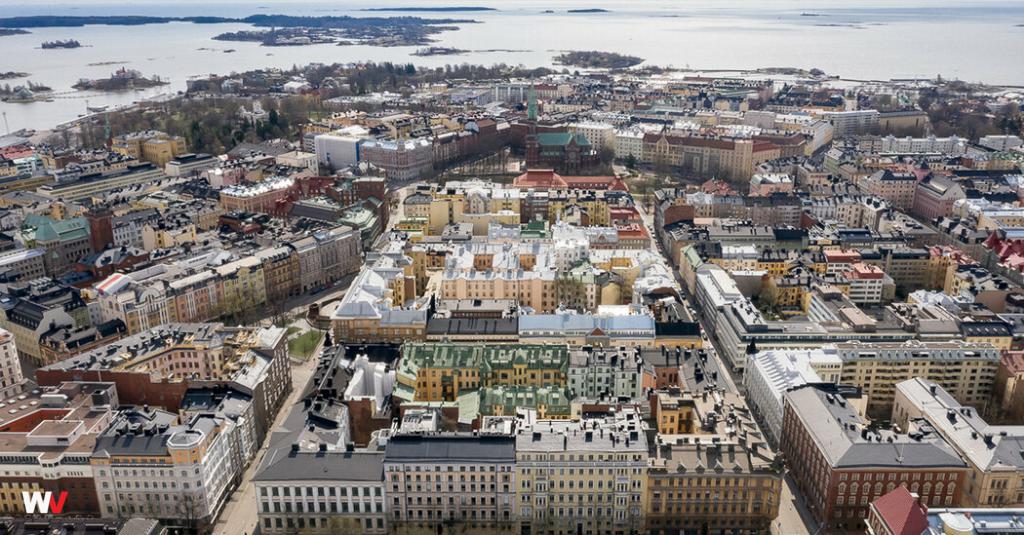
Centered on a blossom-shaped peninsula, Helsinki is as cool and calm as the slate-gray waters that surround it. For centuries, the city, like the rest of present-day Finland, was under foreign rule, first as a provincial outpost of the Swedish Empire and then as the capital of a Grand Duchy under Russian control for most of the 1800s. In the lead-up to independence in 1917, Finnish writers, artists and musicians drew on their singular language and regional folklore to assert a distinctive national identity. Architects played their part, too, combining decorative allusions to Finland’s sprawling landscape of lakes and forests with modern technologies like steel frames and electric lights: a new idiom for a new country. For the past century, design — from the modish floral-print fabrics of Marimekko to the Nokia cellphone — has been one of modern Finland’s most recognizable exports.
For many design enthusiasts, a visit to Helsinki begins with Alvar Aalto, one of the 20th century’s most influential architects, who left his mark across the capital, with buildings ranging from the monumental and recently restored concert venue Finlandia Hall to the modest yet exquisitely detailed home that he built in the central suburb of Munkkiniemi with his first wife, Aino, an essential collaborator until her death in 1949. Yet Aalto represents just one part of a much larger and more diverse architectural culture in Helsinki, one that includes graceful neo-Classical churches and Art Nouveau apartment blocks, as well as formally experimental public spaces like the 2018 Oodi Central Library. Here, listed in the order in which they were completed, are ten buildings that illustrate Helsinki’s evolution as a global design capital.
1. Suomenlinna
The Swedish crown started building this sea fort in 1748 on a cluster of six islands in Helsinki’s harbor and named it Sveaborg, or “Castle of the Swedes” (“Viapori” in Finnish). Developed gradually over the centuries, the fortress now contains 18th-century stone bastions, austere neo-Classical houses along gravel- and cobblestone-paved streets and 19th-century barracks covered in pale pink plaster. The fort got its current name — Suomenlinna, or Castle of Finland — in 1918, immediately after the country’s transition to independence. Used as a marine base during World War II, Suomenlinna was fully demilitarized in 1972 and has since become a residential district and an open-air museum accessible by ferry.