Fashion
Skin Cancer Made Me Nocturnal. It Was Illuminating.
How the earth’s rotation taught me to find peace in the face of death.
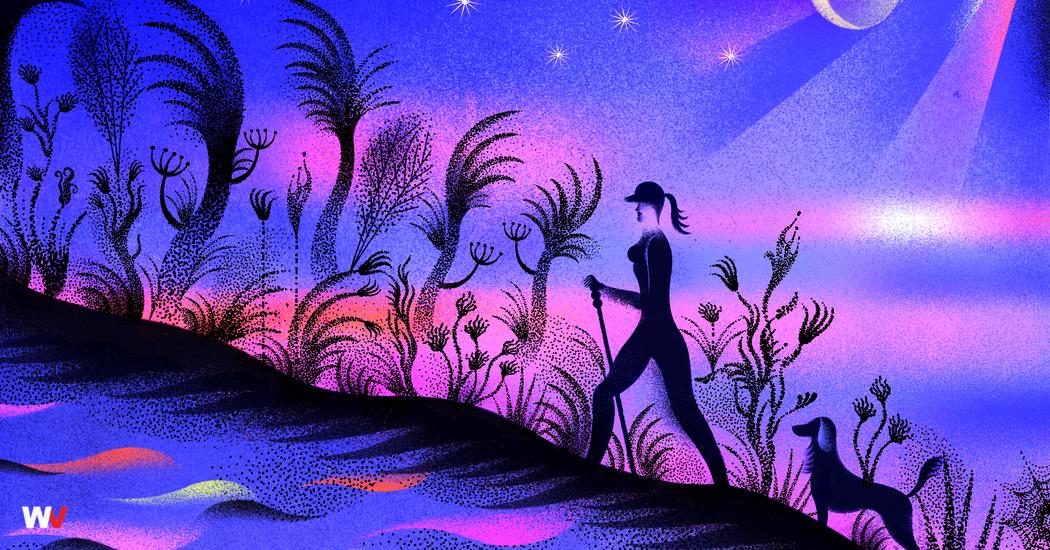
I waited until the dark touched down between the trees, then stepped outside, placed my skis on the snow and kicked a toe into the binding. It was just past midnight. I was at a cabin north of Toronto, on a night so cold my breath hung in the air like a cloud. On the other side of the cabin, the full moon lifted, its reflective light catching ice crystals on the surface of the snow. I was going to ski by moonlight.
For most of my life, I have spent days canoeing on glistening lakes, climbing quartz-flecked rocks and circling mountains on bright glaciers. Then in 2018, at age 45, I was diagnosed with melanoma, the deadliest kind of skin cancer — genetic testing revealed that I have a predisposition. The news felt as inevitable as the earth’s turning — my dad died of the same cancer at age 42. My doctor advised that there was one thing I could do: Stay out of the sun.
This sounded impossible. “Should I make friends with raccoons?” I asked my husband in disbelief. Avoiding daytime activity might be fine for some, but my love of the wilderness meant being outside. At the same time, my dad’s early end could be mine. I didn’t want to die. If I couldn’t go out safely during the day, then maybe I could learn to embrace the night.
Winter’s short days and long nights aided my first attempts at becoming nocturnal. My husband bundled up and came with me on night walks. Friends gathered for an evening snowshoe. As the globe turned toward spring, though, the sun’s rays became stronger and the days stretched on. I stayed in.
Over time, the books I read became thicker, the font smaller, the text denser. But I grew restless and started heading out for night hikes. I tried going for night runs in the city, but the streets were eerily empty and lonely. One night, while walking the last few blocks home, I saw something twitch in a dark doorway. Was a creature lurking, or did I imagine it? I couldn’t tell. Some animals, like bears and dogs, have a reflective layer, the tapetum lucidum, that enhances night vision — but I don’t. Being nocturnal seemed at odds with my evolution.
In the northern hemisphere, ultraviolet rays that damage DNA and cause cancer become more direct as we tilt toward the sun. I became acutely aware of this while visiting Nova Scotia in the summer of 2021. I had been recently diagnosed with another instance of melanoma, but recovered in time to join my family in our cottage overlooking the Northumberland Strait. I spent my childhood running on long sandbars built by the tides, and I had a nostalgic love for the place. Once I was diagnosed, though, this familiar landscape became dangerous for me. I stayed inside all day.