Magazine
Seashell Art Is Shedding Its Kitschy Reputation
Few symbols of death enchant like seashells, the calcified exoskeletons of mollusks, washed ashore after their tenants’ demise. Often lustrous and intricately patterned, shells have served as passports, currency, navigation aids, jewelry and …
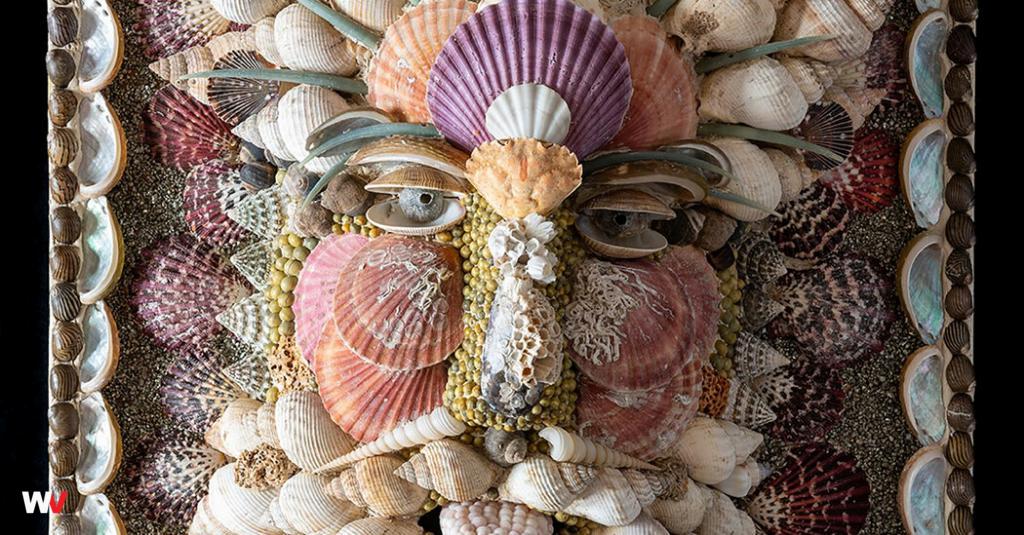
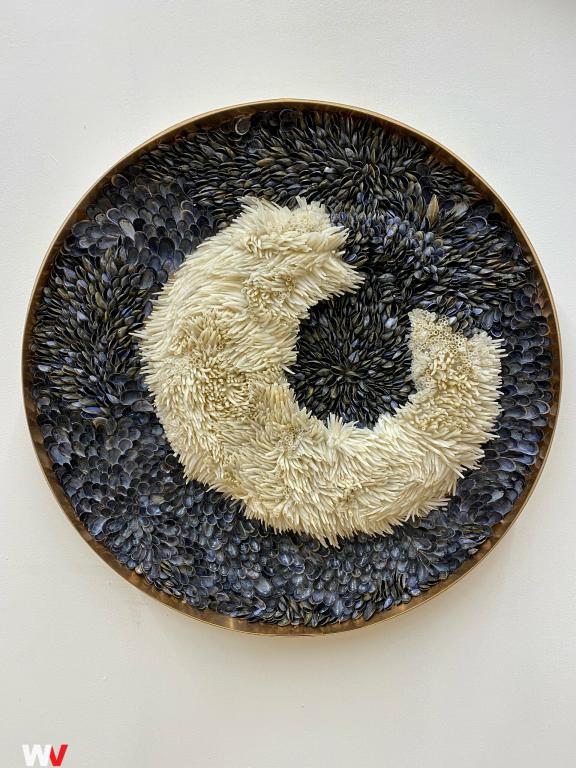
Few symbols of death enchant like seashells, the calcified exoskeletons of mollusks, washed ashore after their tenants’ demise. Often lustrous and intricately patterned, shells have served as passports, currency, navigation aids, jewelry and decoration. In Renaissance Italy, for instance, they were used to adorn artificial grottos built on the grounds of prominent villas, including those of the Medicis. These heavily adorned faux caves — often outfitted with hidden water spouts, stalactites, glass gems and sculptures of mermaids and other mythical sea dwellers — provided refuge from summer heat and counterpoints to the formal gardens that surrounded them. Later, in Victorian Britain, shell mania boomed among the general public as the empire expanded into tropical regions. Women integrated their collections into handicrafts, affixing them to picture frames and boxes and creating shell bouquets. In the time since, shells have remained on the fringes of contemporary art and décor, largely deemed kitsch and relegated to coastal souvenir shops. But now — amid renewed appreciation for organic media in art-making and a climate crisis that renders ocean life ever more precious — artists are once again embracing the shell as both a raw material and muse.
1/5
Emily Endo’s “Nymphaeum” (2024).
Credit…Erik Benjamins-
 Slide 1 of 5
1/5
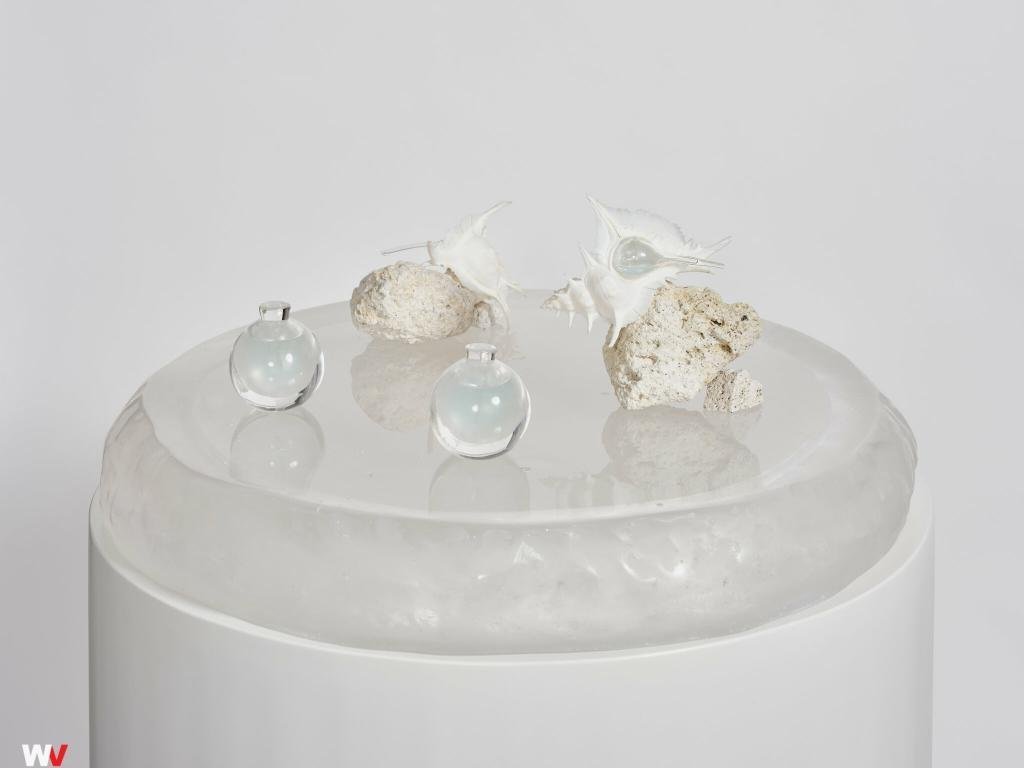
Emily Endo’s “Nymphaeum” (2024).
Credit…Erik Benjamins -
 Slide 2 of 5
2/5
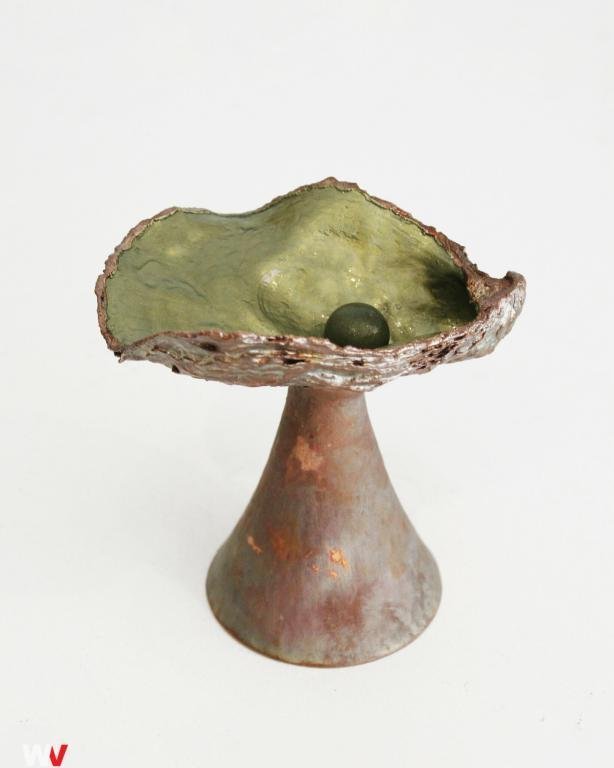
Emma Witter’s “Merman’s Goblet” (2024).
Credit…Courtesy of Gallery FUMI. Photo: Erik Benjamins -
 Slide 3 of 5
3/5
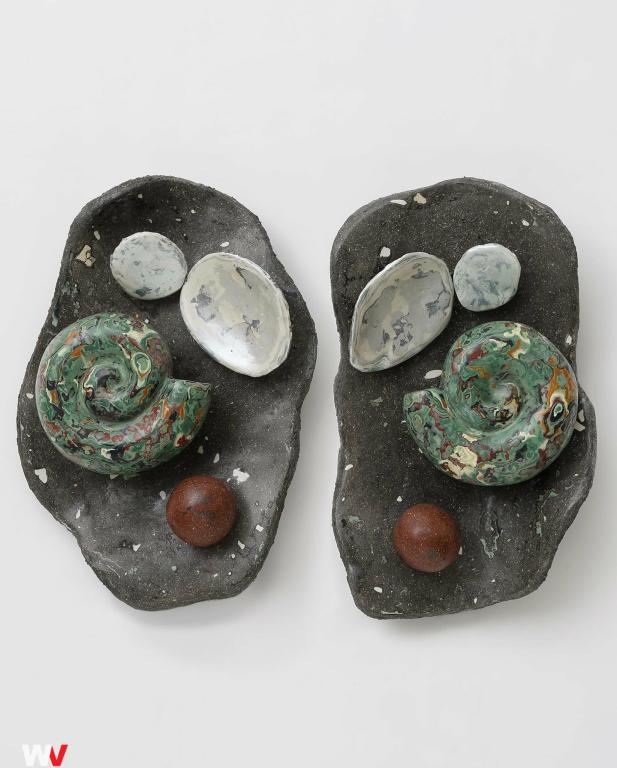
F Taylor Colantonio’s “We May Live On in Comets and Stars” (2023).
Credit…Giorgio Benni -
 Slide 4 of 5
4/5
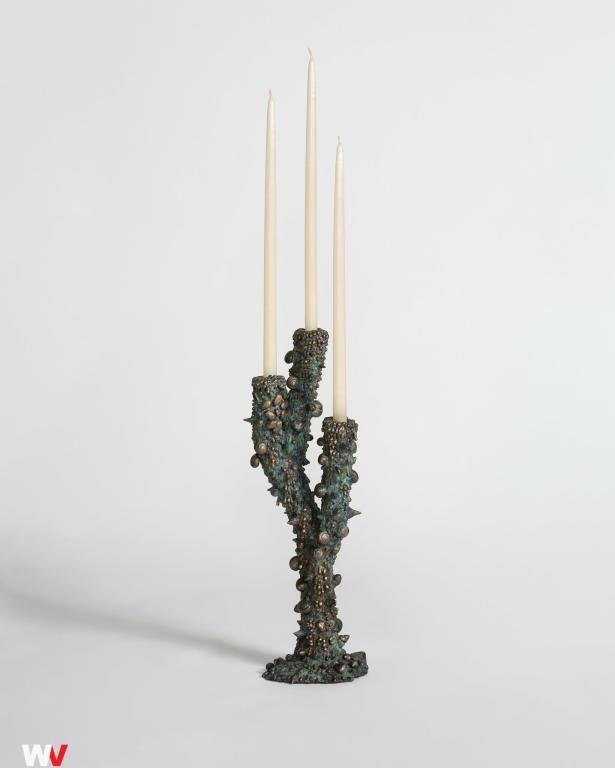
James Naish’s “Aphros” (2024).
Credit…Erik Benjamins -
 Slide 5 of 5
5/5
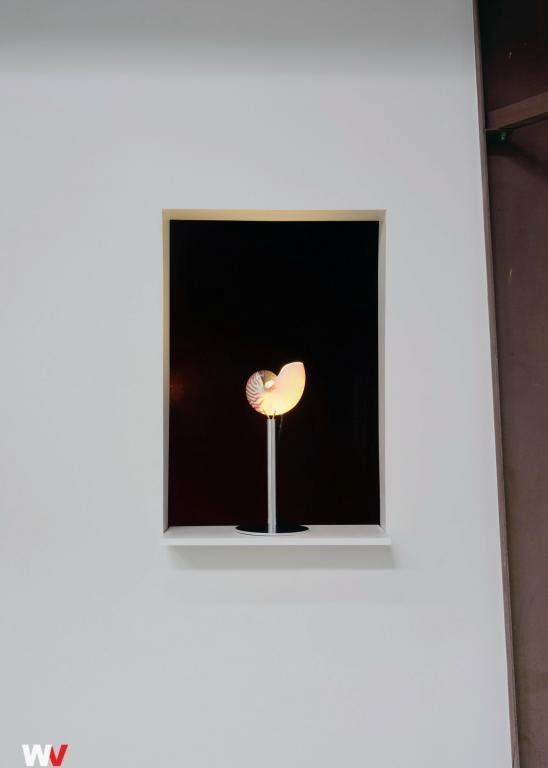
Charlap Hyman & Herrero’s 2024 Nautilus Shell table lamp.
Credit…Erik Benjamins
The work of several such creators will be featured in “Objects for a Heavenly Cave,”an exhibition at Marta gallery in Los Angeles, which runs from Sept. 7 through Oct. 12. The show’s curator, Krista Mileva-Frank, 28, a design historian currently pursuing her Ph.D. at M.I.T., asked 13 artists and collectives to consider how the legacy of the Renaissance grotto might extend to their own work. Among the responses: a cast and welded bronze candelabra by the Los Angeles-based metal artist James Naish, which teems with whorling snail shells, and the London-based artist Emma Witter’s talismanic goblets, which fuse oyster shells with copper, metallic pigment and faux pearls. “Oyster shells, in particular, fascinate me,” says Witter, 35, referring to them as “natural treasure boxes, with their protective shieldlike exterior and sensual lining of pearl nacre.” Mileva-Frank hopes the show will encourage audiences to consider the relationship between art and nature and to contend with their own limited agency in an era of climate disaster. “In our smooth-edged digital world, the appeal of organic, textured shells is not only that they teach us how to look,” she says, “but how to engage our other senses.”
1/7

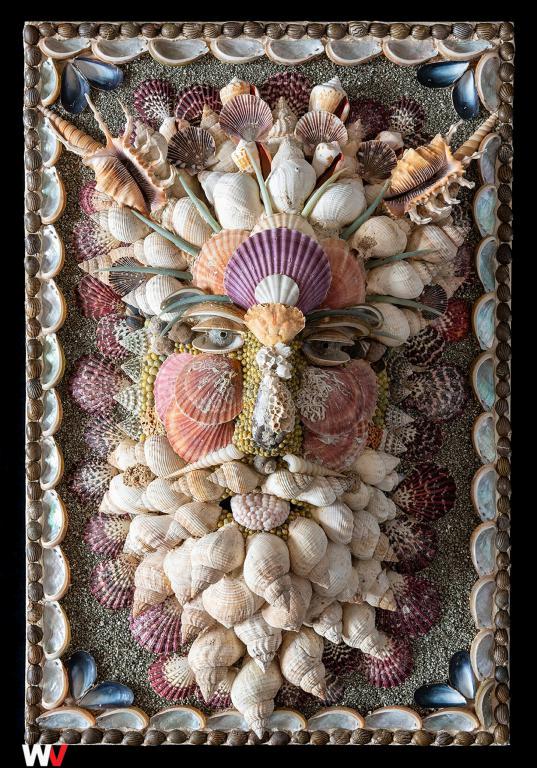
Tess Morley’s “Grotesque with green tusk shells” (2021).
Credit…Steve Speller-
 Slide 1 of 7
1/7
Tess Morley’s “Grotesque with green tusk shells” (2021).
Credit…Steve Speller -
 Slide 2 of 7
2/7
Jane Haselden’s “Tenacity” (2024).
Credit…Courtesy of Jane Haselden -
 Slide 3 of 7
3/7
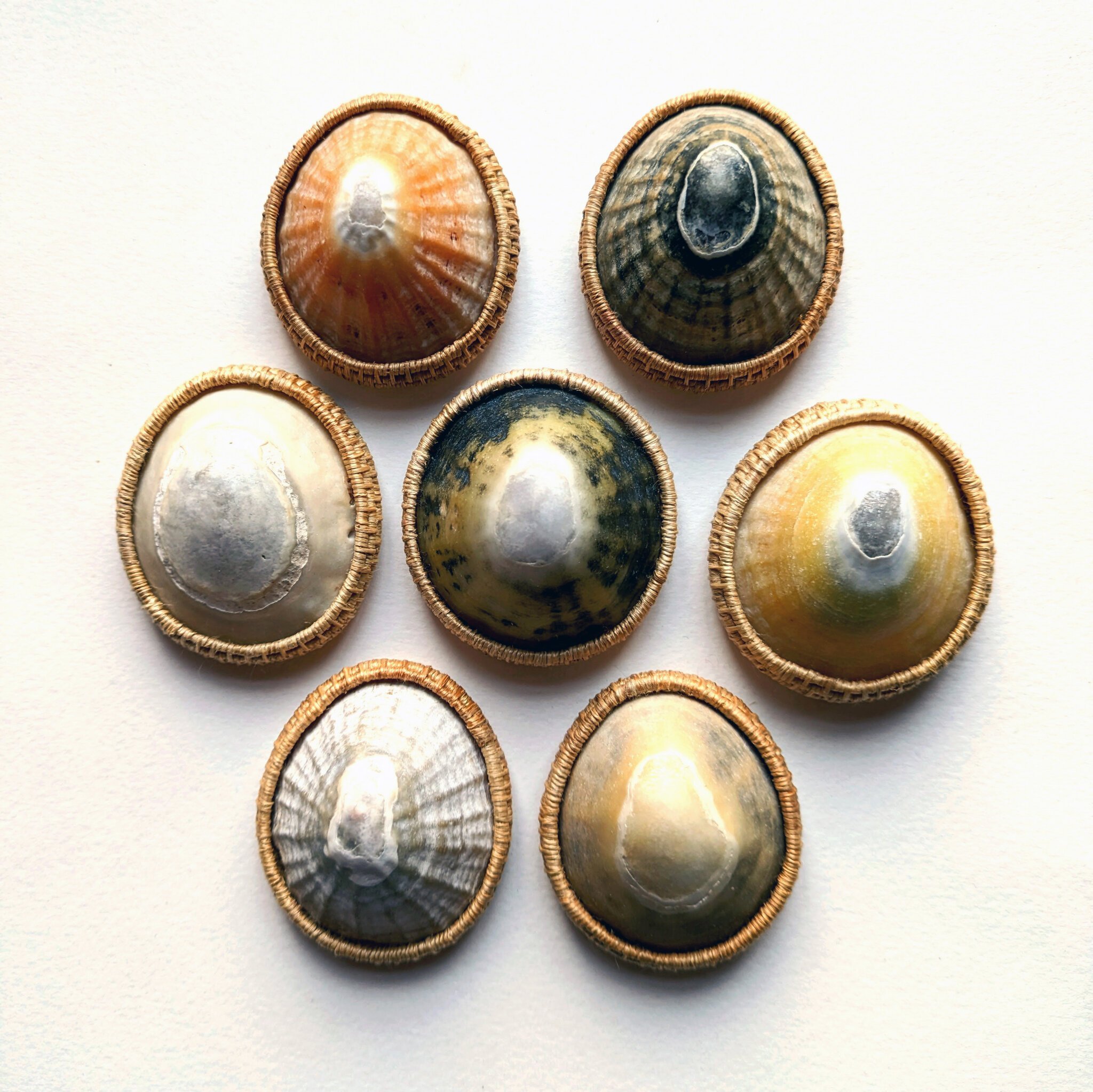
Jane Haselden’s “Limpets” (2024).
Credit…Courtesy of Jane Haselden -
 Slide 4 of 7
4/7
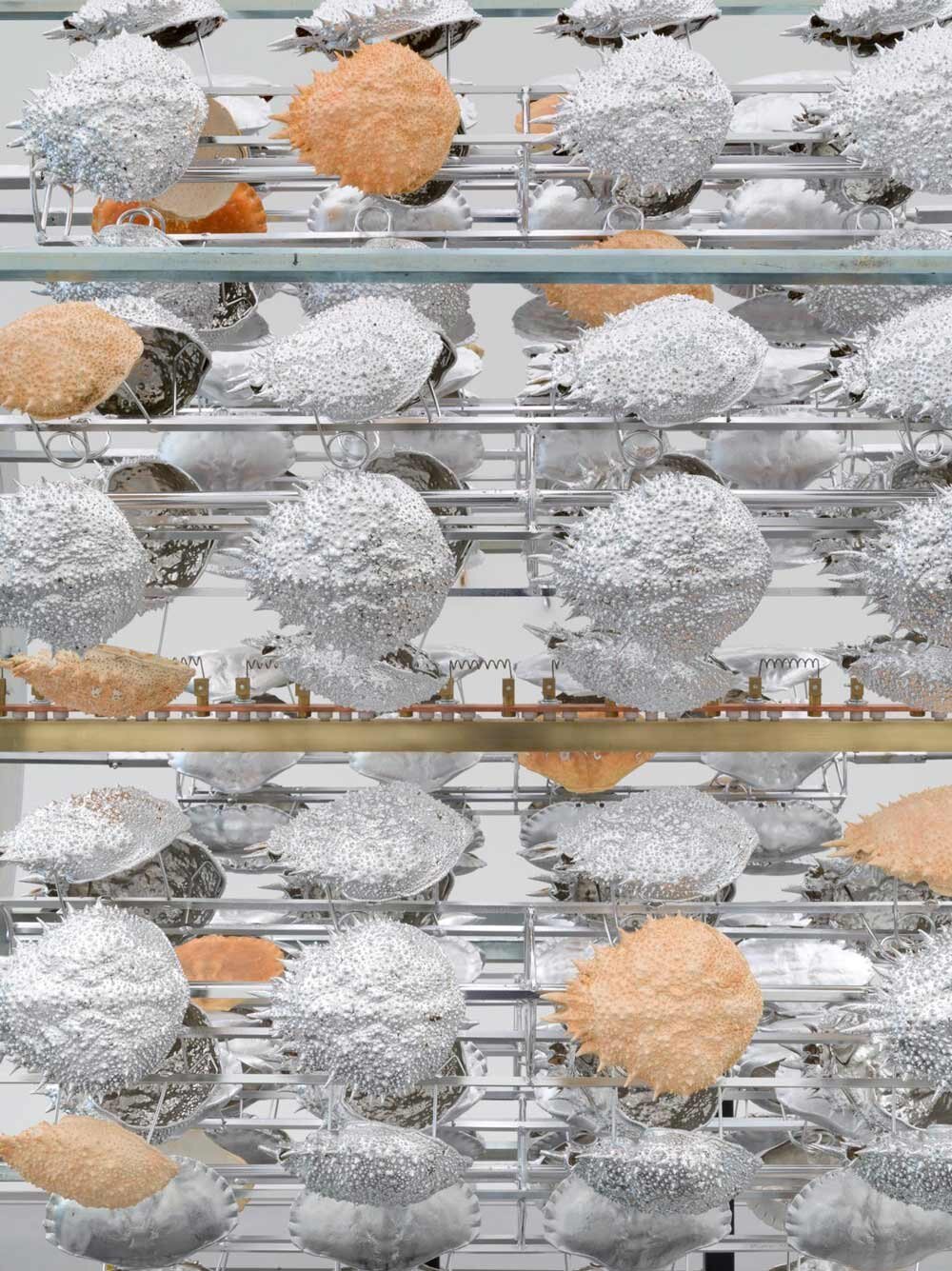
Alice Channer’s “Planetary System (Kolzer DGK63)” (2019).
Credit…Courtesy of the artist and Konrad Fischer Galerie. Photograph by Achim Kukieles -
 Slide 5 of 7
5/7
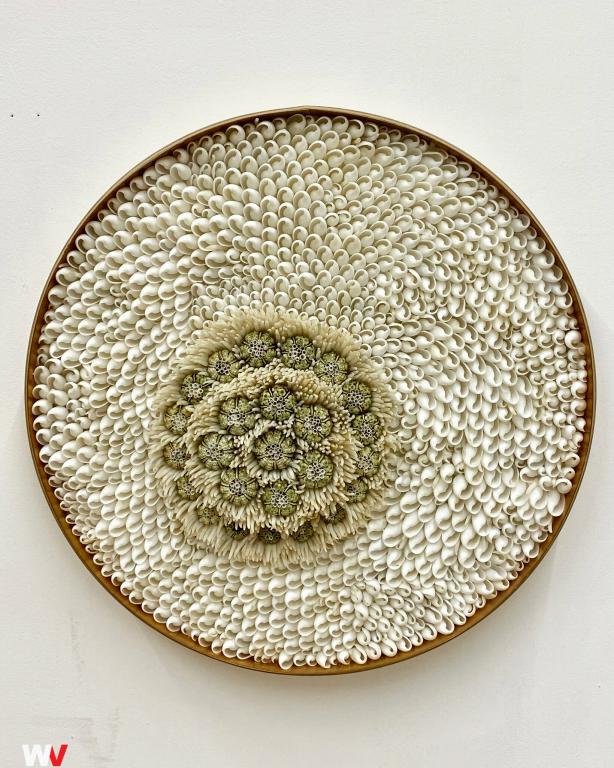
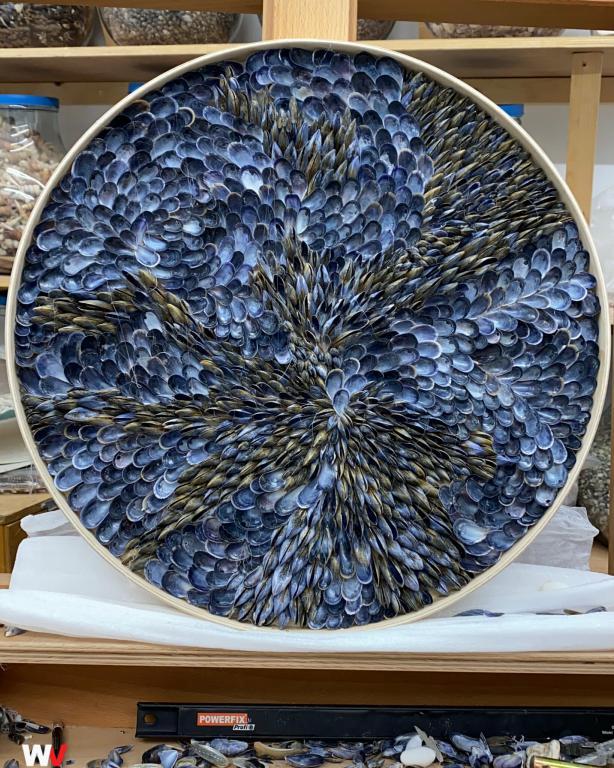
Blott Kerr-Wilson’s “Rockhall” (2024).
Credit…Courtesy of Blott Kerr-Wilson -
 Slide 6 of 7
6/7
Blott Kerr-Wilson’s “Cromarty” (2023).
Credit…Courtesy of Blott Kerr-Wilson -
 Slide 7 of 7
7/7
Blott Kerr-Wilson’s “Faroes” (2024).
Credit…Courtesy of Blott Kerr-Wilson
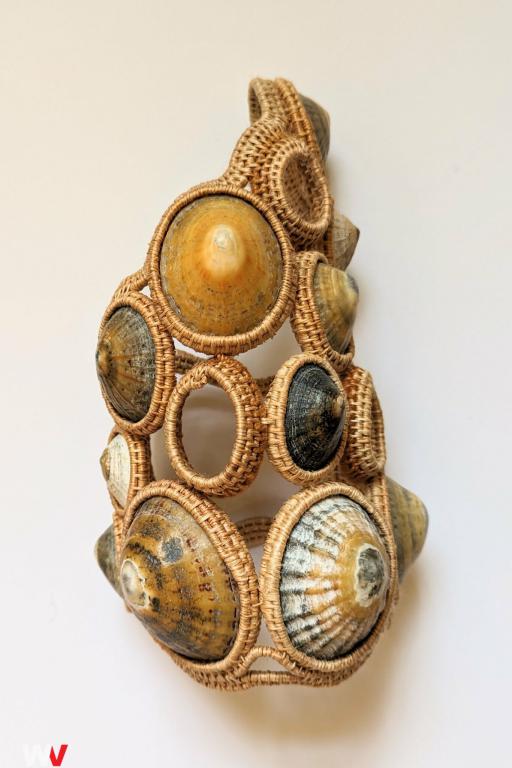
Elsewhere, designers and artists are using shells to make everything from dainty, intricate decorative objects to highly embellished, room-size lairs. In the Orkney Islands, off the coast of Scotland, the textile artist Jane Haselden culls leaves from local gardens to weave cocoons around shells that she finds along the shore. The resulting palm-size ornaments feel like tiny tidal jewels. The British sculptor Alice Channer, 47, meanwhile, loads steel carousels used for aluminum-coating car headlights with vacuum-metalized crab shells that appear both precious and mass-produced, their knobbly forms catching the light. And the Sussex, England-based artist Tess Morley, 51, has an ongoing series of shell-covered grotesques: impudent faces reminiscent of the vegetable-filled portraits of the 16th-century Milanese artist Giuseppe Arcimboldo crossed with 19th-century Bajan sailor’s valentines.