
Magazine
A Sunny New Restaurant in a Parisian Train Station
Plus: skin care inspired by Belize, a Los Angeles designer’s denim collection and more recommendations from T Magazine.

Read This
A New Book Celebrates Japanese Women Photographers
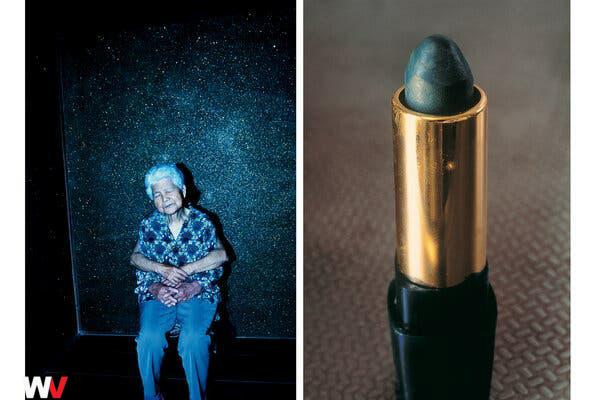
“I’m So Happy You Are Here: Japanese Women Photographers from the 1950s to Now” highlights 25 photographers whose images range from the cinematic to still lifes. Left: Shiga Leiko’s “Okāsan no yasashii te” (Mother’s Gentle Hands) (2009). Right: Miyako Ishiuchi’s “Mother’s #39” (2002).Credit…Left: Courtesy of the artist and Aperture. Right: Third Gallery Aya, Osaka, and Aperture
By Momo Ikeda
“I’m So Happy You Are Here: Japanese Women Photographers from the 1950s to Now,” a new book published by Aperture, features wide-ranging portfolios by 25 photographers. As Pauline Vermare, a co-editor of the book, writes in her introductory essay, the primary focus of the women showcased in the book “has been, and remains, to find the means to be independent and represent their own experiences and views of the world.” Among the works included are those by the 77-year-old photographer Miyako Ishiuchi, who co-founded a photography magazine, main, in 1996. The book contains photos from “Yokosuka Story,” a 1970s series focusing on her hometown, the location of a major U.S. Navy base, and a still-life of a lipstick, part of her “Mother’s” (2000-2005) series, for which she photographed her deceased mother’s possessions. One of the youngest photographers in the book, Momo Okabe, 43, trains her lens on her own body and those of her friends, capturing both everyday experiences and life-changing events such as gender-affirming surgery and pregnancy. From photojournalism to works of collage, the book, as its introduction states, “lays the groundwork for understanding the enormity of what has been overlooked.” “I’m So Happy You Are Here” is out on Sept. 17, $75, aperture.org.
Eat Here
An Enticing Mediterranean Restaurant at Paris’s Gare de Lyon
By Alexander Lobrano
Marius, the sunny brasserie that opened in July at Paris’s Gare de Lyon, offers a pan-Mediterranean menu and a window into how much French eating habits have changed since the train station reopened after a remodeling and expansion by the architect Marius Toudoire in 1900. Then, the station’s main restaurant, the famously opulent Le Train Bleu, which opened in 1901, was named after the night trains that ran between Paris and Nice. Leisure travel was still the preserve of the wealthy, and the menu vaunted the gastronomic glory of France with dishes like roast leg of lamb and crêpes suzette. Now, France’s high-speed TGV trains have introduced the French not only to the cooking of Provence and Nice but to that of all the countries that surround the Mediterranean. Gastronomic inclusiveness is the goal of Marius chef Yoni Saada, who says he wrote his menu to be “bursting with sunshine and spices.”
Saada’s grandfather was the Tunisian founder of the oldest kosher butcher shop in Paris’s Marais district, and Saada grew up eating both Sephardic and Ashkenazi Jewish cooking. After graduating from Paris’s Ecole Ferrandi culinary school and working at fine-dining destinations like the city’s Hôtel Meurice, he founded Zaza, a restaurant specializing in Israeli street food, in the Second Arrondissement. At Marius, dishes include Tunis’s favorite seaside snack: brick à l’œuf de la Goulette, a crispy pastry filled with an organic egg, canned tuna, potatoes and parsley, served with a side of harissa. If Le Train Bleu, still in the station’s mezzanine, continues to be a bastion of grand Gallic grub, Marius has quickly won a following among younger international travelers with its bright flavors and reasonable prices. instagram.com/marius.restaurantparis.
Covet This
A Facial Mist Inspired by the Coppola Family’s Hotels in Belize

By Laura Regensdorf
In 1981, two years after Francis Ford Coppola’s “Apocalypse Now” catapulted moviegoers into the jungle, the director visited Belize and found himself in thrall to a similarly lush landscape. He bought an abandoned lodge in a nature preserve, and over the next decade it became a favorite getaway spot for his young family. By 1993, Blancaneaux Lodge, as it was called, had opened as a laid-back resort. A second property, Turtle Inn, in a coastal fishing village, joined the Family Coppola Hideaways group in 2001. “I started my script for ‘Priscilla’ there,” says the director and screenwriter Sofia Coppola, describing a relaxed pace that has persisted through the decades. “I just love knowing I have a place that feels like home, that’s so different from city life.” A new floral facial mist, created in collaboration with the San Francisco-based skin care line Monastery, is meant to conjure the Belizean retreat. After Athena Hewett, the aesthetician behind the brand, mailed a few of her small-batch products to Coppola, the two women met at Monastery’s Noe Valley spa for a facial. There was a kinship between the beauty brand, with its carefully sourced botanicals and hand-poured formulas, and the Coppolas’ footprint in Belize, where sustainability is central to the group’s operation — Blancaneaux is powered by an on-site hydroelectric plant. The facial spray is made with Central American ingredients including hibiscus oil (rich in vitamin C), wild rose, orchid oil (naturally antifungal) and locally harvested rosewood leaf. At the Belize spas, where Hewett is incorporating new facial massage techniques into the offerings, the spray will serve as a moment of refreshment during treatments — and a travel-ready souvenir. The Floral Facial Essence launches in October, $120, monasterymade.com.