Entertainment
The 19th-Century Country Houses of Europe’s Jewish Elite
A lavish photo book collects images old and new of elaborate estates, manors, chateaus and Schlosses in the European countryside.
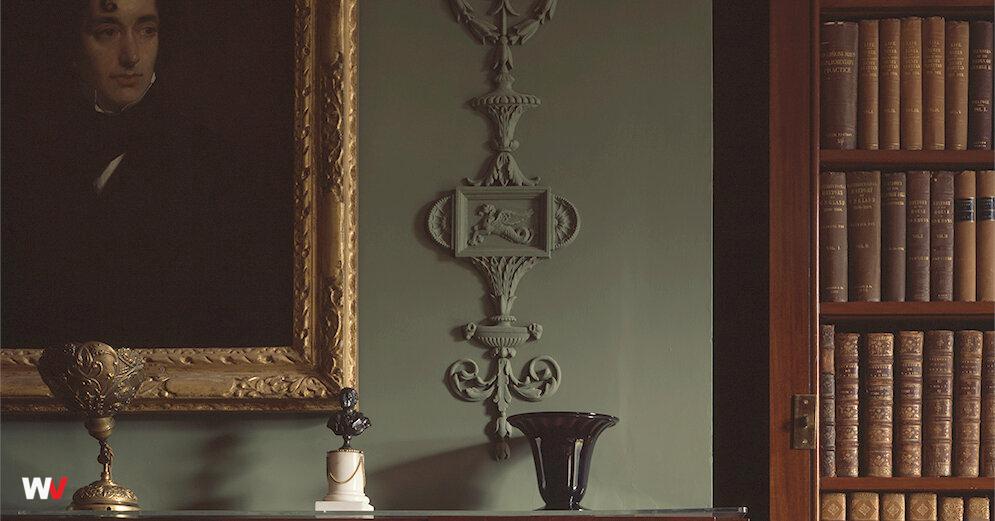
“To enter into high society,” Benjamin Disraeli wrote, “a man must either have blood, a million or a genius.” As soon as he was able to convert his own genius into power and fortune, the future British prime minister — who’d been raised by Sephardic Jews in London — bought Hughenden Manor, a “gentleman’s residence” on 750 hilly acres in the English countryside. Financially, Disraeli could barely afford to buy the place; politically and socially, he couldn’t afford not to. A house and lands were the necessary props to his ambitions.
Hughenden is one of the case studies presented in JEWISH COUNTRY HOUSES (Brandeis University Press, $60), an ambitious catalog of properties across Europe, ranging from the French chateau to the Italian villa to the Polish dwór to the German Schloss, inhabited by 19th-century moguls in such industries as textiles, finance, sugar, opium, coal. The flexible category proves a rich source of material in scholarly essays collected by Juliet Carey and Abigail Green, with archival imagery and moody photographs by Helene Binet.
Among images of gilded staircases and wedding-cake ceilings — and Baron James de Rothschild’s 1862 Château de Ferrières, “a hodgepodge of all styles” that incorporated the innovation of central heating — are stories of gardens flattened by war, homes looted, art collections confiscated by the Gestapo. The book is at ease with its air of inquiry: When we speak of Jewish country houses, are we discussing an architectural phenomenon or something more abstract — landownership as a symbol of national identity, of emancipation, of exploitation, of assimilation? The book’s reply: “Yes.”