General
Jo Baer, Minimalist Painter Who Rejected Abstraction, Dies at 95
After establishing herself as a leading proponent of nonrepresentational art, she left it behind — along with, to a significant extent, her position in the art world.
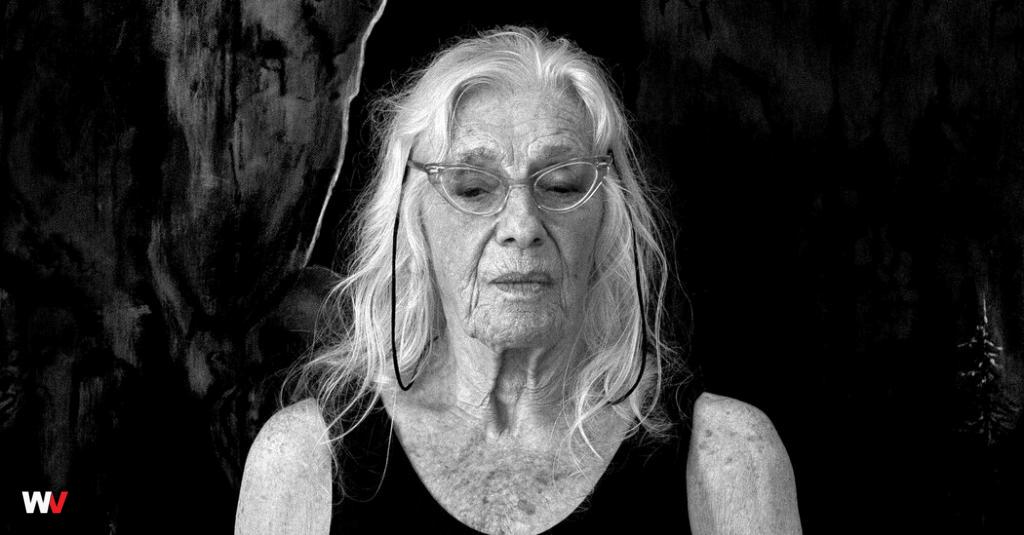
Jo Baer, a painter whoexchanged the severe abstraction that made her name for a heady mix of dream imagery and deep historical references, died on Tuesday at her home in Amsterdam. She was 95.
Her death was confirmed by her son, Josh Baer, who said she had bladder cancer and other ailments.
Beginning in 1960, when she moved to New York for the second time, Ms. Baer became one of the handful of polemical artists who were developing Minimalism. She sparred with the sculptors Donald Judd and Robert Morris over the merits of their respective media, both in person and in the pages of Artforum. In 1966 her work was included in the influential exhibitions “Systemic Painting,” at the Guggenheim Museum, and “10,” at the Dwan Gallery, and she had her first solo show, at Fischbach Gallery.
Her diptych “Horizontals Flanking, Large, Green Line,” which appeared in the Guggenheim show and which the museum later acquired, was typical of her work at the time. In it, two identical flat white fields are surrounded by a thick black border. A thin green line between white and black — the paintings’ most important feature, according to Ms. Baer — adds an extra visual pop.
Other Baer paintings might use vertical bars instead of the all-around border or replace white with a carefully modulated gray. But all of them were just as rigorously stripped of anything that might evoke the sensual, emotional approach of 1950s-era Abstract Expressionism.
After a midcareer retrospective at the Whitney Museum in 1975, however, Ms. Baer left nonrepresentational art behind, along with New York City and, to a significant extent, her position in the art world.