General
Jerome Kohn, Keeper of Hannah Arendt’s Flame, Dies at 93
He devoted his career to guarding the legacy of the philosopher known for her writings on totalitarianism and “the banality of evil.”
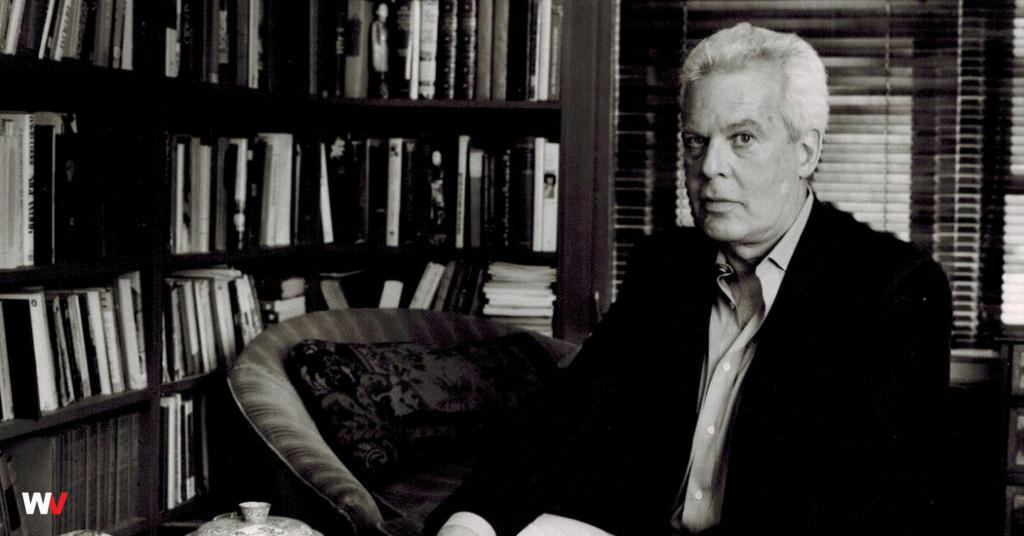
Jerome Kohn, who devoted his career to decoding, defending and disseminating the work of Hannah Arendt, the provocative philosopher who diagnosed the roots of 20th-century totalitarianism and controvertibly wrote that the convicted Nazi war criminal Adolf Eichmann embodied “the banality of evil,” died on Nov. 8 in Bay Shore, N.Y., on Long Island. He was 93.
His death, in a hospital, was confirmed by his sister, Mary Kohn Lazarus.
As the founder of the Hannah Arendt Center at the New School for Social Research in Manhattan, and as the literary executor and trustee since 2001 of the Hannah Arendt Bluecher Literary Trust, Mr. Kohn was the gatekeeper for a political theorist who was difficult to pigeonhole ideologically and whose writings some considered opaque.
He edited five of Ms. Arendt’s books and made her vast oeuvre available to researchers. He was also a rich source of personal reminiscences about a friendship that lasted from 1967, when he first audited her courses at the New School, until her death in 1975.
“Jerome Kohn’s main concern was to keep Hannah Arendt’s thoughts and words in circulation,” said Prof. Thomas Wild, the research director of the Hannah Arendt Center for Politics and Humanities at Bard College, in Annandale-on-Hudson, N.Y., which Mr. Kohn was instrumental in founding and where he served on the board of directors.
”He would, of course, argue against claims or accusations about things that Arendt never wrote or did,” Professor Wild said in an email. “But he would never want to control how people (in good faith) interpreted Arendt’s work.”
The life and work of Ms. Arendt, a Jewish refugee from Nazi Germany, were, Mr. Kohl wrote, largely defined by two events: the rise of totalitarianism, in the form of Nazism and Stalinism, and Eichmann’s trial in Jerusalem in 1961.