Fashion
Peter Doig Finds the Soul and Menace of a Modernist Gem
The artist organizes a show of seldom-seen paintings at Gagosian to cast a fresh eye on Balthus’s enigmatic 1933 tableau, “The Street.”
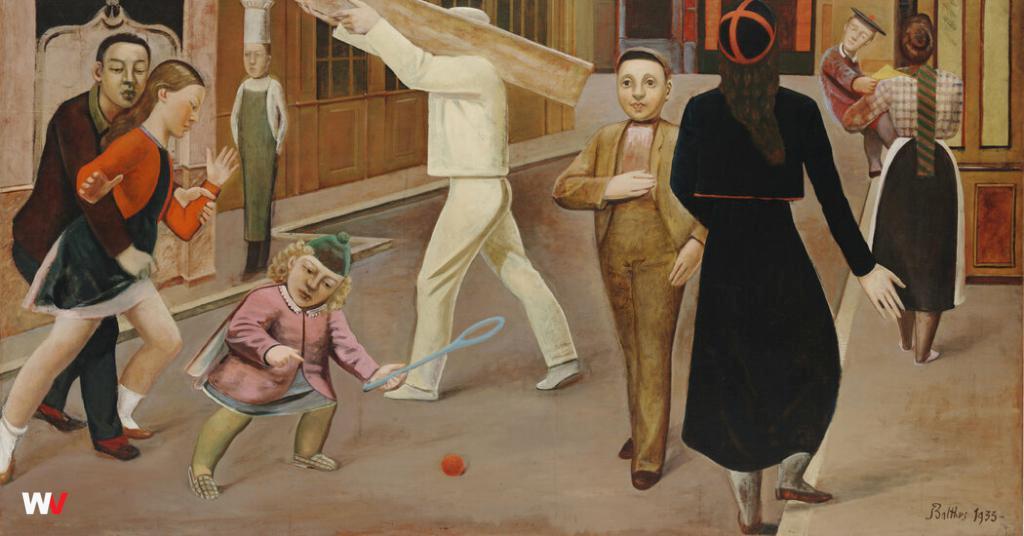
Parisians, most of them children with strangely adult faces, stand transfixed or walk past each other, engaged in what the urban theorist Jane Jacobs called “an intricate sidewalk ballet.” That is the subject of Balthus’s 1933 painting, “The Street,” which has inspired the artist Peter Doig to organize an exhibition by that name at Gagosian, one that is as tantalizing and enigmatic as its modernist centerpiece.
Balthus — the name adopted by Balthasar Klossowski de Rola, a Polish-French artist whose life spanned almost the entire 20th century — considered “The Street” to be his first major painting. It is owned but infrequently displayed by the Museum of Modern Art.
Doig, who received a midcareer retrospective at Tate Britain in 2018, is a figurative painter with a masterly flair for color and light. Born in Scotland and raised in Trinidad and Canada, he lives in Trinidad and London now. Doig has said he was captivated by this “endlessly beguiling” painting, in which “you feel like you’re witnessing something unfold before your eyes.”
Instead of turning to Balthus’s influences (Piero della Francesca, Masaccio, Seurat), he draws together 22 other works that conjure similar impressions of city life, turning the gallery into a prism that refracts the different moods of the painting.