

Fashion
Celebrating the Art Movement That Wasn’t
Orphism has always seemed less like an art movement than a spinoff of cubism that flourished and fizzled in short order. Founded in Paris with the supposed goal of infusing the dun-hued planes of cubism with rapturous color, it failed to produce a …
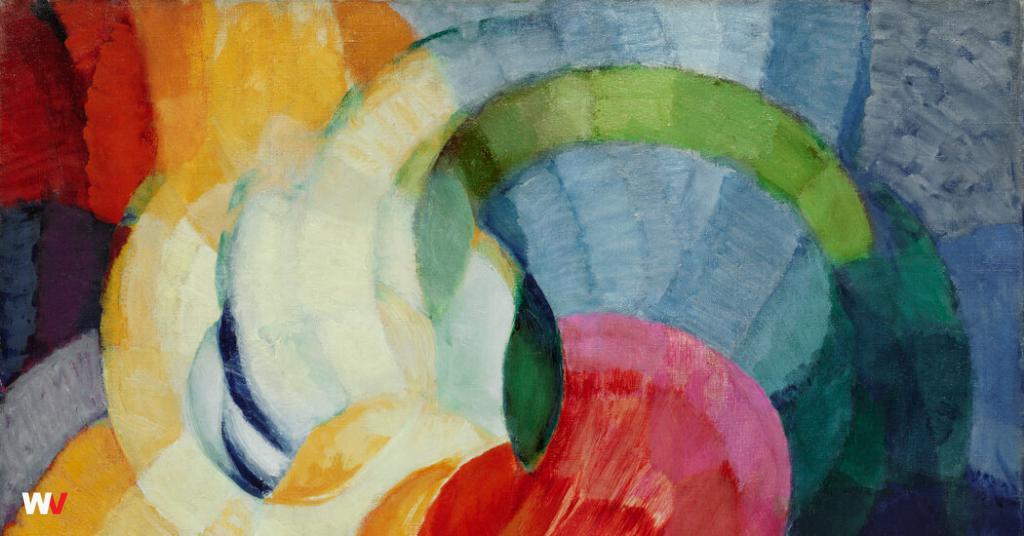
Orphism has always seemed less like an art movement than a spinoff of cubism that flourished and fizzled in short order. Founded in Paris with the supposed goal of infusing the dun-hued planes of cubism with rapturous color, it failed to produce a manifesto or so much as a single scandal. Although the movement was named by Guillaume Apollinaire, the omnipresent poet and critic — he selected the moniker in tribute to Orpheus, the Greek god of music — it had none of the adhesive power of his other art labels, which include cubism and Surrealism.
Who, exactly, were the Orphists? Textbooks dutifully list the artists Robert Delaunay and his wife, Sonia; Francis Picabia and Frantisek Kupka, who was ambivalent at best. Surprised one day to learn from a critic of his putative alliance with Orphism, Kupka wrote a grouchy letter, claiming that the label “had jumped from the head of a man who’s poorly informed.”
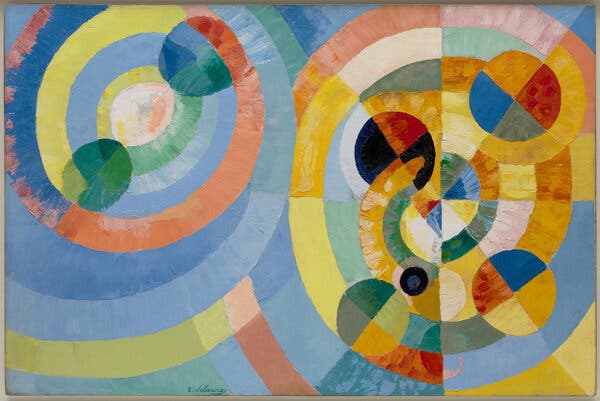
Robert Delaunay, “Circular Forms,” 1930.Credit…via Solomon R. Guggenheim Museum, New York; Photo by Kristopher McKay
“Harmony & Dissonance: Orphism in Paris, 1910-1930,” a sprawling, mood-lifting, masterpiece-studded exhibition at the Solomon R. Guggenheim Museum, confers a thrilling sharpness on a movement that has long been a blur.
Organized by the museum’s veteran curators Vivien Greene and Tracey Bashkoff, the show offers the first in-depth look at Orphism, bringing together about 80 works by 26 artists that mostly date to the enchanted years preceding World War I. It was an upbeat time. Inventions ranging from incandescent lightbulbs to the first cars and airplanes were leading artists to rethink their mission. How do you capture speed and motion in a painting, a medium whose parts do not move?
Granted, you may think that Picasso and Braque had already answered the question adequately. Their Cubist canvases from around 1910, with their radical dismantling of traditional perspective, might seem like the quintessence of modernity. But no, not to the Orphists. Robert Delaunay (1885-1941), who officially broke with cubism in 1912, faulted Picasso for restricting the palette of his still lifes to muted, monkish tones of brown and gray, and for retaining traces of figurative imagery. When Delaunay first saw the cubists’ still lifes, he reportedly exclaimed: “But they’re painting with cobwebs!”