

Entertainment
Will the Real Midwest Please Stand Up?
The vice-presidential debate, pitting Senator JD Vance of Ohio against Gov. Tim Walz of Minnesota, shines the spotlight on a complicated region.
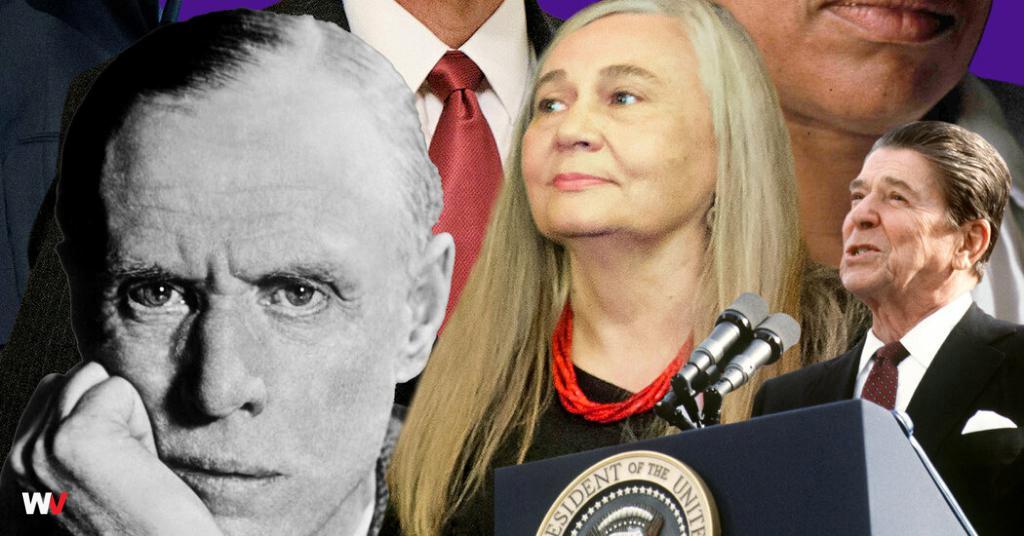
My father grew up in a small town in southwestern Ohio. He met my mother in Madison, Wis., where I was conceived. I mention these facts not to assert my authentic Midwestern identity but to question if such a thing really exists.
Whatever else happens at the vice-presidential debate on Tuesday night, the Midwest is sure to be an important theme. Both JD Vance and Tim Walz have become national figures by trading on their biographical ties to the region. The ideological distance between them can hardly be overstated, but each grounds his political persona — the small-town football-coaching dad, the up-by-the-bootstraps grandchild of hillbillies — in an appeal to the values and traditions of the heartland. An implicit argument on Tuesday night will be about who more genuinely reflects those values, the progressive governor of Minnesota or the right-wing junior senator from Ohio?
The answer might be both. The Midwest is a curious region, often treated less as a distinct geographical or demographic zone than as a symbol, a synonym for the country as a whole. While the U.S. Census Bureau specifies a sprawling expanse of 12 states — east of the Rockies, west of the Alleghenies, south of Canada and north of the South, home to nearly 70 million people — in the cultural imagination “Midwest” is code for the average, ordinary, normal, real America.
Bland as they may sound, those adjectives have always been fighting words, and it’s no accident that in presidential elections — quadrennial contests about who we, as a nation, really are — the Midwest serves as a battleground and a bellwether.
Like “working class,” “Midwestern” too often assumes a default setting of whiteness, and papers over profound political divisions. The region has been a fertile breeding ground for leaders of every factional stripe. Robert M. La Follette, the tribune of early-20th-century progressivism, represented Wisconsin in the U.S. Senate, as did the anti-communist crusader Joseph McCarthy a generation later. In the decades between the Civil War and the Great Depression, Ohio alone, known as “the cradle of presidents,” sent seven of its sons to the White House, all of them Republicans.
Since World War II, Minnesota has spawned three Democratic vice-presidential nominees: Hubert Humphrey, Walter Mondale and now Tim Walz. Indiana is responsible for Mike Pence, Pete Buttigieg and Eugene V. Debs, who won nearly a million votes as a socialist presidential candidate in 1920, at a time when the state was a hotbed of the Ku Klux Klan.





