Entertainment
The Magnificently Weird Fiction of Yoko Tawada
The Japanese author, frequently mentioned as a possible Nobel laureate, has a new novel, the second in her “Scattered All Over the Earth” trilogy.
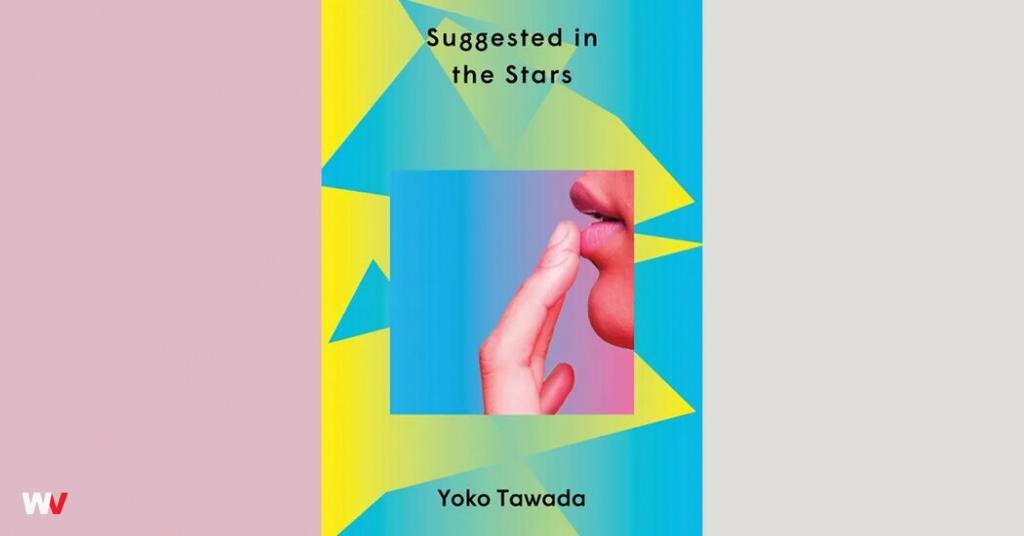
SUGGESTED IN THE STARS, by Yoko Tawada. Translated by Margaret Mitsutani.
“Suggested in the Stars” is the second in Yoko Tawada’s trilogy of friendship amid climate change dystopia, begun by “Scattered All Over the Earth,” published in English in 2022. The books combine the innocence ofThe Baby-Sitter’s Club with the Surrealism of Leonora Carrington’s art. They are, simply put, deeply weird. And while the word “weird” has recently had a moment as an insult on the political stage, Tawada’s work reminds us that weirdness is not always a bad thing.
Though it’s possible to read “Suggested in the Stars” on its own, thanks to a page of catch-up summary and a character cheat sheet at the beginning, it’s best experienced as a sequel. It picks up where the first novel left off, as a group of friends continue their search for someone with whom Hiruko, the novel’s ethereal center, can speak her native language. Hiruko comes from “the land of sushi,” which may or may not have disappeared owing to rising sea levels, and now lives in Denmark teaching Panska, a “Pan-Scandinavian” language she has invented. Her friends, scattered across Europe in the first book, have located a man named Susanoo, who appears to be Japanese but is suffering from aphasia, and the new novel brings him to a hospital in Copenhagen to recover his mother tongue.
This convalescence instigates the book’s action, as the characters make their zigzaggy ways to Susanoo’s cramped hospital room. Nanook — a Greenlander who corrects anyone who calls him an Inuit, identifying instead as an Eskimo — hitchhikes from Trier, ditching his German girlfriend Nora, who makes her separate way to Copenhagen with Akash, a trans woman from India.
This disparate crew, lovers of language as much as Tawada herself, would surely have their own compelling debate over the word “weird.” One character is a linguist; another, a speech pathologist. Among them, they speak English, Danish, French, German, Greenlandic, Hindi, Japanese, Swedish and Panska. Two of them — dishwashers who work in the hospital’s basement — share a private, rhyming language.
Told from rotating points of view, the novel is an optimistic portrait of pluralism. While other writers might be hesitant to channel experiences outside their own, Tawada boldly embodies the voices of characters who are trans, intellectually disabled or less than politically correct. But many identities become slippery, unfixed. Nanook is often mistaken for Japanese, and while considering Akash, one character thinks, “It’s awfully old-fashioned to assume you can tell someone’s gender just by looking.”
Moments like these might seem pointed, but the ongoing nature of the trilogy format allows Tawada to shift and reframe her characters’ views, and to provide plenty of opportunities for communication — and understanding — across differences, something her fiction wholeheartedly embraces.