Entertainment
The Essential Tanith Lee
There are authors who stick to what they know, carving out careful niches for themselves. And then there are the ones who obliterate boundaries. Tanith Lee was in the second camp. An eclectic and prolific writer, she penned more than 90 novels and …
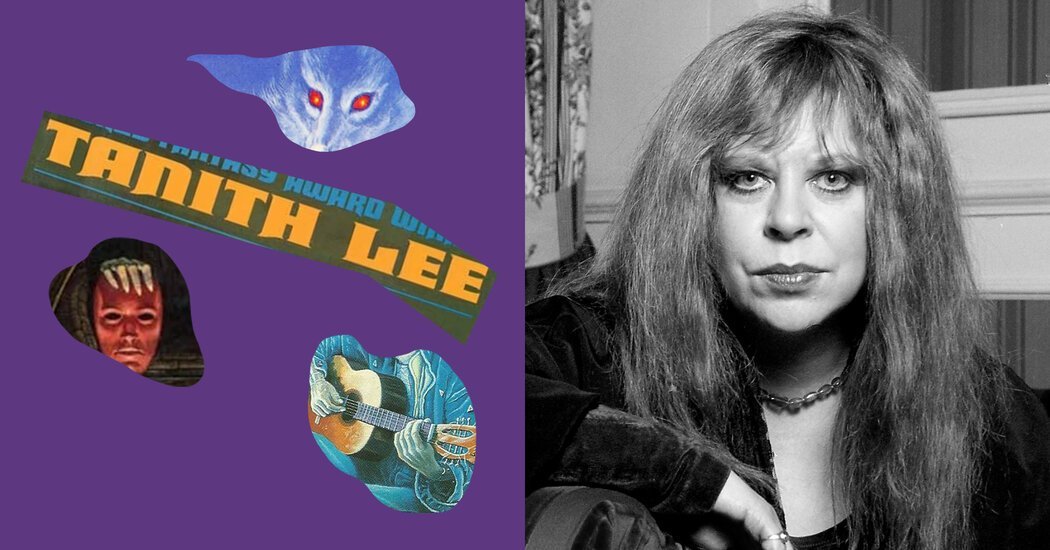
There are authors who stick to what they know, carving out careful niches for themselves. And then there are the ones who obliterate boundaries.
Tanith Lee was in the second camp. An eclectic and prolific writer, she penned more than 90 novels and hundreds of short stories, ranging from fantasy and science fiction to horror, erotica, mysteries and historical fiction. She gloriously reimagined classic myths and imbued her prose with a rich, poetic lushness.
Lee was ahead of her time in so many ways. Her explorations of feminism and gender issues, her complex queer characters and her mordant humor give her work a fresh and vital feel. In “Don’t Bite the Sun” (1976), young people live in a world where robots cater to their every whim. If they die, they can be resurrected, and choose whether to inhabit a male or female body. This kind of gender fluidity is natural in Lee’s fiction — not something to fear, as it is in Robert Silverberg’s “Son of Man” (1971), where a 20th-century man catapulted into the future is horrified when he temporarily changes genders. Instead, Lee frames it as a natural part of her characters’ search for meaning and answers.
Born in 1947 in London to a pair of professional ballroom dancers, Lee began by writing children’s fiction. Her breakout book, an adult fantasy novel called “The Birthgrave,” came out in 1975. (Its publication “enabled me finally to stop doing stupid and soul-killing jobs, and start working day and night as a professional writer,” she said.) Lee published steadily for the next two decades, accumulating accolades along the way; she was the first woman to win a British Fantasy Award, in 1980.
But by the mid-1990s, big publishers, unable to pigeonhole her work, found it increasingly difficult to market her books and began turning away from her.
“If anyone ever wonders why there’s nothing coming from me, it’s not my fault. I’m doing the work …. The indication is that I’m not writing what people want to read, but I never did,” she told Locus magazine in 1998.