

Entertainment
‘The Cole Porter of Literature’: Writers and Artists Remember Edmund White
In these reflections, colleagues, friends and admirers recall his risk-taking, his generosity and his insatiable taste for gossip.
Andrew Sean Greer
Author, “Less Is Lost”
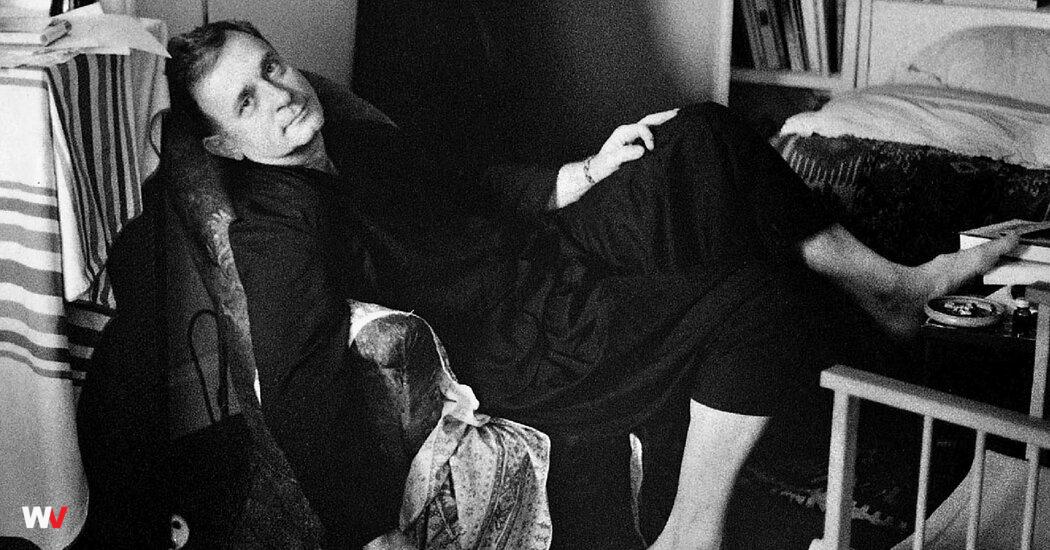
Edmund White was my college thesis adviser, my role model as a gay writer and my friend. He was the Cole Porter of literature: a genius writer who sang dirty lyrics at parties. Always a twinkle of mischief in his eye, a morsel of gossip from the French court, a bit of history about a painting, a comical take on a serious novel, a serious take on a comic one, all in the course of a few minutes’ chat. Other countries celebrate writers who are equally adept at criticism, theater, fiction, biography, memoir — letters in every sense of the word — but in the U.S. the tradition has lapsed. Perhaps Ed was the last of his kind.
Yiyun Li
Author, “Things in Nature Merely Grow”
Edmund and I were close friends for the past eight years. During this time, he was one of the most loving friends supporting me through the losses of my two children. At the onset of the pandemic, we established our two-person book club, meeting Monday through Friday at 5 p.m. on Skype. This continued, and my estimation is that we read between 80 and 120 books together. But if that sounds heavy or dry, the reality was rather the opposite. We spent most of the time giggling and gossiping (about writers living and dead, about characters we just met in a novel, about an actress in Madame de Sévigné’s letters or a courtesan in Louis XIV’s Versailles). Sometimes I would get a detailed and illuminating description of gay sex from 30 years ago, or from an encounter two days ago. Nearly all our conversations would end with irrepressible laughter on both ends. I shall miss his wicked humor, his erudition and most of all, his irreplaceable presence in my life.
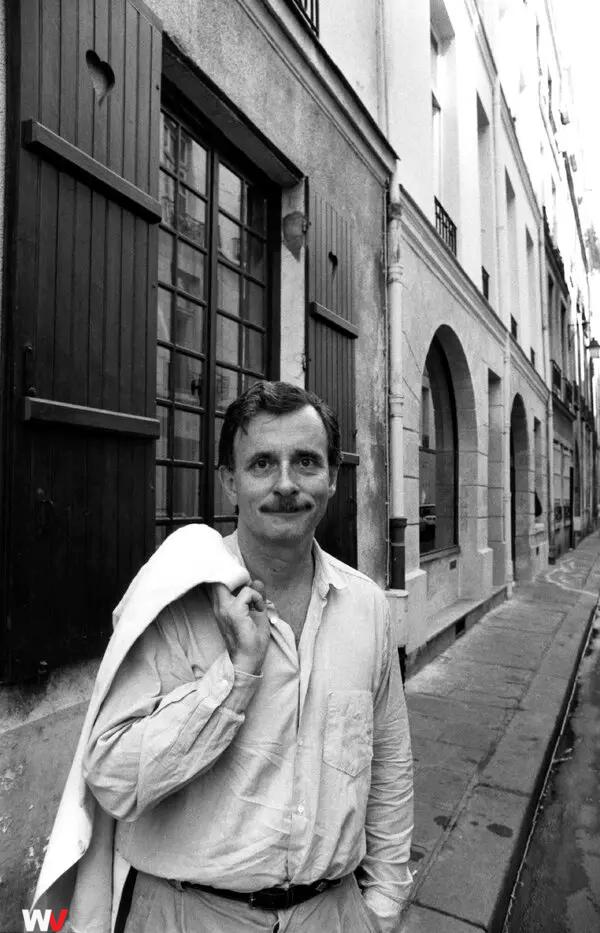
White in 1986.Credit…Ulf Andersen/Getty Images
Jeffrey Eugenides
Author, “The Marriage Plot”
A good argument can be made that it was Ed White who invented autofiction. He used that term himself, long before it became fashionable. More important, it was the nature of his work, its astonishing candor, its lack of shame (at a time when that was needed, unlike the present), and the overriding charm that made every detail, no matter how pungent or revealing, feel like a confession between friends. White is a writer whose originality came from his material rather than his style. He had style, but he needed it only to tell his long and obsessional boy’s own story.
Alejandro Varela
Author, “The Town of Babylon”

I corresponded with Edmund only a few times, but I awaited his replies the way one does news of the winning lottery numbers. His writing wasn’t just intimidatingly brilliant or cross-your-legs-on-the-subway sexy, or full of compassion, humor, and devastation; it was all of these at once. He was a literary icon who titillated the mind and body, and whose work, in ways I’m still deciphering, gave us permission to be and to explore. It was gratifying to see Edmund receive some of his flowers in life, but I always wondered why his bouquet wasn’t fuller, bigger. I suspect it was the rampant homophobia of an industry and a society that, ironically enough, he helped to tame.
Adam Haslett
Author, “Mothers and Sons”
Ed White was the great permission-giver of gay literature. His frankness about sex between men, beginning at a time when almost no one else wrote that explicitly, and in almost every mode — elegiac, ecstatic, documentary — opened countless doors in the minds of younger writers, myself included. I can still remember picking up “A Boy’s Own Story” as a teenager in a bookshop in London and taking it furtively to the counter because I was afraid the picture of the beautiful young man on its cover would give me away. But it was the cleareyed beauty of the prose that actually thrilled me. That book told me my desire didn’t have to be divorced from the urge to make art: it could be that art.