
Entertainment
Making America Red-Scared Again
In “Red Scare,” Clay Risen shows how culture in the United States is still driven by the political paranoia of the 1950s.
RED SCARE: Blacklists, McCarthyism, and the Making of Modern America, by Clay Risen
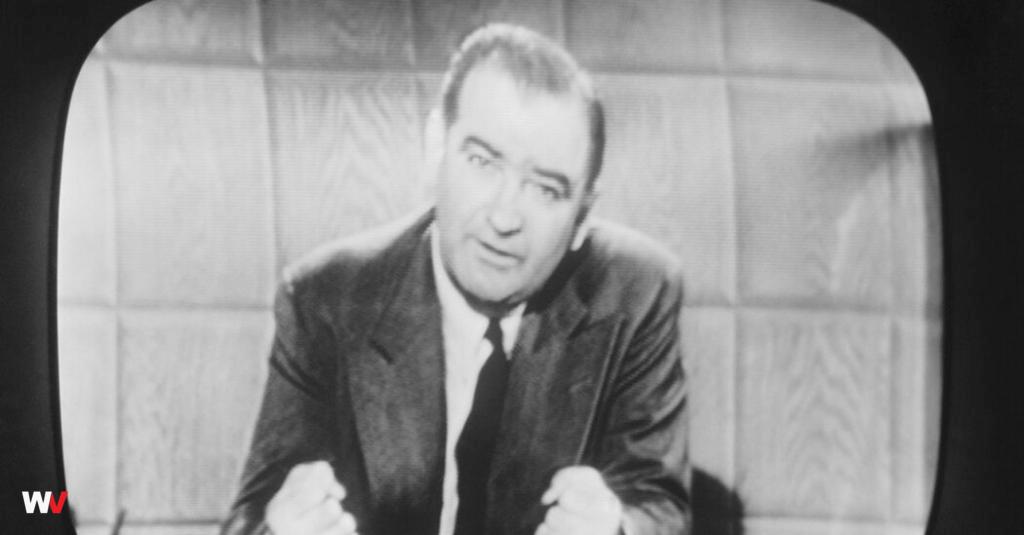
When the end came for Joe McCarthy, it was Edward R. Murrow who delivered the knockout blow. On his CBS program “See It Now,” Murrow ran damning footage of the red-baiting Wisconsin senator, who appeared hectoring and disheveled to viewers. Murrow proclaimed that McCarthy’s “primary achievement has been in confusing the public mind.” The senator’s reputation never recovered from Murrow’s nationally televised exposé.
But Murrow also recognized that his moment’s dangers ran deeper than one man. He urged Americans to accept their own culpability in the tragedy of McCarthyism. McCarthy “didn’t create this situation of fear,” Murrow said, “he merely exploited it.” The broadcaster quoted Shakespeare to drive home his point: “The fault, dear Brutus, is not in our stars, but in ourselves.”
There may be no better diagnosis for our own Trump-era predicament, and revisiting the Red Scare reveals a great deal about how we ended up here. As Clay Risen’s meaty and powerfully relevant new book, “Red Scare,” makes clear, our own times are ringing with echoes of the clamorous battles of mid-20th-century McCarthyism.
Risen, a reporter at The New York Times who has written a history of Theodore Roosevelt and the Rough Riders, among other books, coyly insists that he is “not concerned with drawing parallels between the past and the present” and desires to “leave it up to the reader to find those as they will.” But this is disingenuous. In his 400-some pages Risen touches on anti-fascism, white supremacy, campus activism, anti-elitism, cancel culture, virtue signaling, doxxing, book bans, election interference, anti-immigrant racism, F.B.I. overreach, conspiracy thinking, antisemitism, the surveillance state, anti-colonialism, the Koch family and America First-style ultranationalism. To suggest all this amounts simply to a Rorschach test for his readers stretches credulity.
Risen dates the beginning of the second Red Scare (the first one erupted during the World War I era) to 1946, when Billy Wilkerson, the conservative anti-Communist publisher of The Hollywood Reporter, went to confession at his Catholic church on Sunset Boulevard. “Father, I’m launching a campaign, and it’s gonna cause a lot of hurt,” he told his priest. “I just need to know what to do.” The priest replied, “Get those bastards, Billy.”
Over the following decade, crusading anti-Communists ruined countless careers, driving good men and women into the professional wilderness and, in some cases, to suicide. Even those who survived the ordeal — often by naming names themselves — were nevertheless deeply scarred. “I don’t think you have the foggiest notion of the contempt I have had for myself since the day I did that thing,” one of them, the actor Sterling Hayden, later told his psychiatrist.