

Entertainment
I’ll Have the Psychedelic Dystopia With Everything on It
Fernando A. Flores’s new novel imagines a bleak world where books are illegal and deprivation is the norm. It’s a blast.
BROTHER BRONTË, by Fernando A. Flores
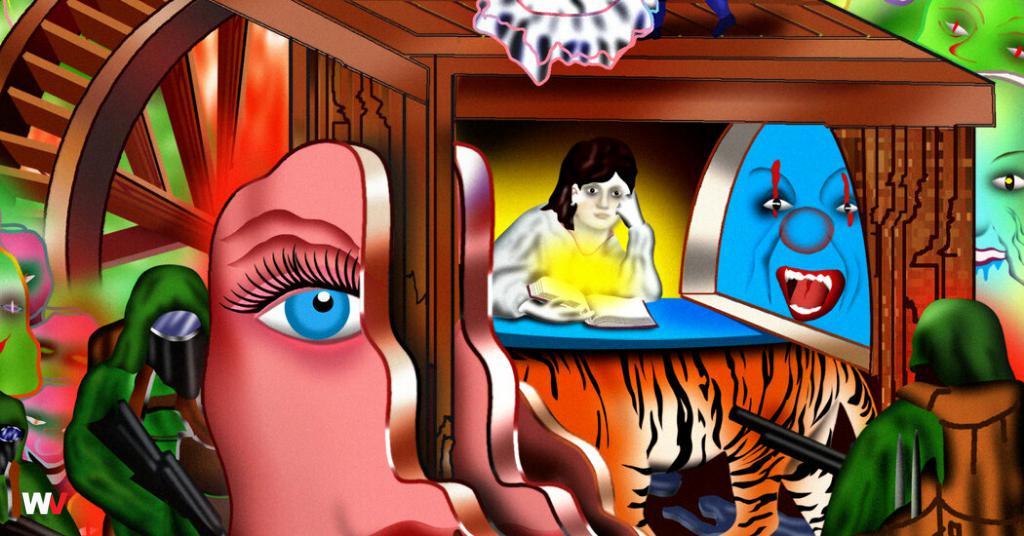
The most shocking dystopian speculation is not clairvoyant or even extrapolative; it’s simply attentive — it discerns what’s right here, right now. It’s a matter of recognition. The evil Day-Glo clown staring at you through your bedroom window in the middle of the night is simply a reflection of you staring out at the emptiness that’s been there all along.
The dystopia situated in Three Rivers, Texas, in Fernando A. Flores’s marvelous new novel, “Brother Brontë,” is a recognizable, if hyperbolic (and not by much), facsimile of today’s flagrant realities.
There is venomous xenophobia and scapegoating, along with the complete disintegration of consensus about objective reality. Many days pass in darkness, the sun and moon and stars blocked out by volcanic smoke and toxic ash, a pall sometimes red, orange or yellow. Water is rationed. People buy homemade toilet paper from peddlers on the street using the tabs from aluminum cans as currency. There’s no internet, no television or radio. Wandering immigrants seeking asylum sleep packed in the tail of a crashed jetliner. A war of attrition is waged against single working mothers, who are required by law to indenture themselves to the Big Tex Fish Cannery. (Young men flee to work on Arctic oil derricks.)
And perhaps most bleakly dystopian (and integral to the story): The possession of books is illegal. In their indefatigable resourcefulness, people fabricate their own media to clandestinely convey text, like the “halceamadon,” a complexly folded piece of parchment paper containing a microscript written backward.
At the crux of it all is a cohort of intractable women who resist the prevailing regime and struggle to live authentic, exuberant lives in the face of tyrannical repression and widespread deprivation. There in the novel’s nucleus, as if radiantly enthroned at the center of a mandala, there amid this draconian book ban enforced by heavily armed ransacking chupacabras (the authorities are named after a cryptid that drinks the blood of goats) who burst into tenements in the middle of the night in search of books to shred, is Jazzmin Monelle Rivas, the cohort’s most beloved contraband author, her latest opus entitled “Brother Brontë.”
Grim prognoses aside, Flores’s novel is an absolute blast to read. Its madcap, carnivalesque backdrop is rendered in psychedelic polychromatics: onyx smokestacks, bright green warehouse walls, purple smog, yellow clouds. And it reeks. Of botanical perfumes, of animal sweat, of grilling onions and wurst, rotting fish, gasoline, blood, agua fresca, tamales, gorditas and powdered doughnuts.





