Entertainment
Elizabeth Strout Gets the Gang Back Together for a Murder Mystery
In “Tell Me Everything,” Bob Burgess deepens his emotional connection with Lucy Barton as he defends a local man accused of killing his mother.
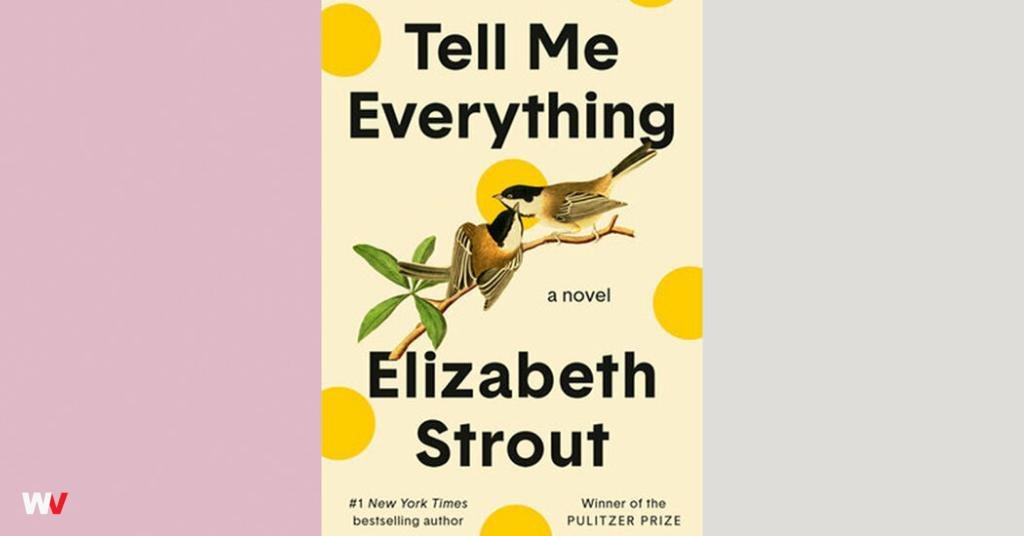
TELL ME EVERYTHING, by Elizabeth Strout
Elizabeth Strout’s readers have spent nearly three decades watching her characters’ lives intersect across her body of work. Her 10th book, the tender “Tell Me Everything,”has the feel of a long-awaited reunion: Olive Kitteridge, Lucy Barton, the Burgess siblings, William and Margaret and Helen and Pam — the gang’s all here.
“Tell Me Everything”finds Lucy, a writer who has recently relocated from New York City to Crosby, Maine, in a will-they-or-won’t-they plot with Bob Burgess, a mostly retired lawyer who has lived in Crosby for 15 years with his wife, Margaret. On riverside strolls together (which they began taking in Strout’s previous novel, “Lucy by the Sea”), Lucy and Bob develop an emotional intimacy that promises — or threatens — to become more. Meanwhile, Olive, now 90 and blunt as ever, summons Lucy to her retirement community to tell her a story about Olive’s mother, thinking that “if her story could be told to a writer, maybe it could be used in a book one day.”
Lucy ends up visiting Olive regularly so that the two women can trade stories about the “unrecorded lives” of people they’ve known. At the same time, Bob agrees to take on the defense of Matt Beach, a local man suspected of murdering his octogenarian mother.
A self-taught painter of pregnant nudes, Matt Beach makes for a memorable addition to this familiar cast. A classic Strout type — solitary, childlike and ill at ease in the world — he is at once reminiscent of Pete Barton (Lucy’s brother) and Zach Burgess (Bob’s nephew) and also wholly his own.
The murder mystery here isn’t much of one; perhaps by design, readers will solve it long before the characters do. But its resolution embodies Strout’s enduring preoccupation with a particular paradox of human nature: that each of us can be both deeply known and ultimately unknowable. In prior novels, Strout has written of Bob’s “ancient inner Bobness,” and Jim’s “Jimlike” nature; “you’re not strange, you’re Lucy,” Bob says in “Tell Me Everything.” And yet, as Lucy puts it, “People are mysteries. We all are such mysteries.”