Entertainment
A Patchwork Satire of Ivory Coast, Pre- and Post-Independence
“Comrade Papa” is told from the perspective of two European arrivals to the West African country, nearly a century apart.
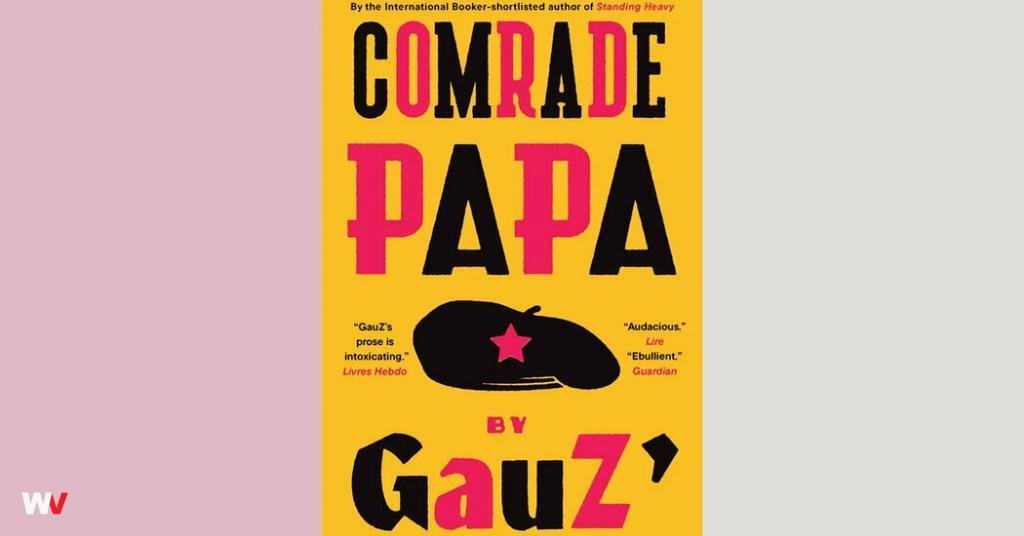
COMRADE PAPA, by GauZ’. Translated by Frank Wynne.
“Comrade Papa” — the second novel by the pseudonymous Ivorian author and newspaper editor GauZ’, published in France in 2018 and newly translated by Frank Wynne — alternates in setting between 19th-century colonial Ivory Coast and 1970s Amsterdam. The two strands don’t converge until the end, after a patchwork of legends, folk tales, revolutionary diatribes and expeditionary reports that come together to make a whimsical, satirical whirlwind of a historical narrative.
In Wynne’s nimble, playful translation — his translation of the author’s previous book, “Standing Heavy,” was shortlisted for the International Booker Prize — GauZ’ views the rough-and-ready nature of France’s colonial presence through the lens of Maxime Dabilly, a young factory worker who has “always dreamed of leaving” his village in war-torn Alsace. (The son of an unmarried Parisian dancer in a Catholic town, “I have been reminded of this litany of sins ever since I could string two words together.”) In 1880 he heeds an inner calling to journey to West Africa on a boat carrying munitions. In scenes reminiscent of Ahmadou Kourouma’s “Waiting for the Wild Beasts to Vote,” the dreamlike encounters of Dabilly and his fellow sickly, pompous white settlers in the country’s ancient towns, with their traditional Ivorian chiefs and religious leaders, are rendered with humor and verve. (“Azuretti will be my first escapade as an explorer,” Dabilly says of one trading post, comparing himself to the famous Welsh American colonizer of Congo: “Though it is a mere half-hour’s walk along the shore, I set off feeling as though I have something of Henry Morton Stanley beneath my helmet and in my shorts.”)
As Dabilly slowly learns the local languages and the mythologies they hold, GauZ’ satirizes the historical record by intertwining fact and folk tale — like the “legend” of Aniaba, an Assinian boy who was stolen from Africa and treated as a prince in the court of Louis XIV, and returned home to have his European airs deflated — without distinction. In his version of this particular moment of empire there is less violence than conversation, treaty making, romantic liaison and dance, the seat of political power left to fate and tropical medicine.
Almost a century later, Anouman, a red-haired, “light brown” boy living near the red-light district of Amsterdam, is also sent to Ivory Coast. Like Dabilly, he too is rootless: His child’s understanding of communist revolution (his language is peppered with malapropisms like “swas-stickers,” “the yolk of capitalism” and “Papa says Maman’s just a Miss Guided socialist”) obscures the fact that his Maoist parents — the titular comrade is his father — have abandoned him to pursue their own political careers, sending him to live with family friends on another continent, convincing him he’s fulfilling his duty as an “undercover agent.”