

Entertainment
30 Years Ago, This Book Saw the Coming Backlash Against Elites
Christopher Lasch’s “The Revolt of the Elites” anticipated the resentments of ordinary Americans that have led inexorably to Trumpism.
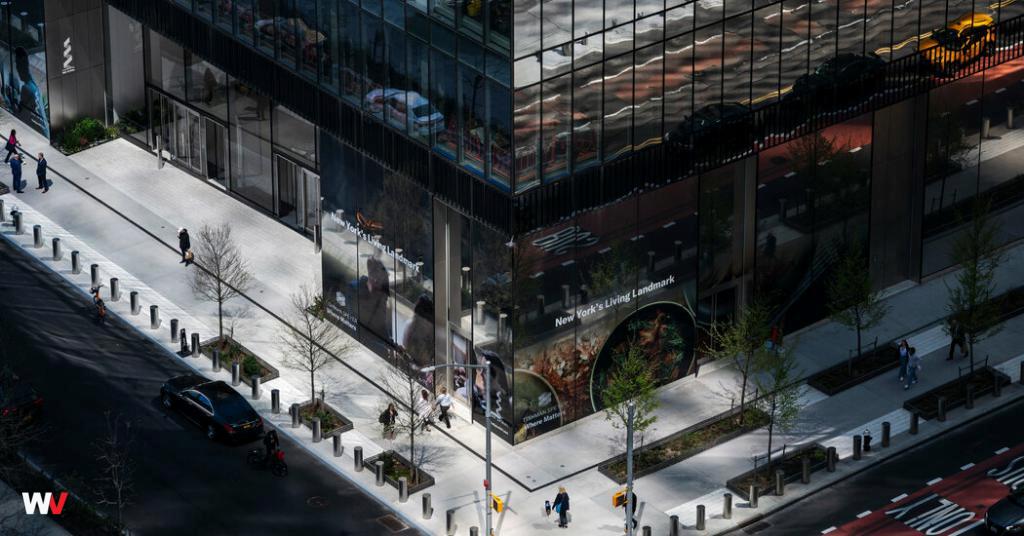
If you want to understand what Christopher Lasch was trying to say in his 1995 book “The Revolt of the Elites” — and why what he said then matters now — take a walk through the Hudson Yards development on the West Side of Manhattan. When I worked there, the area was dominated by rail yards and warehouses. A decade later, the neighborhood is a soaring ode to luxury. There’s a hotel by the high-end gym chain Equinox. One skyscraper’s ground floor is dominated by an “unprecedented space” (per website copy) from the celebrity chef José Andrés. It’s supposed to be a bustling market in the style of Barcelona’s legendary Boqueria, but its sterile opulence is closer in sensibility to the nearby Fendi boutique, only with ham.
“There has always been a privileged class, even in America, but it has never been so dangerously isolated from its surroundings,” Lasch wrote in the first of the 13 essays that make up this lacerating indictment of the United States published posthumously, a year after his death. The book’s title alludes to “The Revolt of the Masses,” the Spanish philosopher José Ortega y Gasset’s 1929 excoriation of “mass-man.” The rebellion Lasch bears witness to is the obverse of Ortega y Gasset’s, because it has been carried out by scornful elites who see the rest of the country as “a nation technologically backward, politically reactionary, repressive in its sexual morality, middlebrow in its tastes, smug and complacent, dull and dowdy.”
People tend to notice when they are the objects of contempt. This is the book I turned to after the presidential election, so perfectly did it capture the resentments that have made Trumpism a mainstay of American politics. A substantive reckoning with his return to power should begin here.
No one embodies the elite’s mixture of loathing and preening more spectacularly or perversely than Patrick Bateman, the protagonist of Bret Easton Ellis’s scandalizing 1991 novel “American Psycho.” Bateman is a Harvard-educated banker who moonlights as a serial killer. The novel’s dark genius is in treating Bateman’s bespoke consumerism as the deeper psychosis. You can practically see him pushing past Hudson Yards tourists on his way to the development’s IWC Schaffhausen watch boutique. Waiting at his deluxe apartment for the arrival of a dinner date, he sips champagne poured from a bottle “on ice in a Spiros spun-aluminum bowl which is in a Christine Van der Hurd etched-glass champagne cooler which sits on a Christofle silver-plated bar tray.” He decides he won’t kill his date in part “because I don’t want to ruin this particular Alexander Julian suit by having the bitch spray her blood all over it.”
We tend to think of the 1990s as a quiescent, prosperous decade, the last good time. Lasch is forcing us to rethink our nostalgia for the moment when entertainment and spectacle decisively triumphed. Only today are the costs of our apathy fully apparent. “The Revolt of the Elites” has the rare subtitle that is actually useful: “And the Betrayal of Democracy.”





