Wikknet
Dionysus, the Ecstatic Lord of Revelry and Transformation
Delve into the mystical revelations of Dionysus, the ecstatic lord of revelry and transformation. Explore the Dionysian rites, shapeshifting nature, and influence on the arts. Embrace the chaos and liberating energies of this subversive Greek deity.
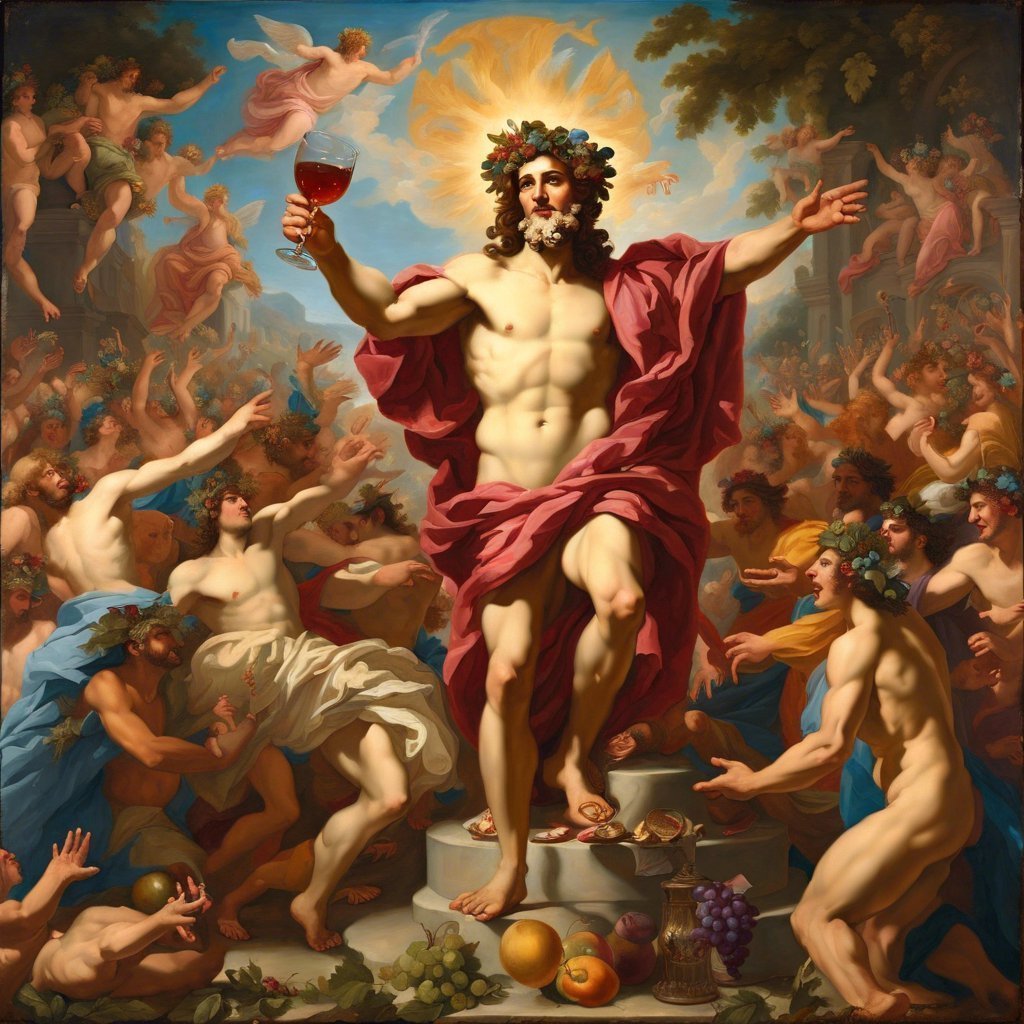
The Mystical Revelations of Dionysus: Ecstasy, Intoxication, and Transformation
Dionysus, the Greek god of wine, revelry, and transformation, holds a unique place in the pantheon of ancient deities. His cult was marked by ecstatic rituals, wild celebrations, and a profound connection to the mysteries of the natural world. In the realm of Greek mythology, Dionysus represents the untamed, the irrational, and the transformative power of the divine.
Ecstasy and Intoxication: At the heart of the Dionysian cult was the pursuit of ecstasy, a state of intense emotional and spiritual transcendence. Through the consumption of wine and the participation in frenzied dances, worshippers sought to commune with the god and experience a temporary liberation from the constraints of everyday life. This intoxicating union with the divine was seen as a means of achieving personal transformation and a deeper understanding of the mysteries of existence.
Transformation and Regeneration: Dionysus was not merely the god of revelry and indulgence; he was also a deity closely associated with the cycle of life, death, and rebirth. His myths often involve stories of dismemberment, death, and subsequent resurrection, mirroring the ebb and flow of the natural world. This connection to the transformative power of the divine was central to the Dionysian cult, which saw the god as a embodiment of the regenerative forces that govern the universe.
- The Maenads: The female followers of Dionysus, known as the Maenads, were central to the ecstatic rituals of his cult. These women, often depicted in a state of frenzy, were said to roam the wilderness, tearing apart animals with their bare hands and communing with the god in a state of divine possession.
- The Mysteries of Dionysus: The rites and ceremonies associated with the cult of Dionysus were shrouded in secrecy, known only to the initiated. These Mysteries were believed to hold the key to unlocking the transformative power of the god, granting participants a glimpse into the hidden workings of the cosmos.
The Dionysian Rites: Abandoning Reason for Unbridled Passion and Catharsis
In the ancient Greek world, the cult of Dionysus, the god of wine, revelry, and transformation, held a profound and often controversial place in the spiritual and cultural landscape. The Dionysian rites, which were characterized by ecstatic rituals, frenzied music and dance, and the abandonment of reason, offered adherents a glimpse into the raw, primal essence of human experience.
At the heart of the Dionysian mysteries was the idea of catharsis, a profound emotional and spiritual cleansing that would occur when the individual surrendered to the ecstatic, transformative power of the god. Through the ritual consumption of wine, the induction of altered states of consciousness, and the release of inhibitions, the worshippers of Dionysus would undergo a journey of self-discovery, shedding the shackles of their everyday personas and embracing the wild, untamed aspects of their being.
The Dionysian rites were not without their critics, however, as the unbridled passion and lack of control inherent in the rituals were seen by some as a threat to the social and political order. The Maenads, the female followers of Dionysus, were particularly notorious for their wild, unrestrained behavior, which was often viewed as a challenge to the patriarchal structures of ancient Greek society.
Yet, for those who embraced the Dionysian way, the rites offered a powerful and transformative experience, a chance to transcend the limitations of the rational mind and connect with the deeper, more primal aspects of the human psyche. Through the abandonment of reason and the embrace of unbridled passion, the worshippers of Dionysus sought to achieve a state of spiritual and emotional catharsis, a release from the burdens of everyday life and a glimpse into the ecstatic, transformative power of the divine.
- Dionysus, the god of wine, revelry, and transformation
- The Dionysian rites, characterized by ecstatic rituals and the abandonment of reason
- The idea of catharsis, a profound emotional and spiritual cleansing
- The Maenads, the female followers of Dionysus, and their wild, unrestrained behavior
- The Dionysian rites as a transformative experience, offering a release from the burdens of everyday life
Dionysus, the Shapeshifting God: Embodying the Duality of Creation and Destruction
Dionysus, the ancient Greek god of wine, revelry, and transformation, is a complex and multifaceted deity whose essence embodies the delicate balance between creation and destruction. As the shapeshifting lord of ecstasy and intoxication, Dionysus represents the duality inherent in the human experience, where the heights of pleasure and the depths of anguish coexist in a never-ending dance.
Dionysus is often depicted as a figure of paradox, embodying both the wild, uncontrollable forces of nature and the transformative power of artistic expression. His followers, known as the maenads, were said to be possessed by a frenzy of ecstatic worship, tearing apart any who dared to defy the god’s authority. Yet, it is this same unbridled energy that inspired the birth of Greek theater, with its rich tapestry of tragedy and comedy.
At the heart of Dionysus’ domain lies the eternal cycle of life, death, and rebirth. As the god associated with the grapevine, he embodies the cycle of growth, harvest, and fermentation – a metaphor for the human experience of joy, suffering, and ultimately, transformation. Through his mythic journey of dismemberment and resurrection, Dionysus teaches that even in the darkest of times, the seeds of renewal and regeneration lie dormant, awaiting the right moment to burst forth and reclaim their rightful place in the grand tapestry of existence.
Dionysus’ role as the shapeshifting god underscores the notion that true power lies in the embrace of duality. By transcending the rigid boundaries of order and chaos, light and dark, Dionysus invites us to celebrate the richness and complexity of the human experience, where the seemingly opposing forces of creation and destruction are revealed to be complementary aspects of the same divine whole.
The Ecstatic Worship of Dionysus: Rituals, Festivals, and the Unleashing of the Divine
Dionysus, the ancient Greek god of wine, revelry, and transformation, was the embodiment of ecstatic and transformative experiences. His worship was marked by a profound sense of divine possession, where devotees would lose themselves in the frenzy of rituals and festivals, allowing the god to take control and unleash the divine essence within.

The worship of Dionysus was characterized by a series of elaborate rituals and festivals that celebrated the god’s power and the transformative nature of his influence. These events were marked by the consumption of wine, the dancing of frenzied dances, and the wearing of masks and costumes that allowed participants to shed their everyday identities and embrace the divine.
At the heart of Dionysian worship was the belief that the god could possess his devotees, allowing them to transcend the limitations of their mortal existence and experience a profound connection with the divine. This process of divine possession was seen as a means of personal transformation, where individuals could shed their everyday selves and tap into the primal, ecstatic energies of the god.
- The Dionysian Mysteries: Secretive rituals that offered initiates a chance to experience the god’s power and transformation.
- The Bacchanalian Festivals: Raucous celebrations marked by the consumption of wine, wild dancing, and the wearing of masks and costumes.
- The Dithyramb: Choral hymns and dances that celebrated the god’s power and the ecstatic nature of his worship.
The Dionysian Impulse: Liberating the Primal Energies of the Human Spirit
Dionysus, the ancient Greek god of wine, revelry, and transformation, embodies the primal, ecstatic forces that lie at the heart of the human experience. His cult, which spread throughout the Greco-Roman world, celebrated the liberation of the individual from the constraints of reason and social norms, inviting participants to embrace the raw, unrestrained energies of the unconscious mind.
The Dionysian Impulse represents a profound yearning to break free from the shackles of the rational ego, to reconnect with the elemental and instinctual aspects of our being. It is a call to surrender to the intoxicating rhythms of the body, to the seductive powers of music, dance, and altered states of consciousness.
- The Dionysian rites were marked by frenzied dancing, the consumption of wine and other psychoactive substances, and the blurring of boundaries between the individual and the collective.
- Participants were said to experience a transcendent state of ecstasy, where the self dissolved and the primal energies of the universe coursed through their veins.
- This profound transformation was seen as a means of liberating the human spirit from the constraints of reason and societal norms, allowing for a direct, unmediated encounter with the profound mysteries of existence.
The Dionysian impulse continues to resonate in the modern world, inspiring artists, thinkers, and seekers to explore the transformative power of the unconscious mind and the liberating potential of ecstatic experience. It reminds us of the vital importance of embracing the primal energies that lie at the core of our being, and the profound possibilities that await when we surrender to the Dionysian call.
Dionysus, the Patron of the Arts: Inspiring Artistic Expression and Emotional Transcendence
Dionysus, the Greek god of wine, revelry, and the arts, has long been revered as the patron of artistic expression. His divine influence has inspired countless creative minds throughout history, from poets and playwrights to musicians and visual artists. Dionysus’ role as the ecstatic lord of transformation has made him a symbol of the power of art to transcend the boundaries of the mundane and elevate the human experience.
Dionysus is believed to have introduced the dramatic arts to ancient Greece, with the first tragedies and comedies emerging from the ecstatic rituals and festivals dedicated to him. His influence is evident in the emotive, passionate, and often visionary nature of the works produced by those who venerate him. From the lyrical poetry of Pindar to the groundbreaking plays of Aeschylus and Euripides, the touch of Dionysus can be felt in the raw, visceral power of the artistic creations that have endured for millennia.
Beyond his role as the patron of the arts, Dionysus is also revered for his ability to inspire emotional transcendence. The rituals and festivals associated with him often involved ecstatic states of being, where participants would lose themselves in the frenzy of music, dance, and intoxication. This experience of surrendering to the divine was seen as a means of achieving a deeper connection with the self and the cosmos, transcending the limitations of the mortal realm.
Dionysus’ transformative power is not limited to the realm of the arts and emotions; it also extends to the personal and social realms. His influence has the ability to challenge traditional social structures and gender norms, empowering individuals to embrace their authentic selves and embrace the fluidity of identity. The cult of Dionysus was often seen as a liberating force, allowing adherents to break free from the constraints of everyday life and explore the boundless potential of the human experience.
- Dionysus as the patron of the arts, inspiring artistic expression and emotional transcendence
- The ecstatic, transformative power of Dionysian rituals and festivals
- Dionysus’ role in challenging traditional social structures and gender norms
- The enduring legacy of Dionysus in the creative and cultural landscape
The Dionysian Paradox: Embracing the Chaos and Upheaval of Transformation
Dionysus, the enigmatic Greek god of wine, revelry, and ecstatic transformation, embodies a profound paradox at the heart of the human experience. As the ecstatic lord of revelry and upheaval, he represents the duality of destruction and creation, the necessity of chaos in the process of transformation.
At the core of the Dionysian mythos lies the acknowledgment that true growth and renewal can only emerge from the embrace of the unknown, the willingness to surrender control and plunge into the depths of the unconscious. Dionysus, with his intoxicating rites and frenzied celebrations, invites us to let go of our rational constraints and surrender to the transformative power of the irrational, the primal, and the ecstatic.
Yet, this surrender is not without its risks. The Dionysian experience is one of upheaval and disintegration, a shattering of the ego and the comfortable boundaries that we have constructed. It is a journey into the unknown, where the self is stripped bare and the very foundations of our being are challenged.
- In this Dionysian paradox, we find the seeds of both destruction and rebirth, the necessary chaos that precedes the emergence of the new.
- To embrace the Dionysian is to confront the fear of the unknown, to relinquish the illusion of control, and to surrender to the transformative power of the ecstatic experience.
- It is a journey that demands courage, vulnerability, and a willingness to let go of the familiar and embrace the unfamiliar, for it is only through this process that we can truly evolve and transcend the limitations of our own conditioning.
The Dionysian paradox, then, is a testament to the duality at the heart of transformation, a reminder that growth and renewal can only arise from the embrace of chaos and upheaval. It is a call to step into the unknown, to surrender to the ecstatic, and to trust in the transformative power of the divine madness that Dionysus embodies.
Dionysus, the Subverter of Social Order: Challenging Societal Norms and Conventions
Dionysus, the ancient Greek god of wine, revelry, and transformation, was renowned for his ability to challenge and subvert the established social order. As the ecstatic lord of revelry, he represented a force that stood in stark contrast to the rigid societal norms and conventions of the time.
The Dionysian Mysteries: Dionysus was the patron of the Dionysian Mysteries, secret rituals and festivals that celebrated the god’s transformative power. These events were marked by ecstatic revelry, the suspension of social hierarchies, and the blurring of boundaries between the divine and the mortal.
Dionysus represented a powerful force that could shatter the constraints of everyday life, allowing participants to experience a profound sense of liberation and transformation.
Challenging Gender Norms: Dionysus was often depicted as androgynous, blending masculine and feminine characteristics. This challenged the rigid gender roles and expectations of ancient Greek society, subverting the traditional notions of masculinity and femininity.
- The followers of Dionysus, known as Maenads, were often women who abandoned their domestic responsibilities to join in the wild, ecstatic dances and rituals associated with the god.
- This defiance of societal expectations for women’s behavior was a powerful act of resistance against the patriarchal structures of ancient Greek culture.
Dionysus as the Subverter of Social Order: Through his association with wine, intoxication, and the blurring of boundaries, Dionysus represented a force that could undermine the established social hierarchy and challenge the rigid social conventions of the time.
The Dionysian festivals and rituals were often sites of social and political subversion, where the traditional power structures were temporarily suspended, and a more egalitarian, ecstatic, and transformative way of being was celebrated.
The Dionysian Cult: Initiating the Faithful into the Mysteries of Ecstasy and Rebirth
In the ancient Greek world, the cult of Dionysus, the god of wine, revelry, and transformation, held a profound and captivating influence. This ecstatic religion, with its roots in the Thracian and Phrygian traditions, promised its devotees a journey of spiritual enlightenment and personal rebirth through the embrace of the divine.
The Dionysian Mysteries, as they were known, were a series of initiatory rites and rituals that sought to connect the faithful with the divine essence of Dionysus. These secret ceremonies, held in secluded sanctuaries and caves, were open to both men and women, transcending the social and gender boundaries of the time.
At the heart of the Dionysian Mysteries was the concept of ecstasy, a state of altered consciousness achieved through a combination of music, dance, and the consumption of wine or other intoxicants. The initiates would undergo a symbolic death and rebirth, shedding their mortal selves and embracing the transformative power of the god.
Through this experience of ecstasy and rebirth, the devotees of Dionysus sought to attain a deeper understanding of the cyclical nature of life and the mysteries of the divine. The cult’s emphasis on the transitory nature of existence and the importance of embracing the present moment resonated deeply with the ancient Greek psyche, offering a counterpoint to the more structured and rational religious traditions of the time.
The Dionysian Mysteries were not without controversy, however, as the ecstatic and often licentious nature of the rites raised concerns among the more conservative elements of Greek society. Yet, the cult’s popularity and influence continued to grow, becoming an integral part of the cultural and religious landscape of ancient Greece.
- The Dionysian Mysteries were a series of initiatory rites and rituals that sought to connect the faithful with the divine essence of Dionysus.
- The cult promised its devotees a journey of spiritual enlightenment and personal rebirth through the embrace of the divine.
- The Dionysian Mysteries emphasized the concept of ecstasy, a state of altered consciousness achieved through a combination of music, dance, and the consumption of wine or other intoxicants.
- The devotees of Dionysus sought to attain a deeper understanding of the cyclical nature of life and the mysteries of the divine through their experience of ecstasy and rebirth.
Dionysus, the Eternal Companion: Guiding the Journey of the Human Soul through Life’s Cyclical Metamorphoses
Dionysus, the ancient Greek god of wine, revelry, and transformation, has long been revered as a powerful force that transcends the boundaries of time and space. As the eternal companion of the human soul, Dionysus accompanies us on the cyclical journey of life, guiding us through the ever-changing landscapes of our existence.
At the heart of Dionysian worship lies the recognition of the cyclical nature of existence. Just as the seasons ebb and flow, so too do the tides of our lives, marked by periods of growth, decay, and rebirth. Dionysus, the lord of revelry and ecstasy, celebrates this perpetual cycle, encouraging us to embrace the transformative power inherent in every moment.
Through the rituals and rites associated with Dionysian worship, the human soul is invited to embark on a transformative journey, shedding the constraints of the everyday and embracing the boundless potential of the ecstatic experience. In the throes of Dionysian revelry, the self is dissolved, allowing for a profound reconnection with the primal rhythms of the universe.
Dionysus, the eternal companion, guides the soul through the cyclical metamorphoses of life, teaching us to embrace the ever-changing nature of our existence. From the depths of despair to the heights of joy, the Dionysian journey challenges us to shed our preconceptions and embrace the unknown, ultimately leading to a deeper understanding of the self and our place within the grand tapestry of the cosmos.
The enduring legacy of Dionysus continues to captivate and inspire, reminding us of the transformative power inherent in the human experience. As we navigate the ebbs and flows of our lives, may we heed the call of the ecstatic lord, embracing the cyclical nature of existence and finding solace in the eternal presence of Dionysus, our eternal companion.