
Wikknet
Hades, the Immortal Lord of the Underworld
Explore the enigmatic realm of Hades, the immortal Lord of the Underworld, as he guides the departed through the shadowy realms of the afterlife. Uncover the mysteries of this unyielding guardian of the unseen realm.
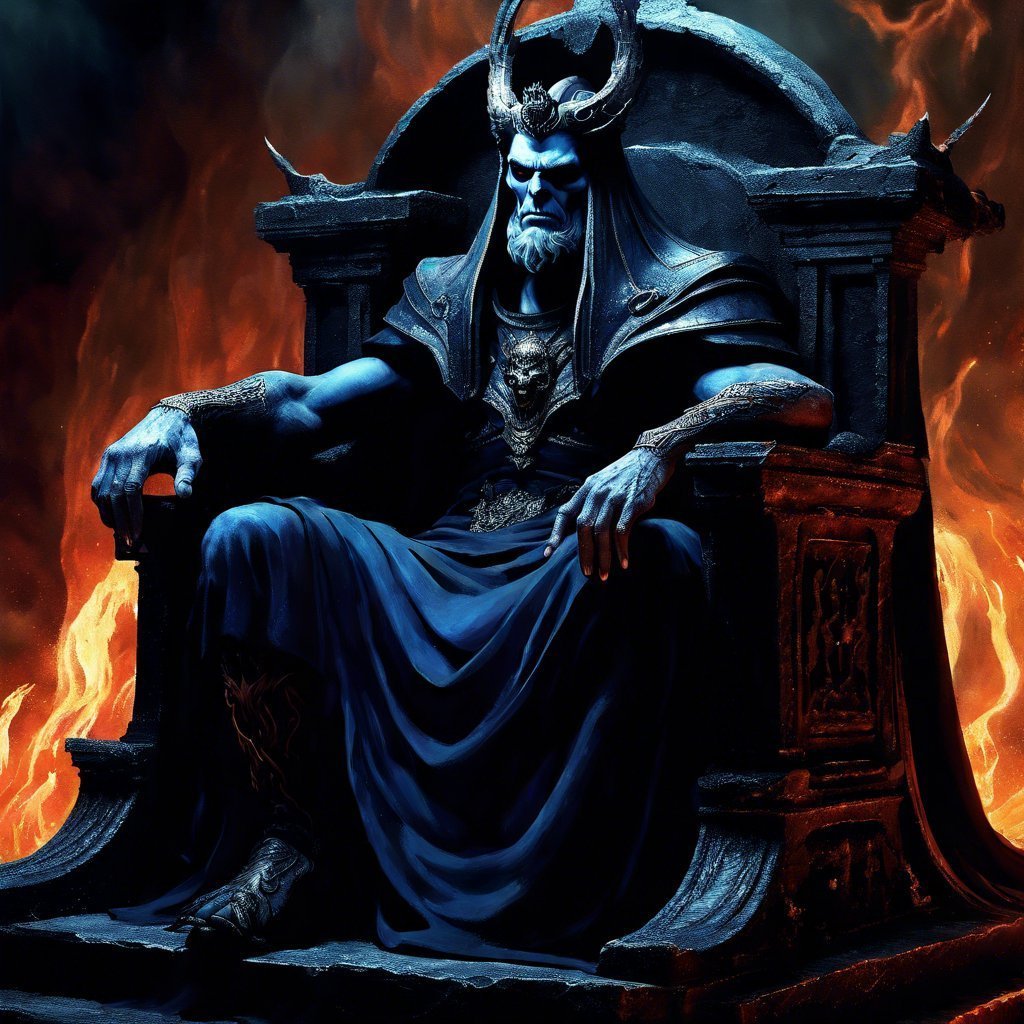
The Eternal Dark Sovereign: Hades, Ruler of the Underworld
Hades, the immortal lord of the Underworld, reigns over the vast realm of the dead with a commanding presence that instills both awe and fear in the hearts of mortals and immortals alike. As the eldest son of the Titans Cronus and Rhea, Hades was granted dominion over the realm of the dead, a domain that encompasses the murky depths of the afterlife, where the souls of the departed are judged and consigned to their eternal resting places.
With his throne situated in the darkest corners of the Underworld, Hades presides over the souls of the dead, ensuring that the natural order of life and death is maintained. His stern and unyielding demeanor, coupled with his unwavering adherence to the laws of the Underworld, have earned him the moniker of the “Grim King of the Shades.” Yet, beneath his imposing exterior, Hades is a complex figure, driven by a deep sense of duty and a desire to maintain the delicate balance that exists between the realm of the living and the realm of the dead.
One of the most well-known myths surrounding Hades is his abduction of Persephone, the daughter of the goddess Demeter. Captivated by Persephone’s beauty, Hades seized her from the mortal realm and brought her to the Underworld, where she became his queen. This act of defiance against the will of the gods and the natural order sparked a great conflict, with Demeter’s grief and anger causing the earth to enter a state of barren winter until her daughter’s return. The story of Persephone’s abduction and her subsequent division of her time between the Underworld and the mortal realm has become a powerful metaphor for the cycle of life, death, and rebirth.
As the ruler of the Underworld, Hades is responsible for overseeing the passage of souls from the mortal realm to the afterlife. He presides over the various realms and regions of the Underworld, from the serene Elysian Fields to the torturous depths of Tartarus, ensuring that the dead are judged and assigned their appropriate destinies. Hades is often depicted as a stern and unyielding figure, unwilling to show mercy or favoritism, for he understands that the laws of the Underworld must be upheld with unwavering resolve.
Hades, the immortal lord of the Underworld, stands as a towering figure in the pantheon of Greek mythology, a dark and enigmatic deity whose influence extends far beyond the boundaries of the realm he rules. His power and authority are absolute, and his presence casts a long shadow over the lives of mortals and immortals alike. Yet, despite his formidable reputation, Hades is a complex and multifaceted character, driven by a deep sense of duty and a desire to maintain the delicate balance that exists between the realms of the living and the dead.
- Keywords: Hades, Underworld, Greek Mythology, Death, Afterlife, Persephone, Ruler, Immortal
The Shadowy Arbiter of Fate: Hades, Lord of the Dead
In the ancient Greek pantheon, Hades stands as the formidable and enigmatic ruler of the Underworld, the realm of the dead. As the eldest son of the Titans Cronus and Rhea, Hades was granted dominion over the vast, shadowy domain that lies beneath the mortal world, a responsibility he has wielded with unwavering authority for eternity.
Hades, whose name is often synonymous with the Underworld itself, is a figure of both fear and reverence in Greek mythology. He is the gatekeeper to the realm of the departed, the arbiter of the souls that pass through his domain, and the guardian of the secrets that lie buried within the earth’s depths.
With his piercing gaze and unyielding demeanor, Hades commands the respect and obedience of the dead, from the most heroic of mortals to the most wretched of sinners. His realm, a sprawling and labyrinthine network of rivers, fields, and domains, is home to a vast and diverse population of spirits, each with their own tales of triumph, tragedy, and eternal consequence.
- The River Styx, which forms the boundary between the living and the dead, is but one of the many facets of Hades’ domain, a testament to the sheer scope of his influence and power.
- The Judges of the Dead, such as Minos, Rhadamanthys, and Aeacus, serve as Hades’ emissaries, determining the fates of the souls that arrive in the Underworld and consigning them to their appropriate afterlives.
- The Furies, or Erinyes, are the relentless pursuers of those who have committed heinous crimes, answerable only to Hades himself.
Yet, despite his fearsome reputation, Hades is not entirely without compassion. His love for his wife, Persephone, the goddess of springtime, is a testament to the depths of emotion that even the Lord of the Dead can possess. Their union, and the annual cycle of her return to the surface world, is a pivotal aspect of the Greek mythological cycle, representing the eternal dance between life and death, light and darkness.
As the immortal arbiter of the Underworld, Hades stands as a complex and multifaceted figure, a powerful deity whose influence and authority touch every aspect of the human experience, from the moment of birth to the moment of death and beyond. His domain is a realm of mystery, of judgment, and of the eternal secrets that lie at the heart of the human condition.
Hades, the Relentless Guardian of the Afterlife
Hades, the immortal lord of the underworld, stands as a figure of both awe and reverence in Greek mythology. As the ruler of the realm of the dead, Hades is a complex and multifaceted deity, whose role extends far beyond the common perception of a grim and unyielding ruler.
The Realm of the Underworld

Hades’ domain, the underworld, is a vast and intricate realm, comprising a myriad of realms and regions, each with its own unique purpose and inhabitants. From the tranquil Elysian Fields, where the virtuous souls of the dead reside, to the ominous Tartarus, where the most wicked are punished, Hades presides over this complex and mysterious afterlife.
The Gatekeeper of the Underworld
As the gatekeeper of the underworld, Hades is responsible for ensuring the smooth transition of souls from the mortal realm to the afterlife. He oversees the passage of the dead, guiding them to their final resting place and maintaining the delicate balance between the living and the dead.
The Impartial Judge
Hades is often depicted as an impartial and unbiased judge, tasked with determining the fate of the souls that pass through his realm. He is said to weigh the deeds and actions of the deceased, ensuring that each soul is granted its rightful place in the afterlife, whether it be in the serene Elysian Fields or the torturous depths of Tartarus.
The Relentless Guardian
While Hades may be perceived as a stern and unyielding ruler, he is also a steadfast guardian of the underworld, ensuring that the delicate balance between the living and the dead is maintained. He is a protector of the natural order, preventing the intrusion of the mortal realm into the realm of the dead, and vice versa.
- Hades, the immortal lord of the underworld, is a complex and multifaceted deity
- He presides over the intricate realm of the afterlife, guiding the souls of the dead to their final resting place
- As the impartial judge of the underworld, Hades determines the fate of the deceased based on their deeds and actions
- Hades is also a relentless guardian, protecting the delicate balance between the living and the dead
The Implacable Warden of the Underworld: Hades
In the ancient Greek pantheon, Hades, the god of the underworld, reigned over the realm of the dead with an iron fist. As the eldest son of the Titans Cronus and Rhea, Hades was entrusted with the domain of the afterlife, a dark and foreboding realm where the souls of the departed were judged and condemned to their eternal fate.
Hades was a formidable and unforgiving deity, feared by both the living and the dead. His reputation as an implacable warden of the underworld struck terror into the hearts of mortals, for he showed no mercy to those who dared to defy him. With his unwavering control over the gates of the underworld, Hades ensured that the souls of the dead remained firmly within his grasp, never to escape his domain.
One of the most well-known myths surrounding Hades is the abduction of Persephone, the daughter of the goddess Demeter. Captivated by her beauty, Hades seized Persephone and dragged her into the underworld, where she became his reluctant queen. This act of violence and deception not only enraged Demeter, but also highlighted Hades’ ruthless nature and his willingness to exploit the suffering of others to fulfill his own desires.
Hades was not alone in his rule of the underworld. He was assisted by a host of fearsome creatures and entities, each tasked with maintaining the order and security of his domain. From the three-headed hound Cerberus, who guarded the gates of the underworld, to the Furies, the vengeful goddesses who pursued the souls of the wicked, Hades commanded a formidable array of supernatural forces to ensure that his kingdom remained inviolable.
Hades’ unwavering control over the underworld and his unwillingness to negotiate or compromise made him an unforgiving and relentless ruler. Even the most heroic of mortals, such as Orpheus and Heracles, who dared to venture into his domain, were forced to confront the implacable warden of the dead, ultimately failing in their attempts to defy the lord of the underworld.
Despite his fearsome reputation, Hades’ role as the immortal lord of the underworld has endured throughout the centuries, capturing the imagination of countless generations. His unyielding control over the realm of the dead and his uncompromising nature have made him a enduring figure in the rich tapestry of Greek mythology, a testament to the enduring power of the ancient gods and the enduring mysteries of the afterlife.
Hades, the Enigmatic Master of the Unseen Realm
Hades, the immortal lord of the underworld, is a figure shrouded in mystery and intrigue. As the ruler of the realm of the dead, he holds dominion over the unseen world, a domain that eludes the grasp of the living. His very name evokes a sense of unease, for Hades is the gatekeeper to the afterlife, the one who determines the final resting place of all souls.
A God of Contradictions
Hades is a god of contradictions, for while he is the embodiment of death, he is also the keeper of the riches that lie beneath the earth. He is both feared and respected, a figure of power and authority, yet also one of solemnity and solitude. His domain, the Underworld, is a place of endless shadows and eternal silence, a realm where the living dare not tread.
The Enigmatic Ruler
Hades is an enigmatic ruler, his true nature hidden behind a veil of secrecy and uncertainty. He is often depicted as a stern and unyielding figure, his countenance carved from granite and his gaze as cold as the depths of his domain. Yet, within this façade lies a depth of emotion and complexity that few can truly fathom.
The Unseen Realm
The Underworld, over which Hades holds dominion, is a realm of the unseen, a place where the boundaries between life and death blur. It is a realm where the souls of the departed reside, awaiting their final judgment and the opportunity to move on to the next stage of their existence. Hades is the gatekeeper to this realm, the one who decides the fate of those who have passed on.
- Hades is the ruler of the Underworld, the realm of the dead.
- He is a figure of power and authority, yet also one of solemnity and solitude.
- Hades is an enigmatic ruler, his true nature hidden behind a veil of secrecy and uncertainty.
- The Underworld is a realm of the unseen, where the souls of the departed reside.
- Hades is the gatekeeper to this realm, the one who decides the fate of those who have passed on.
The Indomitable Monarch of the Underworld: Hades
In the vast pantheon of Greek mythology, the domain of Hades stands as a realm shrouded in mystery and reverence. As the immortal lord of the underworld, Hades reigns over the afterlife, presiding over the eternal resting place of the departed souls of humanity.
Hades, the brother of the mighty Zeus and Poseidon, is a figure of both fear and reverence. Commanding the respect of the dead and the living alike, he is the unyielding guardian of the underworld, ensuring that the natural order of the cosmos is maintained.
One of the most captivating narratives in Greek mythology is the tale of Hades’ abduction of Persephone, the daughter of the goddess Demeter. This fateful event not only shaped the relationship between the underworld and the world above but also gave rise to the changing of the seasons, as Demeter’s grief over her daughter’s absence from the surface world led to the barren winter months.
Hades is an indomitable and unyielding ruler, unswayed by the pleas or bargains of those who seek to escape the finality of death. His domain is a place of solemn contemplation, where the souls of the departed are judged and assigned their eternal resting places.
- Cerberus, the three-headed guard dog, stands vigilant at the gates of the underworld, preventing the living from entering and the dead from escaping.
- The Furies, or Erinyes, are the relentless and merciless goddesses who mete out punishment to those who have committed grievous sins in life.
- The ferryman Charon, who guides the souls of the departed across the River Styx, is an integral part of the underworld’s intricate system.
Hades, the Unyielding Custodian of the Departed
Hades, the unyielding custodian of the departed, reigns over the realm of the dead with an unwavering resolve. As the eldest son of the Titans Cronus and Rhea, he was destined to preside over the realm of the afterlife, a domain both feared and revered by the living.
Hades, the Immortal Lord of the Underworld, is the ultimate guardian of the boundary between the world of the living and the world of the dead. With an iron fist and an unbreakable will, he ensures that the departed remain within the confines of his domain, safeguarding the delicate balance between the two realms.
As the Unyielding Custodian of the Departed, Hades is tasked with the solemn duty of receiving the souls of the deceased and guiding them to their final resting place. With an unwavering sense of purpose, he oversees the eternal procession of the dead, maintaining the order and harmony of the underworld.
Though often perceived as a stern and unyielding figure, Hades is, in fact, an impartial arbiter of the afterlife. He metes out judgement without bias, ensuring that the souls of the departed are accorded the appropriate fate, whether it be eternal bliss or eternal torment.
- Hades, the Immortal Lord of the Underworld, stands as an unbreakable sovereign, his authority and dominion over the realm of the dead unquestioned.
- As the Unyielding Custodian of the Departed, he guards the sanctity of the underworld, ensuring that the delicate balance between the living and the dead is maintained.
- With an unwavering resolve and an unyielding sense of duty, Hades fulfills his role as the ultimate gatekeeper and arbiter of the afterlife.
The Unfathomable Potentate of the Underworld: Hades
Hades, the god of the underworld, is a figure of immense power and mystery in Greek mythology. As the ruler of the vast and enigmatic realm of the dead, he commands a dominion that is both awe-inspiring and feared by mortals and deities alike. His domain encompasses the eternal abode of departed souls, where the living cannot venture and the dead find their final resting place.
Hades, also known as Pluto, is a complex and multifaceted deity whose influence extends far beyond the confines of the underworld. He is a figure of both power and restraint, wielding his authority with a stern and unyielding hand, yet maintaining a sense of order and balance within his realm. As the brother of Zeus and Poseidon, Hades is one of the three primary deities of the Greek pantheon, commanding respect and reverence from all who encounter him.
Hades is often depicted as a stern and imposing figure, clad in dark robes and wielding the bident, a three-pronged scepter that symbolizes his dominion over the underworld. He is a figure of both fear and fascination, for his power over the souls of the dead is unparalleled, and his decisions regarding the afterlife are final and irrevocable.
- Cerberus, the three-headed hound that guards the gates of the underworld, is one of Hades’ most renowned and fearsome companions.
- The Furies, also known as the Erinyes, are the relentless and vengeful spirits who punish the wicked in the afterlife.
- The judges of the underworld, Minos, Rhadamanthys, and Aeacus, preside over the souls of the dead, determining their fate in the afterlife.
Hades’ realm is a labyrinthine and enigmatic world, filled with both wonders and horrors. From the River Styx, where the dead must pay their toll to cross, to the various realms of the underworld, such as Tartarus and Elysium, the underworld is a vast and complex realm that defies mortal understanding. Hades, as its immortal lord, stands as the ultimate arbiter of this mysterious and awe-inspiring domain.
Hades, the Uncompromising Lord of the Afterlife
Hades, the immortal lord of the underworld, reigns over the realm of the dead with an iron fist. As the brother of Zeus and Poseidon, he commands a domain that is as vast as it is mysterious, a realm where the souls of the departed find their final resting place.
Hades is the ultimate arbiter of the afterlife, determining the fate of every soul that crosses the threshold into his kingdom. From the depths of Tartarus, where the most wicked are punished, to the tranquil fields of Elysium, where the virtuous find their reward, Hades presides over the delicate balance of the underworld.
Hades is a figure of both fear and respect, for he does not bend to the whims of mortals or even the gods themselves. He is a ruthless and unyielding lord, unwilling to compromise on the laws and traditions that govern his domain. Even the mightiest of heroes have found themselves at the mercy of his uncompromising will.
Hades’ consort, the enigmatic Persephone, adds a layer of complexity to his otherwise unforgiving nature. Their tumultuous relationship, forged in the depths of the underworld, has become the stuff of legend, a tale of love, loss, and the eternal cycle of life and death.
Hades is a guardian of the deepest secrets of the universe, privy to knowledge that few others possess. His domain is a place of mysteries, where the veil between the living and the dead is thinnest, and where the truths of the cosmos are whispered in the echoes of the damned.
Hades stands as an uncompromising figure, a testament to the enduring power of the underworld and the eternal cycle of existence. His rule is absolute, his domain inviolable, and his presence a constant reminder of the fragility of mortal life and the inevitability of the afterlife.
The Immortal Overseer of the Underworld: Hades
In the vast realm of Greek mythology, one figure stands as the embodiment of the afterlife: Hades, the immortal lord of the Underworld. As the brother of Zeus and Poseidon, Hades was entrusted with the domain of the dead, a realm of eternal darkness and unspeakable mysteries.
Hades, whose name literally means ‘the unseen one,’ was a complex and multifaceted deity. While often depicted as a grim and unyielding figure, he was also revered as a protector of the dead and the keeper of the sacred laws that governed the realm of the departed. His kingdom, the Underworld, was a vast and intricate realm, divided into various regions, each with its own unique inhabitants and challenges.
- The River Styx: The most famous of the Underworld’s rivers, the Styx was the boundary between the world of the living and the world of the dead. Souls were required to pay the ferryman, Charon, a coin to cross this dark and foreboding waterway.
- The Elysian Fields: This idyllic region of the Underworld was reserved for the most virtuous and heroic souls, who were rewarded with eternal peace and tranquility.
- Tartarus: The deepest and most terrifying region of the Underworld, Tartarus was a place of eternal torment, where the most wicked and sinful souls were punished for their misdeeds.
As the lord of the Underworld, Hades was responsible for maintaining the delicate balance between the living and the dead, ensuring that the natural order of the universe was preserved. He was a formidable and uncompromising deity, feared by mortals and immortals alike, yet he was also capable of acts of compassion and mercy, as seen in the myth of Orpheus and Eurydice.
The worship of Hades was an integral part of ancient Greek religious practices, and his cult was widespread throughout the Hellenic world. Temples and shrines were dedicated to him, and offerings were made to ensure the safe passage of the dead and the continued prosperity of the living.
Even today, the legacy of Hades endures, as his story continues to captivate the imaginations of people around the world. The Immortal Overseer of the Underworld remains a powerful and enduring figure in the pantheon of Greek mythology, a testament to the enduring power of the human imagination and the eternal mysteries of the afterlife.