Wikknet
Poseidon, the God of the Seas
Delve into the captivating world of Poseidon, the mighty Greek god of the seas. Explore his majestic domain, his unparalleled power, and the mythical creatures that inhabit his underwater realm. Discover the bounty and vengeance of the sea god, his celestial connections, and his eternal reign over the tides and currents.
Poseidon’s Majestic Domain: The Oceans and Seas
As the mighty ruler of the seas, Poseidon presides over a vast and awe-inspiring domain that encompasses the vast oceans, the turbulent seas, and the countless waterways that crisscross the earth. His power is as immense as the boundless expanse of the waters he commands, and his influence extends far beyond the shores, reaching into the very depths of the underwater realms.
The oceans, in all their grandeur and mystery, are the primary realm of Poseidon’s dominion. From the shimmering surface to the abyssal depths, his dominion encompasses the vast, ever-changing seascapes that cover more than 70% of the planet. The mighty currents, the towering waves, and the churning tides all bend to his will, as Poseidon orchestrates the ebb and flow of the vast aquatic realms.
The seas, with their hidden depths and untold wonders, are an endless source of fascination and intrigue. Poseidon presides over these mysterious waters, where countless creatures, both known and unknown, dwell in the underwater kingdoms. From the majestic whales to the enigmatic sea monsters, the seas are a realm of boundless discovery and exploration, all under the watchful gaze of the god of the oceans.
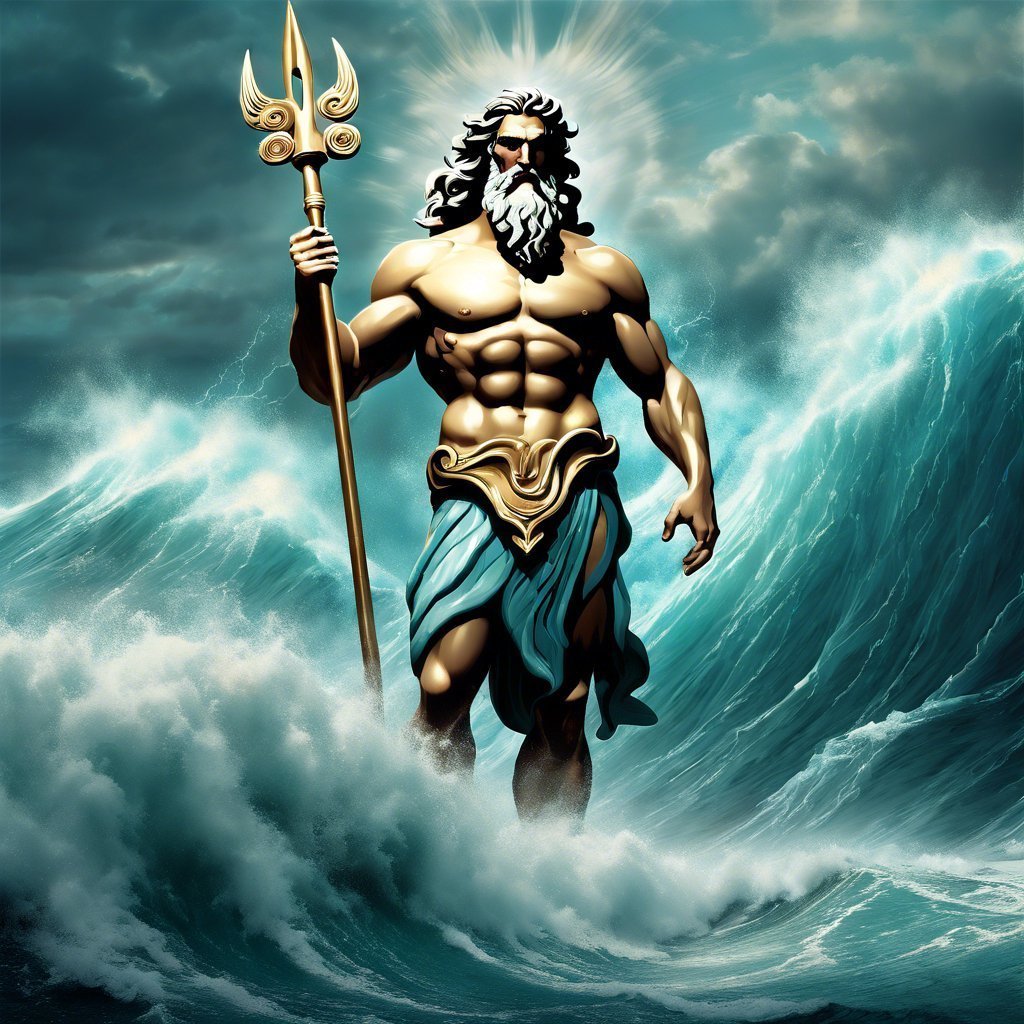
With a mere trident, Poseidon can summon the full force of the seas, unleashing devastating storms, raging waves, and powerful currents that can both sustain and destroy. His dominion over the waters is absolute, and his influence can be felt in the ebb and flow of the tides, the migration patterns of marine life, and the very rhythm of the earth itself.
Across the ancient world, Poseidon was revered and worshipped as a deity of immense power and importance. From the seafaring civilizations of Greece to the maritime cultures of the Mediterranean, the god of the seas was honored with grand temples, elaborate rituals, and offerings made in hopes of securing his favor and protection.
Even in the modern era, the legacy of Poseidon continues to captivate the human imagination. His mythic tales, his enduring symbols, and his profound influence on the natural world have all contributed to his enduring status as one of the most iconic and powerful deities in the pantheon of ancient Greek mythology.
Poseidon’s Wrath: Commanding the Tempests and Storms
Poseidon, the Greek god of the seas, was a formidable and awe-inspiring figure in the pantheon of ancient deities. As the brother of Zeus and Hades, he commanded the vast expanse of the oceans, wielding the power to conjure mighty storms, whip up treacherous waves, and even cause devastating earthquakes.
When Poseidon’s wrath was aroused, the very foundations of the earth trembled. With a mere gesture, he could summon towering walls of water, churning currents, and raging tempests that struck fear into the hearts of sailors and coastal dwellers alike. His dominion over the seas was absolute, and those who dared to defy him often faced the consequences of his unbridled fury.
Poseidon was known to be capricious and volatile, quick to anger and slow to forgive. Whether it was punishing those who had wronged him or simply asserting his authority, the god of the seas unleashed his might with devastating effect. Mighty ships were tossed about like toys, coastal cities were ravaged by towering waves, and the very fabric of the earth was rent asunder by his power.
To placate the tempestuous Poseidon, ancient mariners and coastal communities often made elaborate offerings and sacrifices. Temples were erected in his honor, and rituals were performed to seek his favor and protection. Even the mighty heroes of Greek mythology, such as Odysseus, were forced to navigate the treacherous waters of Poseidon’s domain, facing the wrath of the sea god at every turn.

Today, the legend of Poseidon and his command over the seas continues to captivate the human imagination. From the raging storms that batter our coastlines to the mysteries that lie beneath the waves, the power and influence of the god of the seas remains a testament to the awe-inspiring forces of nature that have shaped our world.
- Poseidon
- Greek Mythology
- Storms
- Oceans
- Earthquakes
Poseidon’s Trident: A Symbol of Unparalleled Power
In the pantheon of ancient Greek gods, Poseidon, the ruler of the seas, stands as a figure of immense power and authority. At the heart of his dominion lies the iconic trident, a symbol that has captivated the imaginations of countless individuals throughout history.
The trident, a three-pronged spear, is more than just a weapon in Poseidon’s arsenal; it is a manifestation of his unparalleled control over the vast and unpredictable oceans. With a single thrust of this mighty implement, Poseidon can summon mighty waves, conjure raging storms, and even shake the very foundations of the earth.
- The trident’s prongs represent Poseidon’s mastery over the three realms of the sea: the surface, the depths, and the shoreline.
- It is a symbol of his ability to command the tides, the currents, and the creatures that dwell within the watery depths.
- The trident’s sheer power is a testament to Poseidon’s status as one of the most formidable deities in the Greek pantheon.
Whether wielded in battle or used to assert his divine authority, Poseidon’s trident remains a enduring symbol of the god’s unparalleled power and the untamed forces that he commands over the vast and mysterious oceans.
Poseidon’s Underwater Realm: Exploring the Depths of the Sea
Poseidon, the mighty Greek god, reigned over the vast and mysterious expanse of the seas. His domain extended from the deepest oceanic trenches to the gentle waves that lapped against the shores. As the ruler of this aquatic realm, Poseidon commanded the tides, the currents, and the creatures that dwelled beneath the surface.
At the heart of Poseidon’s realm lies his magnificent underwater palace, a sprawling complex of grand halls, ornate chambers, and intricate gardens. This submerged sanctuary is a testament to the god’s power and wealth, adorned with gleaming pearls, shimmering coral, and the most exquisite treasures plucked from the sea’s depths.
Poseidon’s domain is home to a diverse array of mythical creatures, each with its own unique abilities and legends. From the mighty sea serpents that guard the ocean’s most treacherous passages to the graceful merfolk who serve as Poseidon’s messengers, these beings are a testament to the wonder and mystery of the underwater world.
Mortals who dare to venture into Poseidon’s realm must navigate a treacherous and ever-changing landscape, where powerful currents, fierce storms, and dangerous creatures lurk. Only the bravest and most skilled seafarers can hope to traverse these waters without incurring the wrath of the god himself.
As the lord of the seas, Poseidon wields immense power, capable of both creating and destroying. With a mere wave of his trident, he can summon raging storms, part the waters, or even cause the earth to tremble with earthquakes. Those who earn his favor are blessed with safe passage and bountiful catches, while those who offend him face the full fury of his wrath.
For those who dare to delve into the mysteries of Poseidon’s underwater realm, the rewards are vast and awe-inspiring. From the vibrant coral reefs teeming with life to the ancient shipwrecks that hold untold treasures, the depths of the sea offer a world of wonder and discovery, a realm where the impossible becomes reality.
- Keywords: Poseidon, Greek mythology, god of the seas, underwater realm, mythical creatures, ocean exploration
Poseidon’s Mythical Creatures: Guardians of the Watery Abode
Poseidon, the mighty Greek god of the seas, is not only revered for his command over the vast ocean, but also for the awe-inspiring creatures that inhabit his watery domain. These mythical beings, born from the depths of Poseidon’s imagination, serve as the guardians of his underwater kingdom, protecting the delicate balance of the marine ecosystem and enforcing the will of the sea god.
Among the most iconic of Poseidon’s mythical creatures are the Hippocampi, magnificent sea horses with the upper bodies of horses and the lower tails of fish. These magnificent creatures are not merely beasts of burden, but rather the steeds upon which Poseidon and his entourage of sea deities ride, traversing the depths of the ocean with unparalleled grace and power.
Striking fear into the hearts of sailors and coastal dwellers alike are the Krakens, colossal squid-like monsters that lurk in the darkest recesses of the ocean floor. With their massive tentacles and powerful jaws, these creatures are said to be capable of dragging entire ships beneath the waves, serving as the enforcers of Poseidon’s wrath against those who dare to defy the sea god’s dominion.
Accompanying Poseidon in his palace beneath the waves are the Nereids, the fifty beautiful sea nymphs who serve as his attendants and messengers. These graceful and captivating creatures are believed to possess the power to calm the seas and guide lost sailors to safety, making them both revered and feared by those who venture into Poseidon’s realm.
As the heralds and trumpeters of Poseidon’s court, the Tritons are half-human, half-fish creatures who wield powerful conch shells as their instruments of command. These mighty beings are responsible for announcing the arrival of Poseidon and his entourage, their booming calls echoing across the vast expanse of the ocean, instilling both awe and reverence in all who hear them.
Beyond the more well-known mythical creatures, Poseidon’s domain is also home to a host of other enigmatic sea monsters, whose true nature and purpose remain shrouded in mystery. From the serpentine Leviathans to the elusive Kraken-like beasts, these creatures serve as a constant reminder of the vast and untamed power of the oceans, and the boundless imagination of the sea god himself.
These mythical guardians of Poseidon’s watery abode are not merely the stuff of legend, but rather integral components of the rich and captivating mythos that surrounds the ruler of the seas. Their presence serves to imbue the ocean with a sense of wonder, mystery, and, at times, dread, ultimately reinforcing the profound respect and reverence that all who venture into Poseidon’s realm must maintain.
Poseidon’s Gifts: The Bounty of the Seas and the Coasts
As the mighty ruler of the seas, Poseidon’s domain encompasses the vast expanse of the oceans, the untamed power of the waves, and the abundant resources that lie beneath the surface. From the shimmering depths to the rugged coastlines, the gifts of Poseidon are woven into the very fabric of the natural world, sustaining life and shaping the course of human civilization.
Poseidon’s generosity is manifested in the bountiful resources of the seas. Teeming with a diverse array of marine life, the oceans provide a rich source of sustenance, from the succulent seafood that graces our tables to the valuable materials that fuel our industries. The schools of fish, the shimmering crustaceans, and the majestic whales are all part of Poseidon’s grand design, sustaining the delicate balance of the marine ecosystem.
Beyond the open waters, Poseidon’s influence extends to the rugged coastlines, where the meeting of land and sea gives rise to a unique and dynamic environment. The sandy beaches, the towering cliffs, and the sheltered coves offer a bounty of their own, providing habitats for a diverse array of flora and fauna, as well as resources for human settlement and exploration.
Poseidon’s gifts extend to the realm of seafaring, as the god of the seas is also revered as the patron of sailors and ships. The favorable winds, the calm waters, and the guiding currents have all been harnessed by mariners throughout history, enabling them to venture forth and explore the vast expanse of the oceans, connecting civilizations and expanding the boundaries of human knowledge.
- The seas and coasts remain integral to the cultural, economic, and environmental well-being of humanity, a testament to the enduring legacy of Poseidon’s gifts.
- From the sustenance they provide to the inspiration they evoke, the bounty of the seas and the coasts continue to shape the course of human civilization, reminding us of the profound impact that the god of the seas has had on our world.
Poseidon’s Vengeance: Punishing the Hubris of Mortals
As the mighty god of the seas, Poseidon was known for his immense power and his willingness to unleash his fury upon those who dared to challenge his dominion. When mortals displayed hubris, a profound and arrogant sense of self-importance, Poseidon would not hesitate to punish them, demonstrating the consequences of defying the immortal gods.
One of the most famous examples of Poseidon’s vengeance can be found in the epic tale of Odysseus, the legendary Greek hero. After Odysseus and his crew offended the god by blinding his son, the Cyclops Polyphemus, Poseidon unleashed his wrath, subjecting Odysseus to a perilous journey home filled with treacherous storms, shipwrecks, and the loss of his companions.
Poseidon’s anger was not limited to Odysseus alone. He was known to punish any mortal who dared to challenge the authority of the gods or to boast of their own achievements, believing themselves superior to the divine beings that ruled the cosmos. Hubris was a grave offense in the eyes of Poseidon, and he would stop at nothing to ensure that those who displayed it were brought low.
- The story of Orion, a mighty hunter who boasted of his prowess and was subsequently killed by Poseidon, serves as a cautionary tale of the consequences of hubris.
- The Niobe myth, in which a woman who claimed to be superior to the goddess Leto was punished by Poseidon, further illustrates the god’s intolerance for mortal arrogance.
Poseidon’s vengeance was a powerful reminder to the people of ancient Greece that the gods were to be respected and revered, not challenged or defied. Through his actions, the god of the seas demonstrated the importance of humility and the need for mortals to acknowledge the limits of their own abilities in the face of the divine.
Poseidon’s Aquatic Dominion: Ruling the Tides and Currents
Poseidon, the ancient Greek god of the seas, stood as a formidable and commanding figure in the pantheon of deities. As the brother of Zeus and Hades, Poseidon’s dominion extended far beyond the confines of the mortal realm, encompassing the vast expanse of the oceans, the powerful currents, and the untamed waves that shaped the world.
Wielding the mighty trident, a symbol of his authority, Poseidon possessed the ability to control the tides, stir up tempestuous storms, and even cause earthquakes that shook the very foundations of the earth. With a mere gesture, he could summon the might of the seas, unleashing their fury upon those who dared to challenge his supremacy.
To those who honored and revered him, Poseidon was a benevolent deity, guiding sailors and seafarers through treacherous waters, ensuring safe passage and bountiful catches. However, to those who incurred his wrath, Poseidon could become a relentless and formidable force, unleashing the full power of the oceans to punish and destroy.
Poseidon’s influence extended beyond the surface of the seas, as he was believed to be the creator and ruler of the legendary underwater city of Atlantis. This mythical realm, a testament to Poseidon’s engineering prowess and divine authority, captivated the imaginations of the ancient Greeks and continues to captivate the modern world.
Poseidon’s relationship with the sea was one of deep, unwavering connection. As the god of the oceans, he was intimately attuned to its rhythms, its currents, and its ever-changing moods. He was the embodiment of the sea’s power, both in its life-sustaining and destructive capacities, a constant reminder of the awe-inspiring forces that shaped the world.
Throughout the ancient Greek world, Poseidon was revered and worshipped, with temples and shrines dedicated to his honor dotting the coastlines and islands. His legacy continued to influence art, literature, and the cultural traditions of the Mediterranean civilizations, solidifying his place as one of the most significant and enduring figures in Greek mythology.
Poseidon’s Eternal Reign: The Enduring Legacy of the Sea God
Poseidon, the Greek god of the seas, was a powerful and revered figure in ancient mythology. As the brother of Zeus and Hades, he commanded the vast expanse of the oceans, wielding his trident with unparalleled authority. His domain encompassed not only the open waters but also the rivers, springs, and all other bodies of water that graced the Earth.
Poseidon was known for his unpredictable and often tumultuous temperament. He could whip up raging storms, send towering waves crashing against the shores, and even cause devastating earthquakes with a mere strike of his trident. Sailors and coastal dwellers lived in constant fear of his wrath, knowing that their lives were at the mercy of the capricious sea god.
Despite his fearsome reputation, Poseidon was also revered as the patron of seafarers, fishermen, and shipbuilders. Those who braved the treacherous seas sought his favor, offering sacrifices and prayers in the hope of safe passage and bountiful catches. The construction of ships and the development of maritime technology were also under his divine protection.
The legacy of Poseidon has endured through the ages, inspiring countless works of art, literature, and cultural traditions. His iconic image, with his trident and flowing hair, remains a powerful symbol of the untamed and awe-inspiring power of the oceans. Even in modern times, the worship of Poseidon and the reverence for the sea continue to shape the beliefs and practices of coastal communities around the world.
- Poseidon was the Greek god of the seas, known for his tempestuous and unpredictable nature.
- He commanded the vast expanse of the oceans, including rivers, springs, and all other bodies of water.
- Poseidon was the patron of seafarers, fishermen, and shipbuilders, offering protection and prosperity to those who sought his favor.
- His enduring legacy continues to shape the beliefs and practices of coastal communities around the world.
Poseidon’s Celestial Connections: The Cosmic Influence of the Seas
Poseidon, the mighty Greek god of the seas, was not solely a ruler of the earthly oceans, but also wielded a profound influence over the celestial realms. His domain extended beyond the watery depths, encompassing the very heavens themselves. As the god of the seas, Poseidon’s power was intricately linked to the movements and rhythms of the cosmos, shaping the tides, currents, and even the celestial bodies that governed the oceans.
Poseidon’s control over the tides was not merely a terrestrial phenomenon, but a cosmic dance orchestrated by his divine influence. The ebb and flow of the oceans were intimately tied to the phases of the moon, with Poseidon’s trident guiding the waters in sync with the celestial bodies. The rise and fall of the tides were a physical manifestation of Poseidon’s dominion over the seas, and by extension, his power to manipulate the very fabric of the cosmos.
Poseidon’s role as the god of the seas was not limited to the management of the oceans; he also played a crucial part in the art of seafaring and celestial navigation. Mariners and explorers of the ancient world relied on the celestial bodies to guide their ships across the vast expanse of the seas, and Poseidon was believed to have a profound influence over these celestial navigational aids. The stars, constellations, and even the sun and moon were seen as Poseidon’s celestial emissaries, guiding sailors to their destinations and ensuring the safe passage of their vessels.
Poseidon’s celestial connections extended beyond the immediate influence of the tides and seafaring. His domain was believed to be intricately woven into the very fabric of the cosmic cycle, with the ebb and flow of the seas mirroring the rhythms of the heavens. The ancient Greeks saw the oceans as a reflection of the larger cosmic order, with Poseidon’s trident orchestrating the intricate dance between the earthly and the celestial realms.
The enduring legacy of Poseidon’s celestial connections can be seen in the enduring fascination and reverence that the ancient Greeks held for the god of the seas. His power over the tides, celestial navigation, and the cosmic cycle of the oceans have left an indelible mark on the cultural and spiritual traditions of the ancient world, and continue to captivate the imagination of scholars and enthusiasts alike.