Wikknet
Demeter, the Mighty Mother Goddess of the Earth
Discover the mighty Demeter, the revered Greek goddess of fertility, abundance, and the natural world. Explore her profound influence on the harvest, the cycle of life, and her unparalleled power as the sovereign matriarch of the Earth.
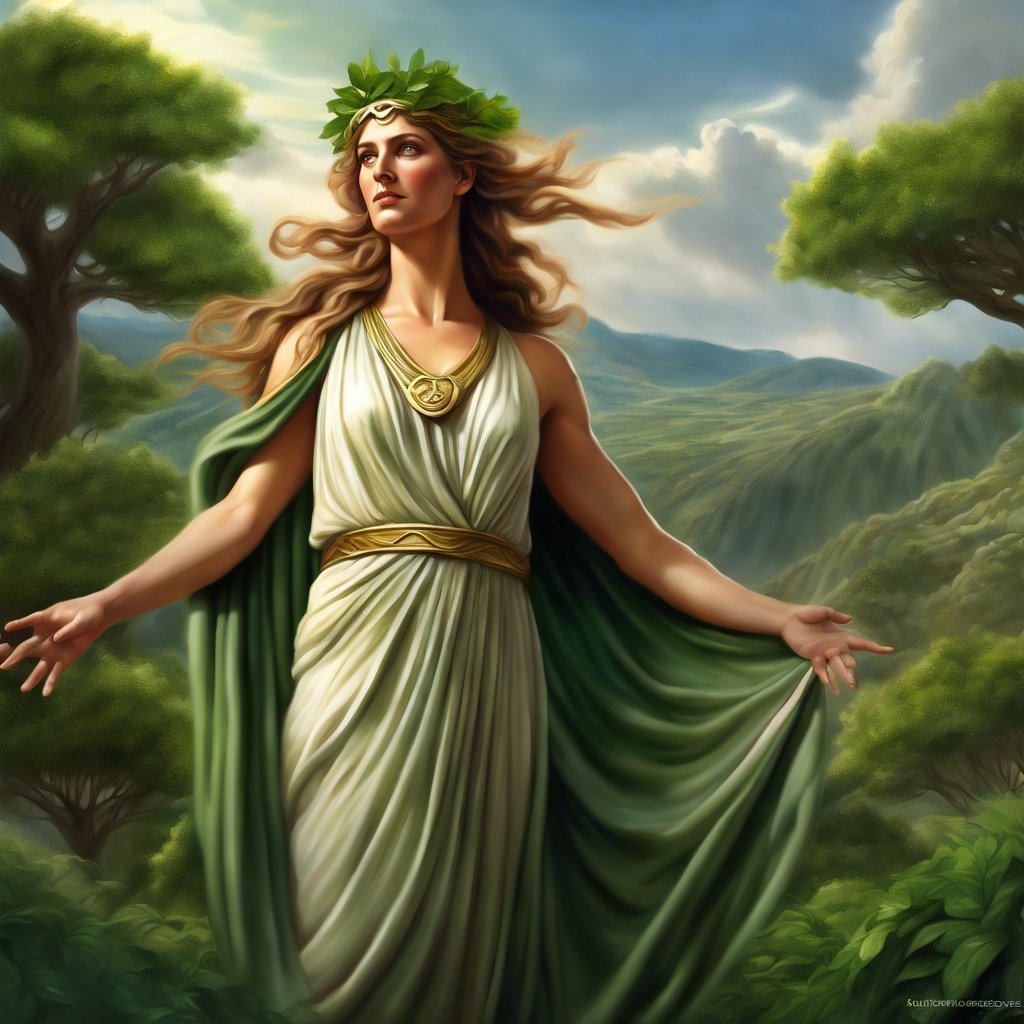
Demeter, the Sovereign Goddess of Fertility and Abundance
Demeter, the revered Olympian goddess, is the sovereign deity of fertility, agriculture, and the bountiful earth. As the daughter of the Titans Kronos and Rhea, Demeter’s divine power is deeply rooted in the cycle of growth, decay, and renewal that governs the natural world.
Demeter’s most famous myth is the abduction of her beloved daughter, Persephone, by the god of the underworld, Hades. When Persephone is taken to the realm of the dead, Demeter’s grief and despair cause the earth to wither and become barren. This cyclical separation and reunion of mother and daughter is believed to be the driving force behind the changing of the seasons, with Demeter’s joy at Persephone’s return heralding the blooming of spring and her sorrow at Persephone’s departure ushering in the cold of winter.
The worship of Demeter was central to many ancient Greek civilizations, with the Eleusinian Mysteries being one of the most important religious festivals in the classical world. These sacred rites, held in honor of Demeter and Persephone, promised initiates a more fulfilling afterlife and a deeper connection to the rhythms of the natural world.
- Grains and Crops: As the goddess of agriculture, Demeter is often depicted holding sheaves of wheat or other grains, symbolizing her role in ensuring bountiful harvests.
- The Poppy: The poppy flower, with its ability to induce sleep and altered states of consciousness, is closely associated with Demeter and her mysteries.
- The Cornucopia: The horn of plenty, overflowing with fruits and vegetables, is a common symbol of Demeter’s abundance and generosity.
The Bountiful Matron: Demeter’s Influence on the Harvest
Demeter, the revered Greek goddess of the harvest, was a central figure in the pantheon of ancient deities. As the bountiful matron, she was responsible for the fertility of the earth, ensuring the abundance of crops and the wellbeing of the people. Her influence on the harvest was profound, as she was believed to control the cycle of growth and decay that governed the agricultural cycle.
At the heart of Demeter’s story lies the myth of her daughter, Persephone, who was abducted by Hades, the god of the underworld. Distraught by her daughter’s disappearance, Demeter’s grief caused the earth to become barren, and she refused to allow the land to bear fruit until Persephone’s return. This cyclical pattern of growth and dormancy, mirroring Persephone’s time spent in the underworld and her subsequent return to the surface, became the basis for the changing of the seasons.
To honor Demeter and ensure the continued fertility of the land, the ancient Greeks held several festivals and rituals throughout the year. The most prominent of these was the Eleusinian Mysteries, a series of sacred ceremonies that celebrated the goddess and her daughter. These elaborate rites, which were shrouded in secrecy, were believed to confer blessings of prosperity and spiritual enlightenment upon the participants.
Even in modern times, Demeter’s influence can be seen in the reverence and respect accorded to the land and its bounty. As a symbol of the earth’s fertility and the cycle of life, she continues to be celebrated and honored by those who recognize the importance of the natural world in sustaining human existence. Demeter’s legacy as the bountiful matron, the mighty mother goddess of the earth, endures as a testament to the profound connection between humanity and the natural cycles that sustain us.
Demeter, the Benevolent Nurturer of the Natural World
Demeter, the ancient Greek goddess of the harvest, was revered as the benevolent nurturer of the natural world. As the daughter of the Titans Cronos and Rhea, Demeter’s domain encompassed the cycle of growth, decay, and rebirth that governed the earth’s vegetation and the changing of the seasons.
One of the most famous myths associated with Demeter is the tale of her daughter, Persephone, who was abducted by the god Hades and taken to the Underworld. Demeter’s grief over the loss of her daughter caused the earth to become barren and lifeless, a reflection of her own sorrow. Eventually, a compromise was reached, allowing Persephone to spend part of the year with her mother and the rest in the Underworld, thus explaining the changing of the seasons.
The cult of Demeter was centered in the ancient city of Eleusis, where the Eleusinian Mysteries, a series of initiation rites and ceremonies, were held in her honor. These sacred rituals were believed to offer participants a glimpse of the afterlife and a promise of a bountiful harvest.
As the goddess of agriculture, Demeter was revered for her role in ensuring the fertility of the earth and the abundance of the harvest. She was often depicted holding sheaves of wheat or a cornucopia, symbolizing her power to provide sustenance and prosperity to the people.

- Demeter was considered a benevolent and nurturing goddess, who cared for the well-being of humanity and the natural world.
- Her myths and rituals emphasized the cyclical nature of life, death, and rebirth, mirroring the rhythms of the seasons and the growth of crops.
- The Eleusinian Mysteries, which celebrated Demeter and Persephone, were among the most important religious events in ancient Greece.
The Majestic Matriarch: Demeter’s Dominion over the Earth
Demeter, the ancient Greek goddess of the harvest, agriculture, and fertility, was revered as one of the most powerful and influential deities of the Olympian pantheon. As the Mighty Mother Goddess, Demeter’s dominion over the Earth was absolute, her bountiful gifts sustaining the very fabric of life on the mortal realm.
At the heart of Demeter’s mythos lies the tragic tale of her beloved daughter, Persephone, and the cyclical nature of the seasons. When the Underworld god, Hades, abducted Persephone to be his bride, Demeter’s grief and rage plunged the Earth into a state of unending winter. It was only through the intervention of Zeus that a compromise was reached, allowing Persephone to spend part of the year with her mother and the remainder with Hades, thus giving rise to the changing of the seasons.
As the Goddess of the Harvest, Demeter’s bounty was essential to the sustenance of humankind. Her gifts of grain, the cultivation of crops, and the fertility of the land were celebrated through the Eleusinian Mysteries, a sacred rite that offered initiates a glimpse into the afterlife and the promise of a bountiful existence in the hereafter.
- The Eleusinian Mysteries were among the most important religious festivals in ancient Greece, drawing devotees from across the Hellenic world.
- The rituals, shrouded in secrecy, were believed to have been established by Demeter herself, imparting the knowledge of agriculture and the cycle of life, death, and rebirth.
- Participation in the Eleusinian Mysteries was seen as a mark of piety and devotion, granting the initiated a deeper understanding of the divine order and the promise of a blessed afterlife.
Even in the modern era, the enduring legacy of Demeter, the Mighty Mother Goddess, can be seen in the reverence and respect accorded to the natural world and the cycles of life that sustain us. As humanity grapples with the delicate balance of our relationship with the Earth, the timeless wisdom and power of Demeter serve as a poignant reminder of our profound connection to the land that nourishes and sustains us all.
Demeter, the Revered Protector of the Cycle of Life
Demeter, the revered Greek goddess of the harvest, agriculture, and fertility, has long been celebrated as the Mighty Mother Goddess of the Earth. Her benevolent presence was integral to the cyclical nature of life, governing the perpetual renewal of the seasons and the bountiful sustenance of all living creatures.
At the heart of Demeter’s dominion was her role as the protector of the cycle of life. As the goddess who presided over the planting, growth, and harvesting of crops, she was intimately connected to the rhythms of nature and the delicate balance that sustained all life on Earth. Her ability to bestow or withhold her blessings of fertility and abundance was a testament to the power she wielded over the natural world.
The most famous myth associated with Demeter is the story of her daughter, Persephone, and the grief that the goddess experienced when Persephone was abducted by Hades, the lord of the underworld. In her sorrow, Demeter withdrew her divine gifts, causing the earth to become barren and lifeless. This mythic tale eloquently captures Demeter’s profound connection to the cycle of life, as well as her unwavering dedication to the well-being of her daughter and all of humanity.
Throughout the ages, Demeter has been venerated as a symbol of the earth’s fecundity, the sustenance of life, and the power of the natural world. Her temples and festivals were sites of communal celebration and reverence, where the faithful sought her blessings for bountiful harvests and the continuation of the cycle of life. Even in the modern era, Demeter’s enduring legacy continues to inspire awe and reverence, as we recognize the vital role that the natural world plays in sustaining our own existence.
- Demeter, the Mighty Mother Goddess of the Earth
- Persephone, the daughter of Demeter
- Hades, the lord of the underworld
The Omnipotent Goddess: Demeter’s Dominance in Greek Mythology
In the pantheon of Greek mythology, Demeter stands as a towering figure, the Mighty Mother Goddess whose dominion over the earth and its abundance is unparalleled. As the daughter of the Titans Cronus and Rhea, Demeter’s pedigree is one of primordial power, rooted in the very foundations of the cosmos.
Demeter’s story is intrinsically linked to that of her beloved daughter, Persephone, whose abduction by the god of the underworld, Hades, plunges the world into a state of profound grief and barrenness. In her despair, Demeter withdraws her blessings, causing the earth to wither and die, until her daughter is finally restored to her.
This cyclical narrative of loss and renewal, death and rebirth, lies at the heart of Demeter’s mythology, reflecting the eternal rhythms of the natural world. As the Goddess of the Harvest, Demeter’s powers are intimately tied to the fecundity of the earth, her annual reunion with Persephone signaling the return of life and abundance.
Demeter’s influence extended far beyond the realm of myth, as she was the central figure in the Eleusinian Mysteries, a sacred rite of passage that promised initiates a glimpse of the afterlife and a deeper understanding of the mysteries of existence. These rituals, held in her honor, underscored Demeter’s role as a giver of life and death, a guardian of the cycle that binds all living things.
In the pantheon of Greek deities, Demeter stands as an omnipotent figure, her dominion over the earth and its abundance unquestioned. Her myths and rituals continue to captivate and inspire, for Demeter’s story is one of the fundamental forces that shape our world, a testament to the enduring power of the Mighty Mother Goddess.
Demeter, the Gracious Giver of Sustenance and Prosperity
Demeter, the revered Mother Goddess of the Earth, was a central figure in ancient Greek mythology and religion. As the goddess of agriculture, grain, and the harvest, Demeter was celebrated for her role in providing the sustenance and prosperity that sustained human civilization.
At the heart of Demeter’s mythology was her deep bond with her daughter, Persephone, the Queen of the Underworld. When Persephone was abducted by Hades, Demeter’s grief and anger caused her to withhold her blessings from the Earth, leading to a period of famine and desolation. This myth not only highlighted Demeter’s power over the cycles of growth and decay but also her immense love and protective nature as a mother.
Demeter’s benevolence, however, was not limited to her own daughter. As the gracious giver of sustenance and prosperity, she was revered by all who depended on the land for their livelihood. Her temple at Eleusis, where the Eleusinian Mysteries were celebrated, was a sacred site where the ancient Greeks sought her blessings and guidance.
- Demeter’s role as the Goddess of the Harvest was central to the agricultural cycles that sustained ancient Greek society.
- She was celebrated for her abundant provision of grain, fruits, and vegetables, which were seen as her gifts to humanity.
- Demeter’s festivals, such as the Thesmophoria and the Eleusinian Mysteries, were crucial events in the ancient Greek religious calendar, where her worshippers sought her favor and protection.
The Mighty Mother: Demeter’s Unparalleled Power and Influence
Demeter, the ancient Greek goddess of the harvest, was a central figure in the pantheon of deities. As the Mighty Mother of the Earth, she was revered for her ability to bring forth the bountiful crops that sustained human civilization. Her domain encompassed not only the fertile fields and orchards but also the very cycle of life and death that governed the natural world.
Demeter’s most renowned myth is the tale of her daughter, Persephone, who was abducted by the god of the underworld, Hades. This tragic event plunged the goddess into a deep grief, causing her to withhold her blessings from the land. The world descended into a state of barren desolation until Persephone’s eventual return, marking the change of seasons and the renewal of life.
The profound impact of Demeter’s power and influence was celebrated in the Eleusinian Mysteries, a sacred rite that drew devotees from across the ancient Greek world. These secretive ceremonies offered initiates a glimpse into the mysteries of the afterlife, emphasizing the cyclical nature of existence and the crucial role of the Mighty Mother in sustaining the balance of the cosmos.
- Demeter’s influence extended far beyond the realm of agriculture, as she was also associated with the protection of marriage and the family.
- Her benevolent nature and role as a nurturer made her a beloved figure among the ancient Greeks, who sought her favor through offerings and devotion.
- The enduring legacy of Demeter’s power and significance continues to captivate scholars and enthusiasts alike, underscoring her enduring importance in the rich tapestry of Greek mythology.
Demeter, the Venerated Custodian of the Seasons and Vegetation
Demeter, the ancient Greek goddess of the harvest, agriculture, and the changing of the seasons, was revered as a powerful and benevolent deity. As the daughter of the Titans Cronus and Rhea, Demeter’s domain encompassed the vital cycle of growth, decay, and renewal that sustained life on Earth.
The Myth of Persephone: Demeter’s most renowned myth is the abduction of her daughter, Persephone, by the god of the underworld, Hades. When Persephone was taken to the underworld, Demeter’s grief caused the land to become barren and lifeless, ushering in the cold, dark months of winter. It was only after Persephone’s return to the surface that Demeter’s joy would restore the land to its verdant splendor, marking the arrival of spring and summer.
The Eleusinian Mysteries: The worship of Demeter was central to the Eleusinian Mysteries, one of the most sacred and influential religious rites in ancient Greece. These annual ceremonies celebrated the myth of Persephone and the cyclical nature of life, death, and rebirth, offering initiates a glimpse of the afterlife and the promise of a bountiful harvest.
The Venerated Goddess: Demeter was revered as a nurturing, protective, and life-giving force. She was invoked by farmers, gardeners, and all who depended on the land for their sustenance. Her temples and sanctuaries were places of refuge, where the faithful could seek her blessings and guidance during times of hardship or uncertainty.
- Demeter’s symbols included the poppy, the torch, and the cornucopia, representing her dominion over the abundance of the earth.
- She was often depicted as a matronly figure, crowned with grain or wearing a veil, reflecting her role as the benevolent Mother Goddess.
- The festivals and rituals honoring Demeter, such as the Thesmophoria and the Eleusinian Mysteries, were integral to the cultural and religious fabric of ancient Greek society.
The Indomitable Deity: Demeter’s Enduring Legacy as a Goddess of the Earth
In the pantheon of ancient Greek deities, Demeter stands as a towering figure, revered as the Goddess of the Earth, Agriculture, and Fertility. As the daughter of Cronus and Rhea, Demeter’s roots are deeply intertwined with the very essence of the land, embodying the cyclical nature of growth, decay, and rebirth.
At the heart of Demeter’s legend lies the tragic tale of her beloved daughter, Persephone, who was abducted by the god Hades and taken to the Underworld. Demeter’s anguish over her daughter’s disappearance is a poignant reminder of the profound connection between a mother and child, as well as the delicate balance of life and death that underpins the natural world.
In her grief, Demeter’s powers were unleashed, and she withheld the fertility of the earth, causing a devastating famine that threatened the very existence of mankind. This mythic event is believed to be the origin of the changing seasons, as Demeter’s mood and emotions directly influenced the cycle of growth and dormancy in the natural world.
- The ancient Greeks recognized the immense power and importance of Demeter, and established the Eleusinian Mysteries, a series of sacred rites and initiations dedicated to the Goddess.
- These rituals, held annually in the city of Eleusis, allowed devotees to commune with the divine and partake in the eternal cycle of life, death, and rebirth that Demeter represents.
Even in the modern era, the legacy of Demeter, the Mighty Mother Goddess of the Earth, continues to resonate. Her timeless symbols of grain, the poppy, and the cornucopia remain potent reminders of the enduring power of the natural world and the essential role of the divine feminine in sustaining all life on our planet.