

Tech
ChatGPT and the Future of Artificial Intelligence: Pioneering the Next Epoch of Human-Machine Synergy
Explore how ChatGPT is shaping the future of AI by revolutionizing communication, enhancing human-machine collaboration, transforming industries, and addressing ethical challenges, paving the way for a new era of advanced AI and personalized user experiences.
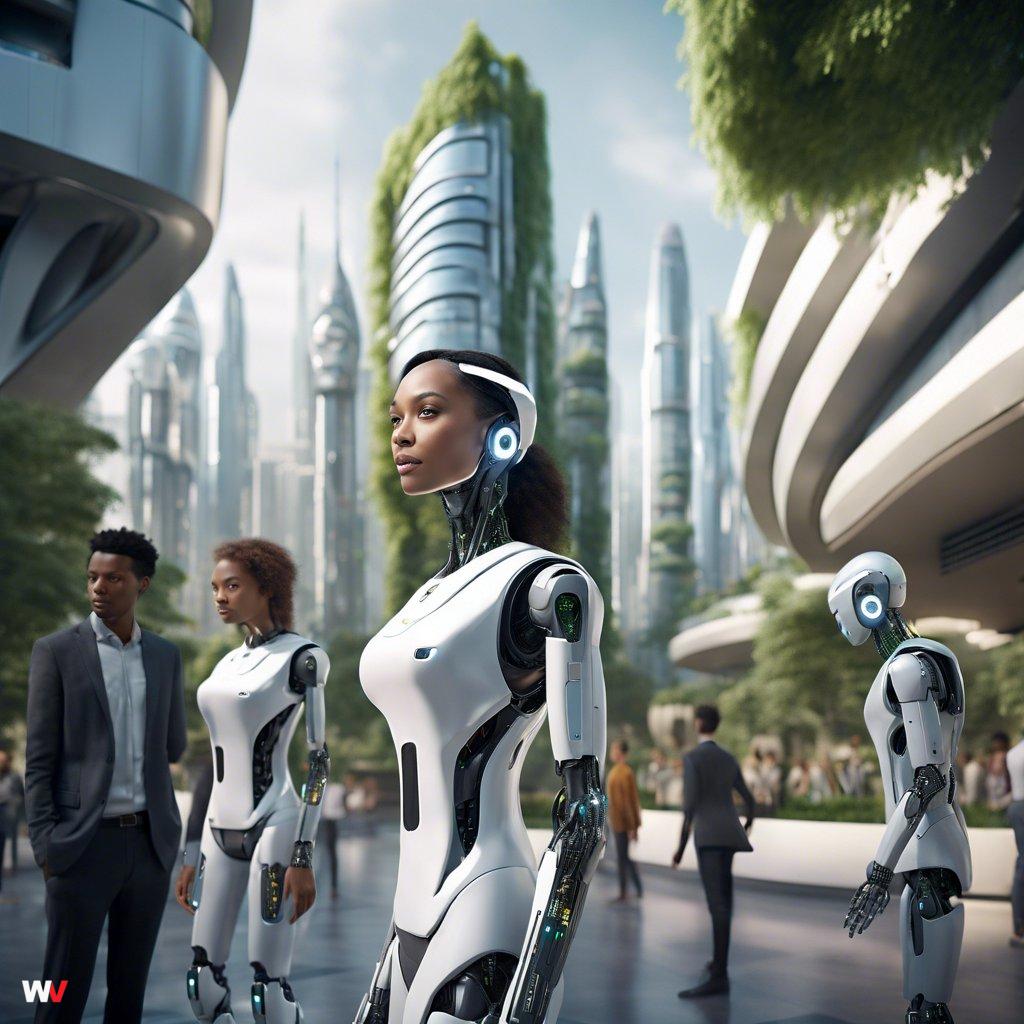
Revolutionizing Communication: ChatGPT’s Role in Modern Dialogues
Artificial Intelligence (AI) has become an integral part of our daily lives, influencing various industries, and revolutionizing the way we communicate. Among the myriad of AI technologies, ChatGPT stands out as a groundbreaking innovation in natural language processing (NLP). This article delves into ChatGPT’s role in transforming modern dialogues, enhancing human-machine interactions, and its potential future impacts.
ChatGPT, developed by OpenAI, is a language model that leverages deep learning techniques to generate human-like text based on the input it receives. By utilizing a vast dataset, ChatGPT can engage in conversations, answer queries, and even exhibit creative writing abilities. Its applications span from customer service bots to personal virtual assistants, making it a versatile tool in today’s digital age.
One of the most significant impacts of ChatGPT is in the realm of customer service. Companies are increasingly deploying AI-powered chatbots to handle customer queries, providing instant responses and 24/7 availability. ChatGPT’s ability to understand and generate natural language allows it to offer personalized solutions, thereby improving customer satisfaction and operational efficiency.
ChatGPT has paved the way for more advanced virtual assistants capable of understanding and executing complex tasks. From setting reminders to providing detailed information on a wide array of topics, these assistants are becoming indispensable in personal and professional settings. The blend of AI with everyday tasks underscores the seamless integration of technology into our lives.
In the educational sector, ChatGPT is transforming the way students and educators interact with information. It serves as a tutor by explaining complex concepts, answering questions, and providing additional resources. This personalized approach to learning helps cater to individual student needs, promoting a more inclusive and effective educational experience.
Despite its numerous advantages, the use of ChatGPT also brings forth several challenges and ethical considerations. Issues such as data privacy, the potential for generating misleading information, and the need for human oversight are critical factors that must be addressed. Ensuring that ChatGPT operates within ethical guidelines is paramount to its successful integration into society.
The future of ChatGPT and similar AI technologies is promising. As AI continues to evolve, we can anticipate even more sophisticated models that further bridge the gap between human and machine communication. The potential applications are vast, ranging from advanced personal assistants to innovative tools in healthcare and beyond.
ChatGPT is at the forefront of revolutionizing communication, offering unprecedented opportunities for enhancing human-machine dialogues. Its role in customer service, personal assistance, education, and other areas demonstrates its versatility and transformative potential. However, addressing the associated challenges and ethical considerations will be crucial in harnessing the full benefits of this technology.
The Evolution of AI: From Simple Algorithms to ChatGPT
Artificial Intelligence (AI) has captivated human imagination and effort for decades. The journey began with simple algorithms designed to execute basic tasks and evolved into sophisticated systems capable of complex decision-making.
In the early days, AI was limited to rule-based systems that followed predefined instructions. These simple algorithms were the foundation of AI, enabling machines to perform tasks like calculations and data sorting.

- 1950s: Alan Turing proposed the concept of a machine that could simulate any human intelligence task.
- 1960s: The advent of symbolic AI and the development of the first AI programs.
The introduction of machine learning marked a significant shift in AI’s evolution. Unlike rule-based systems, machine learning enabled computers to learn from data. This led to the development of neural networks and other advanced techniques.
- 1980s: Emergence of neural networks and the backpropagation algorithm.
- 1990s: Growth of data-driven approaches and the rise of statistical learning.
Deep learning, a subset of machine learning, brought about a revolution in AI. With the ability to process vast amounts of data, deep learning algorithms achieved remarkable feats in image and speech recognition.
- 2010s: Convolutional neural networks (CNNs) and recurrent neural networks (RNNs) gained prominence.
- 2012: Deep learning models outperformed humans in image classification tasks.
Natural Language Processing (NLP) emerged as a crucial area of AI, aiming to enable machines to understand and generate human language. NLP advancements led to the creation of sophisticated language models.
- 2018: Introduction of the Transformer model, revolutionizing NLP tasks.
- 2019: The release of GPT-2, demonstrating the potential of large-scale language models.
ChatGPT represents the culmination of decades of AI research. Built upon the GPT-3 architecture, ChatGPT is capable of engaging in human-like conversations, answering questions, and generating coherent text.
- 2020: GPT-3, with 175 billion parameters, became one of the largest language models.
- 2021: ChatGPT was introduced, offering enhanced conversational capabilities.
The journey of AI is far from over. Future advancements will likely focus on improving generalization, ethics, and integration with human activities. The goal is to create AI systems that not only mimic human intelligence but also augment human capabilities.
- Continued research in general AI and multi-modal learning.
- Emphasis on ethical considerations and responsible AI development.
Human-Machine Collaboration: Unlocking New Potentials with ChatGPT
The advent of advanced AI technologies, such as ChatGPT, is revolutionizing the way humans interact with machines. By enhancing collaboration between humans and AI, we are unlocking new potentials that promise to reshape various industries and improve our daily lives.
ChatGPT facilitates seamless communication between humans and machines, making interactions more intuitive and efficient. This technology can understand and generate human-like text, enabling natural dialogues and minimizing misunderstandings.
Integrating ChatGPT into workplaces can significantly boost productivity. By automating routine tasks, providing instant information, and assisting in decision-making processes, employees can focus on more complex and creative tasks.
In the field of education, ChatGPT offers personalized learning experiences. It can serve as a virtual tutor, providing tailored content and feedback to students, thereby enhancing their learning outcomes.
Customer service is another domain where ChatGPT is making a substantial impact. It can handle a large volume of inquiries, provide accurate responses, and offer 24/7 support, leading to improved customer satisfaction.
By leveraging ChatGPT, businesses can foster innovation. The AI can assist in brainstorming sessions, generate creative ideas, and predict market trends, helping companies stay ahead of the competition.
While the benefits of human-machine collaboration are immense, it is crucial to address ethical considerations. Ensuring data privacy, preventing biases, and maintaining transparency are essential to building trust in AI systems like ChatGPT.
The collaboration between humans and machines, facilitated by technologies like ChatGPT, is unlocking new potentials across various sectors. As we continue to integrate AI into our lives, it is imperative to navigate this journey with a focus on ethical practices and mutual enhancement.
Ethics and Governance: Navigating the Challenges of Advanced AI
As artificial intelligence (AI) technologies rapidly evolve, the importance of ethical considerations and robust governance frameworks becomes increasingly critical. This section delves into the ethical and governance challenges that come with the advancement of AI, particularly focusing on the role of systems like ChatGPT.
Bias and Fairness: One of the foremost ethical challenges is ensuring that AI systems do not perpetuate or amplify biases. Training data often contain biases reflecting societal prejudices, and without meticulous oversight, AI can reinforce these biases.
Privacy: Advanced AI systems can process vast amounts of data, raising significant privacy concerns. Safeguards must be implemented to protect individual data and ensure confidentiality.
Transparency: The ‘black box’ nature of many AI systems makes it difficult to understand how decisions are made. Enhancing transparency is vital for accountability and trust.
Accountability: Determining who is accountable when an AI system causes harm is a complex issue. Clear guidelines and frameworks are needed to address liability and responsibility.
Regulatory Policies: Governments and international bodies are working on policies to regulate AI development and deployment. These policies aim to ensure ethical compliance and protect public interest.
Industry Standards: Establishing industry standards can help in creating uniform practices that prioritize ethical considerations in AI development.
Public Participation: Engaging the public in discussions about AI governance can provide diverse perspectives and enhance legitimacy and acceptance of AI technologies.
Interdisciplinary Collaboration: Collaboration between technologists, ethicists, policymakers, and other stakeholders is essential for developing comprehensive governance frameworks.
Examining specific instances where ethical and governance challenges in AI have been navigated can provide valuable lessons. Cases such as the deployment of facial recognition technology and the use of AI in criminal justice highlight the complexities and the need for careful consideration of ethical implications.
The rapid advancement of AI technologies like ChatGPT necessitates a proactive approach to ethics and governance. By addressing these challenges through robust frameworks and interdisciplinary collaboration, we can harness the full potential of AI while safeguarding societal values and human rights.
AI in Everyday Life: How ChatGPT is Transforming Industries
Artificial Intelligence (AI) has rapidly evolved over the past decade, and one of its most exciting developments is ChatGPT. This advanced language model is already making significant strides in various sectors, revolutionizing how we interact with technology and transforming many industries.
One of the most profound impacts of ChatGPT is in customer service. Companies are increasingly deploying ChatGPT-powered chatbots to handle customer inquiries, provide support, and resolve issues. This not only enhances customer satisfaction but also reduces operational costs.
- 24/7 Availability: ChatGPT can provide round-the-clock assistance, ensuring customers receive help whenever they need it.
- Instant Responses: Queries are addressed in real-time, improving response times and customer experience.
- Consistency: ChatGPT offers consistent and accurate information, reducing the chances of human error.
In the healthcare industry, ChatGPT is being utilized to support medical professionals and patients alike. It assists in diagnosing conditions, offering treatment suggestions, and even providing mental health support.
- Virtual Health Assistants: Patients can receive preliminary diagnoses and advice without needing to visit a doctor.
- Mental Health Support: ChatGPT offers a safe space for individuals to discuss their feelings and receive guidance.
- Administrative Assistance: AI helps in scheduling appointments, managing patient records, and other administrative tasks.
ChatGPT is transforming the education sector by offering personalized learning experiences and support to students and educators.
- Tutoring: Students can receive instant help with their homework and understanding complex subjects.
- Content Creation: Educators can use ChatGPT to generate lesson plans, quizzes, and educational content.
- Language Learning: ChatGPT aids in learning new languages by providing practice conversations and translations.
The finance industry is leveraging ChatGPT to enhance customer service, provide financial advice, and streamline operations.
- Customer Support: Financial institutions use AI to address customer inquiries about accounts, transactions, and more.
- Personalized Advice: ChatGPT offers investment and savings advice tailored to individual needs.
- Fraud Detection: AI helps in identifying suspicious activities and preventing fraud.
In the entertainment industry, ChatGPT is being used to create content, engage audiences, and enhance user experiences.
- Content Creation: AI assists in generating scripts, stories, and other creative content.
- Interactive Experiences: ChatGPT powers chatbots and virtual assistants in games and apps, providing interactive and engaging experiences.
- Audience Engagement: AI helps in managing social media interactions and responding to fan queries.
ChatGPT is undeniably transforming a wide range of industries by enhancing efficiency, improving customer experiences, and opening up new possibilities for innovation. As AI continues to evolve, its integration into everyday life is set to deepen, heralding a new era of human-machine synergy.
The Future Workforce: ChatGPT as a Partner, Not a Replacement
The advent of artificial intelligence has brought about significant changes in various sectors. Among the myriad of AI technologies, ChatGPT stands out as a revolutionary tool that promises to transform the workforce. However, it is essential to understand that ChatGPT is not here to replace humans but to work alongside them as a valuable partner.
Enhancing Collaboration
ChatGPT can enhance collaboration within teams by offering quick access to information and automating routine tasks. This allows human employees to focus on more complex, creative, and strategic aspects of their work. By providing real-time data and insights, ChatGPT can help teams make informed decisions more efficiently.
- Real-time Data Analysis: ChatGPT can process vast amounts of data quickly, providing employees with actionable insights.
- Automating Routine Tasks: By handling repetitive tasks, ChatGPT frees up time for employees to engage in more meaningful work.
Improving Customer Service
Customer service has always been a crucial aspect of any business. ChatGPT can significantly enhance this by providing instant responses to customer inquiries, thus reducing wait times and improving customer satisfaction. However, human agents are still essential for handling complex issues that require a personal touch.
- Instant Responses: ChatGPT can handle a large volume of customer inquiries simultaneously, providing quick and accurate responses.
- Handling Complex Issues: While ChatGPT manages routine inquiries, human agents can focus on more complex customer issues.
Empowering the Workforce
Rather than viewing ChatGPT as a replacement, it should be seen as a tool that empowers the workforce. By automating mundane tasks and providing valuable insights, ChatGPT enables employees to enhance their skills and contribute more effectively to their organizations.
- Skill Enhancement: Employees can focus on developing their skills and expertise, leading to personal and professional growth.
- Increased Productivity: With routine tasks automated, employees can focus on higher-value activities, leading to increased overall productivity.
Conclusion
In conclusion, ChatGPT represents a significant advancement in artificial intelligence, offering numerous benefits to the workforce. However, it is crucial to understand that its role is to complement human efforts, not replace them. By embracing ChatGPT as a partner, organizations can unlock new levels of efficiency, creativity, and productivity.
Personalized AI: Enhancing User Experience with ChatGPT
Artificial Intelligence (AI) has significantly transformed various aspects of our lives, and one of the most groundbreaking advancements is the development of ChatGPT. This powerful AI model has the potential to revolutionize user experiences through its personalized interactions.
ChatGPT is an advanced language model developed by OpenAI that has evolved over several iterations. Originally designed for natural language processing tasks, it has now matured into a sophisticated tool capable of understanding and generating human-like text.
Personalized AI involves tailoring interactions based on individual user preferences, behaviors, and needs. By leveraging vast amounts of data, AI can offer unique experiences that resonate with each user on a personal level.
- Understanding User Context: ChatGPT can comprehend the context of a conversation, ensuring that responses are relevant and meaningful.
- Adaptive Learning: The model continuously learns from user interactions, adapting its responses to better suit individual preferences.
- Natural Language Understanding: With its advanced NLP capabilities, ChatGPT can interpret and respond to a wide range of user inputs accurately.
- Enhanced User Engagement: Personalized interactions keep users more engaged and satisfied.
- Efficiency: Tailored responses can significantly reduce the time taken to find information or complete tasks.
- Improved Customer Support: Businesses can use ChatGPT to provide personalized support, enhancing customer satisfaction.
While personalized AI offers numerous benefits, it also presents challenges such as data privacy concerns and the need for robust ethical guidelines.
As AI continues to advance, personalized interactions through ChatGPT will play an increasingly vital role in enhancing user experiences. By understanding and adapting to individual needs, ChatGPT is poised to pioneer the next epoch of human-machine synergy.
Innovations in AI: ChatGPT Leading the Charge
Artificial Intelligence (AI) has rapidly evolved, significantly impacting various sectors. Among the myriad of AI advancements, ChatGPT stands out as a pioneering innovation. This article delves into how ChatGPT is leading the charge in AI innovations.
ChatGPT, developed by OpenAI, has undergone numerous iterations, each improving its capabilities. From its initial versions to the latest models, ChatGPT has demonstrated remarkable advancements in natural language processing and understanding.
- Contextual Understanding: ChatGPT has enhanced its ability to understand and maintain context, making interactions more coherent and human-like.
- Adaptive Learning: The model continuously learns from new data, improving its responses over time.
- Multilingual Capabilities: ChatGPT can understand and generate text in multiple languages, broadening its application scope globally.
ChatGPT’s innovations have paved the way for diverse applications:
- Customer Support: Many companies use ChatGPT for efficient and effective customer service interactions.
- Content Creation: Writers and marketers leverage ChatGPT to generate creative content, blog posts, and marketing materials.
- Education: ChatGPT serves as a tutor, providing personalized learning experiences for students.
The future of ChatGPT and AI, in general, looks promising. With continuous improvements and innovations, ChatGPT will further revolutionize human-machine interactions, making AI an indispensable part of daily life.
As we move forward, ChatGPT will continue to lead the charge in AI innovations, setting new benchmarks for what artificial intelligence can achieve. Its contributions to various sectors highlight the transformative potential of AI, heralding a new era of human-machine synergy.
Security and Privacy: Safeguarding Data in the Age of ChatGPT
The advent of ChatGPT has revolutionized the way humans interact with machines, ushering in a new era of human-machine synergy. However, with great power comes great responsibility, especially regarding security and privacy of user data. This section delves into the critical aspects of safeguarding data in the age of ChatGPT.
- Encryption: Utilizing advanced encryption techniques to protect data at rest and in transit.
- Authentication: Implementing robust authentication mechanisms to ensure that only authorized users can access the system.
- Access Control: Establishing granular access control policies to limit data access based on user roles and responsibilities.
- Regular Audits: Conducting frequent security audits to identify and rectify vulnerabilities.
- Data Minimization: Collecting only the data that is necessary for the intended purpose.
- Anonymization: Employing techniques to anonymize user data, thereby protecting individual identities.
- Transparency: Ensuring that users are fully informed about data collection and usage practices.
- Compliance: Adhering to relevant data protection regulations such as GDPR and CCPA.
Despite the implementation of these security and privacy measures, challenges remain. The rapidly evolving nature of cyber threats necessitates continuous advancements in security technologies. Moreover, fostering a culture of privacy awareness among users and developers is crucial for long-term success. The future will likely see more sophisticated AI-driven security solutions, further enhancing the protection of user data in the age of ChatGPT.
As ChatGPT continues to evolve, so too must our approaches to security and privacy. By adopting comprehensive security measures and prioritizing user privacy, we can pave the way for a safer and more secure digital future.
The Road Ahead: Predicting the Next Milestones in AI Development
As we stand on the brink of a new era in artificial intelligence, it is crucial to explore the roadmap ahead and predict the significant milestones that will shape the future of AI development. The evolution of AI technologies, such as ChatGPT, is set to revolutionize various aspects of our lives, facilitating unprecedented levels of human-machine synergy.
Natural Language Processing (NLP) is at the core of AI-human interaction. Future advancements in this field will focus on:
- Contextual Understanding: Improving the ability of AI to understand context and nuance in human language.
- Multilingual Proficiency: Enhancing AI’s capability to comprehend and generate text in multiple languages seamlessly.
- Emotion Recognition: Developing algorithms to detect and respond to human emotions more accurately.
The integration of AI into autonomous systems and robotics will see remarkable progress. Key milestones include:
- Self-Driving Vehicles: Achieving full autonomy and ensuring safety in self-driving cars and other vehicles.
- Service Robots: Deploying robots in healthcare, hospitality, and other sectors to perform complex tasks.
- Industrial Automation: Enhancing efficiency and precision in manufacturing processes through advanced robotics.
As AI becomes more pervasive, addressing ethical concerns and establishing governance frameworks will be paramount. Future developments will focus on:
- Bias Mitigation: Implementing strategies to identify and eliminate biases in AI algorithms.
- Transparency: Ensuring AI systems are transparent in their decision-making processes.
- Regulatory Compliance: Developing and adhering to regulations that govern AI development and deployment.
The healthcare sector stands to benefit immensely from AI innovations. Anticipated milestones include:
- Diagnostic Accuracy: Enhancing the precision of AI-driven diagnostics for early disease detection.
- Personalized Medicine: Utilizing AI to tailor treatment plans based on individual patient data.
- Healthcare Management: Streamlining administrative processes and improving patient care through AI-powered systems.
The synergy between humans and AI will reach new heights, with advancements aimed at:
- Augmented Intelligence: Combining human expertise with AI capabilities to solve complex problems.
- Interactive Interfaces: Creating more intuitive and user-friendly interfaces for human-AI interaction.
- Skill Enhancement: Using AI to assist in skill development and continuous learning for professionals.
The future of artificial intelligence holds immense potential, with ChatGPT and similar technologies paving the way for groundbreaking innovations. As we navigate through these milestones, a collaborative approach between humans and machines will be essential in harnessing the full potential of AI.