Politics
What Is a Student Visa? The Rights and Risks Amid Trump’s Crackdown.
Federal immigration officials are rescinding the legal status of some international students, using rarely invoked powers.
Ranjani Srinivasan, a Fulbright recipient from India who was pursuing a doctoral degree in urban planning at Columbia University, fled to Canada after authorities revoked her student visa and showed up at her campus apartment on March 7.
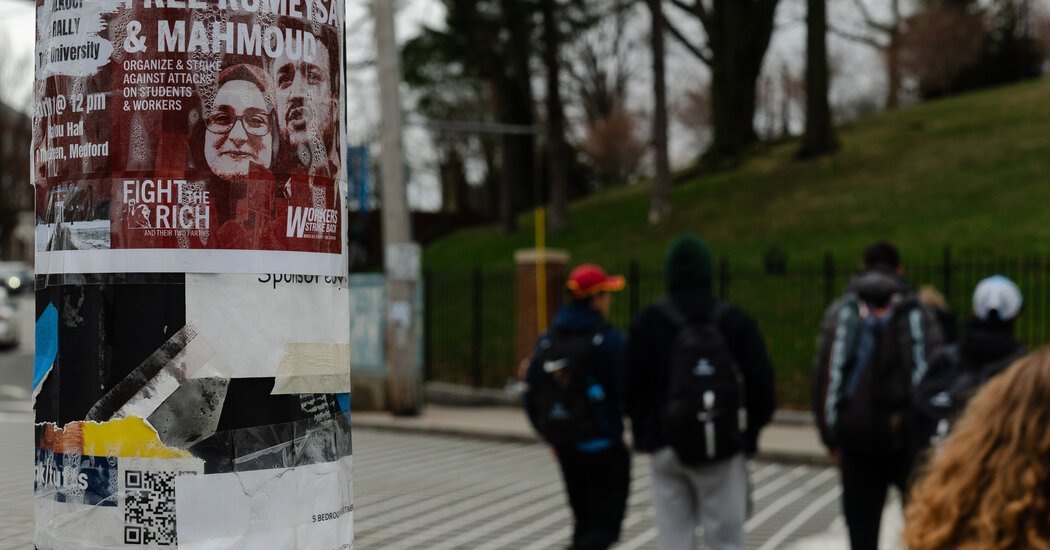
Two weeks later, in Somerville, Mass., Rumeysa Ozturk, a Turkish citizen and graduate student at Tufts University, was taken into federal custody after she drew the attention of a right-wing group that says it combats antisemitism on college campuses.
Those cases and others — unfolding amid President Trump’s campaign to deport immigrants — have cast a spotlight on student visas, which allow foreign nationals to enter the United States for full-time study.
International students at universities across the country are afraid of being targeted.
“They’re terrified. They’re unsettled,” said Fanta Aw, the executive director and chief executive of NAFSA, a nonprofit association of international educators. “Some of them are asking themselves, ‘Should I remain here, knowing there is so much uncertainty, or is it best that I just go home?’”
Here is what we know about the legal protections afforded to student visa holders, their vulnerabilities and the power the federal government possesses to revoke their visas.
What is a student visa?
International students typically have what is known as an F-1 visa, and they must meet and maintain certain criteria that are set by the federal government and the host school.