

Politics
New York’s ‘One-Man Innocence Project’ May Finally Be Cleared Himself
Jon-Adrian Velazquez spent years in Sing Sing for a shooting he says he did not commit. Along the way, he helped others seek their freedom and became the face of a movement.
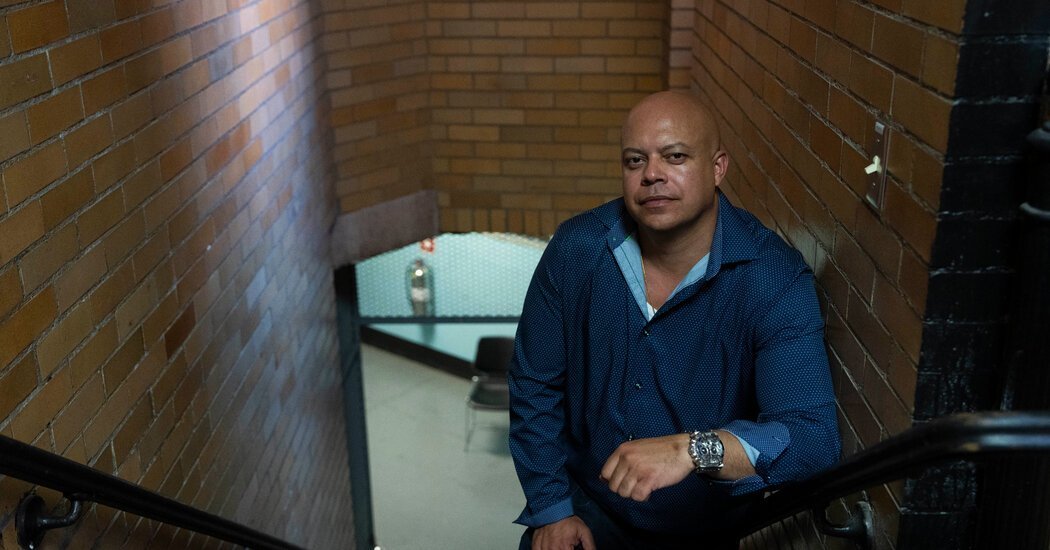
Jon-Adrian Velazquez is the subject of a new book, a podcast and a coming documentary series.
He has spoken at dozens of justice events and was invited to the White House in 2022 to meet President Biden. He has famous friends like the actor Martin Sheen and played himself alongside the actor Colman Domingo in “Sing Sing,” a film released this summer about a prison theater program.
And the legal system considers him a convicted killer.
That is likely to change Monday morning. Mr. Velazquez, 48, and his many supporters plan on packing a Manhattan courtroom and expect a judge to overturn a second-degree murder conviction that had him serve nearly 24 years in prison for the 1998 fatal shooting of Albert Ward, a retired police officer, during an attempted robbery of an illegal gambling parlor that Mr. Ward ran in Harlem.
Ruthless police and prosecutorial tactics during the high-crime, crack-ravaged 1990s in New York City resulted in scores of wrongful convictions. Even decades later, a steady stream of old, flawed cases is still being overturned with the help of advances in DNA testing, innocence groups and conviction review units.
Mr. Velazquez’s unflagging quest for justice stands out among them.
While incarcerated at Sing Sing Correctional Facility, the notorious maximum-security prison on the Hudson River some 30 miles north of New York City, he became well known in New York innocence circles as a model of how to seek freedom while incarcerated, with limited access to phones, computers and legal resources.
He pursued his appeal by becoming a fixture in Sing Sing’s law library and on prison yard phones. He kept a typewriter in his cell and bought stamps and stationery from the lockup’s commissary, all while trying to avoid violence, gangs and run-ins with correction officers.
“I had people on the outside send me the law books I needed,” said Mr. Velazquez, who received an executive clemency in 2021 that left him free but not exonerated. “I made a law library in my cell. I had to learn the language they used to take my life from me.”





