General
Your essential guide to the EU probe into Chinese electric cars
The European Commission’s inquiry into Chinese electric vehicles has become entangled in geopolitical tensions, raising the stakes even further.
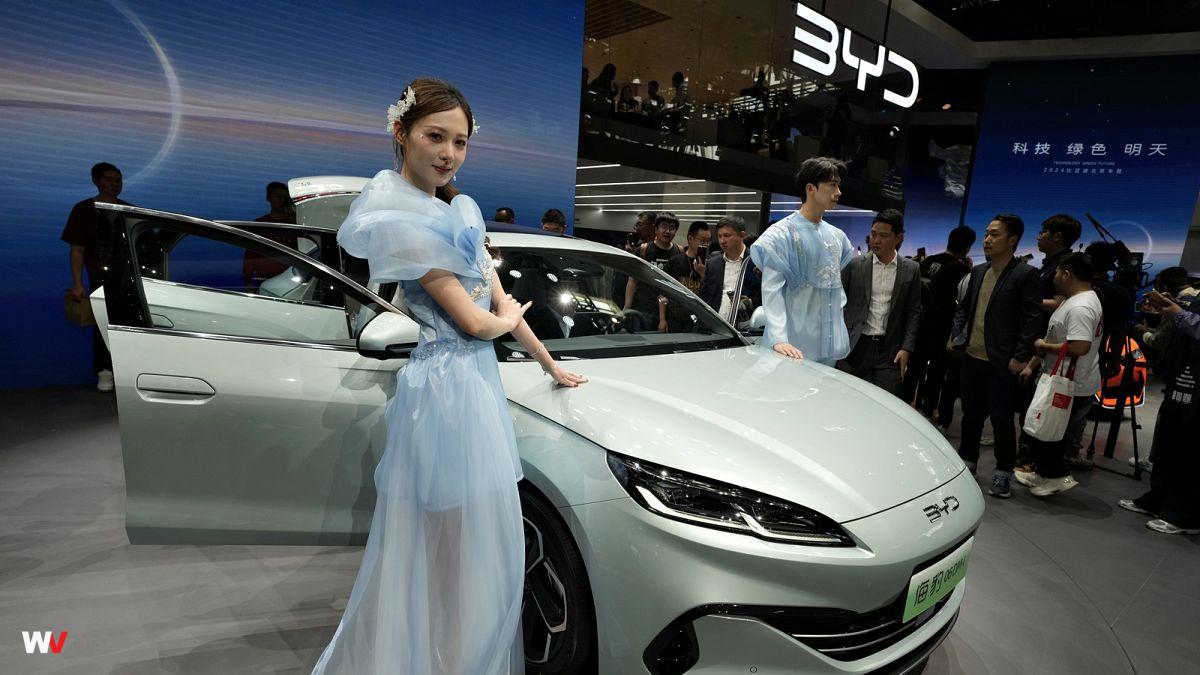
For decades, the People’s Republic of China has lavished domestic companies with public money to fulfill the long-term economic objectives established by the government.
Among the current priorities is the development of Battery Electric Vehicles (BEVs), a sector that is fast expanding as nations transition towards climate neutrality.

The European Union has historically enjoyed a strong position in the car-making industry, with member states like Belgium, Spain, France, Italy, the Czech Republic, Slovakia and Poland ranked among the top 20 largest exporters in the world.
In Germany, the automotive sector is seen as a key industry, a major employer and a driver of innovation and growth.
This set the stage for the European Commission to launch an anti-subsidy inquiry into Chinese electric vehicles, a step highly likely to lead to additional tariffs to offset the unfair advantage of state aid and close the price gap. On average, the executive believes Chinese BEVs are 20% cheaper than their European counterparts.
Notably, the probe was initiated by the Commission without first receiving a formal complaint from the bloc’s industry. Equally remarkable is the fact the investigation is based on a potential threat of disruption, which may arise in the future and lead to “heavy losses which could prove rapidly unsustainable.”
Euronews explains what’s at stake.
How did we get here?
Under the Green Deal, the EU is legally obliged to slash its greenhouse gas emissions by at least 55% by the end of this decade.
Transport, a big polluter, has a role to play. After fraught negotiations, member states and the European Parliament agreed to ban new sales of combustion-engine vehicles as of 2035, which would effectively make electric vehicles the new normal.
Last year, more than 1.5 million units of BEVs were