
General
Writing Helped Her Realize She Was a Woman. It Also Made Her Famous.
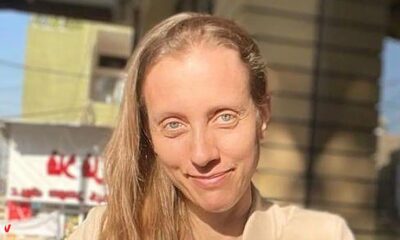
Camila Sosa Villada, an Argentine transgender author, first inhabited a female voice in stories she wrote as a child. Now her novels are translated in more than 20 languages and being adapted for the screen.

Before Camila Sosa Villada transitioned and stepped out into the world as a woman, she wrote as one.
Growing up in the province of Córdoba, in the Argentine interior, she inhabited a first-person, female voice in the stories that she wrote and kept secret from her parents. It was a powerful act of emancipation, she said, one laden with measures of shame and mischief, as if she were doing something forbidden.
“Writing enabled a certain courage,” Sosa Villada said in an interview from her home in Córdoba. “It was prophetic.”
Years later, that voice would be celebrated. Sosa Villada’s work has collected international prizes and accolades, often drawing on her own harsh experiences as a sex worker, an actress and a travesti — a term she and others in Latin America use to describe people who were assigned male at birth but develop a female identity, reclaiming the word from its origins as a slur.
Language has been an act of resistance for Sosa Villada.
“I don’t use the term trans women,” she wrote in an author’s note in her acclaimed debut novel, “Bad Girls.” “I don’t use surgical vocabulary, cold as a scalpel, because the terminology doesn’t reflect our experience as travestis in these regions, from Indigenous times to this nonsense of civilization. I reclaim the stonings and spittings, I reclaim the scorn.”
What she is after, she said, is a visceral reaction.
Her precise prose can be tender and blunt in turn, serving up doses of whimsical allegory alongside acts of intimate violence, and it has earned her a growing audience.