General
Why Britain Has So Many White Christmases (Technically)
Bing Crosby dreamed of it and Charles Dickens romanticized it, but the truth about a white Christmas in Britain may surprise you.
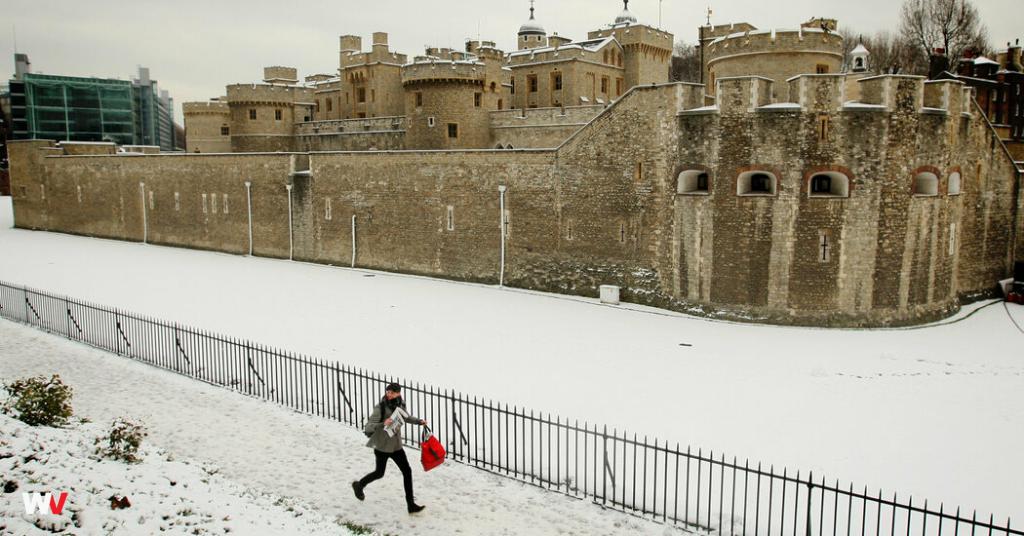
It’s the fantasy festive image: snow on Christmas Day. Immortalized on countless holiday cards, inspired in the collective consciousness by Charles Dickens’s depictions of snow blanketing the cobbled, crowded streets of London in “A Christmas Carol.”
But if you’ve only read Dickens’ descriptions of the scenes — “for it was a clear, cold, winter day, with the snow upon the ground” — you may be surprised to learn that heavy snowfall on Christmas Day, or in December at all, is a rarity for Britain. (The Met Office, the national weather service for the United Kingdom, says sleet and snow are more common in January than December.)
So why was Dickens so fixated on snowy Christmas scenes?
One theory traces to the switch from the Julian to the Gregorian calender, which in Britain happened in the 18th century, less than 100 years before “A Christmas Carol” was published. In 1752, 11 days were removed from the calender, effectively moving Christmas Day backward 12 days, from what had previously been Jan. 5. The Met Office supports this, explaining that “white Christmases were more frequent in the 18th and 19th centuries, even more so before the change of calendar in 1752.”
The writer Peter Ackroyd, in his biography of Dickens, highlights another connection: “In view of the fact that Dickens can be said to have almost single-handedly created the modern idea of Christmas, it is interesting to note that in fact during the first eight years of his life there was a white Christmas every year; so sometimes reality does actually exist before the idealized image.” (The Met Office could not verify this, as its weather maps date back only to 1959.)
In the modern era, the Met Office has a slightly different bar for what qualifies as an official white Christmas, and it’s far lower than you may expect.
All it takes, it says, is “a single snowflake” observed falling on Christmas Day, seen by an official Met Office observer or by a Met Office automated weather station.