General
Why Are People Weird About Women Dining Alone?
I eat alone at restaurants — and I do it a lot. This usually seems to make people around me uncomfortable. Recently, I went to a restaurant for dinner and mistakenly booked a table for two instead of one. The host and I hashed this out, and I sat …
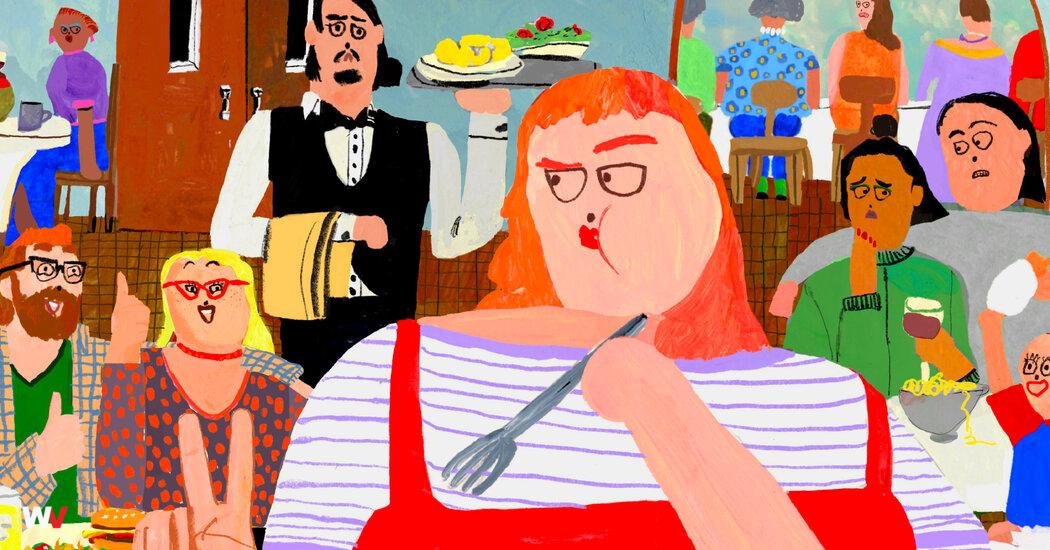
I eat alone at restaurants — and I do it a lot. This usually seems to make people around me uncomfortable. Recently, I went to a restaurant for dinner and mistakenly booked a table for two instead of one. The host and I hashed this out, and I sat down. The chef working that night saw me and came to say how sorry she was that I had, in her mind, been abandoned for the evening. Before I could correct her, she gave me an extra elderberry verbena kombucha for my woes, gazing at me tenderly like I was Samantha Jones crying in a restaurant after being stood up.
I’ve never been afraid to eat alone; I like eating out so much that I write a newsletter about restaurants. Since I can’t always be bothered to get a friend to come along, I end up having more solo experiences than most. Sitting by myself, I’ve been offered free drinks from restaurant staffers and comments with an admixture of admiration and sympathy: I just love that you’re having a steak by yourself on a Sunday night.
The pitying or you-go-girl sentiments never cease to puzzle me. Does ambling outside all by myself and sitting down with a credit card merit me a courage badge? Society still seems to think of women as permanently social creatures, not meant to be by their lonesome. But women don’t need encouragement to live an independent life. It is infantilizing to be treated like a sad, lost lamb just because someone has not accompanied me outside. It’s essential to recognize the absurdity inherent in viewing a woman dining alone as a brave act performed in the face of embarrassment. It is neither brave nor sad for a woman to dine alone.
In the 19th century, some large hotels reserved separate dining rooms called “ladies’ ordinaries” for women dining alone or in all-female groups. Into the 20th century, women could be refused service at taverns or hotel eating rooms without a male escort. Change was slow to come. Some restaurants maintained different forms of men-only policies. In 1969, Betty Friedan and a cohort of sign-wielding feminists stormed the Oak Room in the Plaza Hotel to demand that women be allowed in during the male-only lunch hours. The restaurant soon reversed its policy — and the agitation inspired a wave of protests at other restaurants across the country. The changes weren’t always voluntary: In 1970, a federal suit and a new municipal law required McSorley’s Old Ale House, New York City’s oldest saloon, to ditch its 116-year ban on women.
But the sight of a woman dining alone can still feel unusual. It implies a story of rejection, of loneliness, of romantic failure. It implies being left, rather than choosing to be alone. The restaurateur Keith McNally began a tradition at his restaurant Balthazar soon after it opened in 1997: A woman dining alone will be given a free glass of champagne. He says he does this “to send the message that the restaurant actually likes, even encourages, women to dine alone.”
A single woman eating alone can be a magnet for society’s fears, but also its dreams. She can be a mysterious, glamorous Carrie Bradshaw, a bon vivant renegade ignoring cultural expectations. She can also be a painfully bereft Miss Havisham, abandoned not just at the restaurant but also in the world. It’s a simplistic fairy tale in which we can only imagine a woman ignoring the social imperative to couple going one of two ways: triumph or devastation. The single woman is the canary in the coal mine, her fate fascinating us and portending what life has in store for us if we stray from the beaten path.