
General
Who Cares If Madrid is Landlocked? The Maritime Vibe is Everywhere.
Sign up for the Travel Dispatch newsletter. Essential news on the changing travel landscape, expert tips and inspiration for your future trips. Get it sent to your inbox.More than 450 years ago, King Philip II of Spain decreed Madrid — a somewhat …
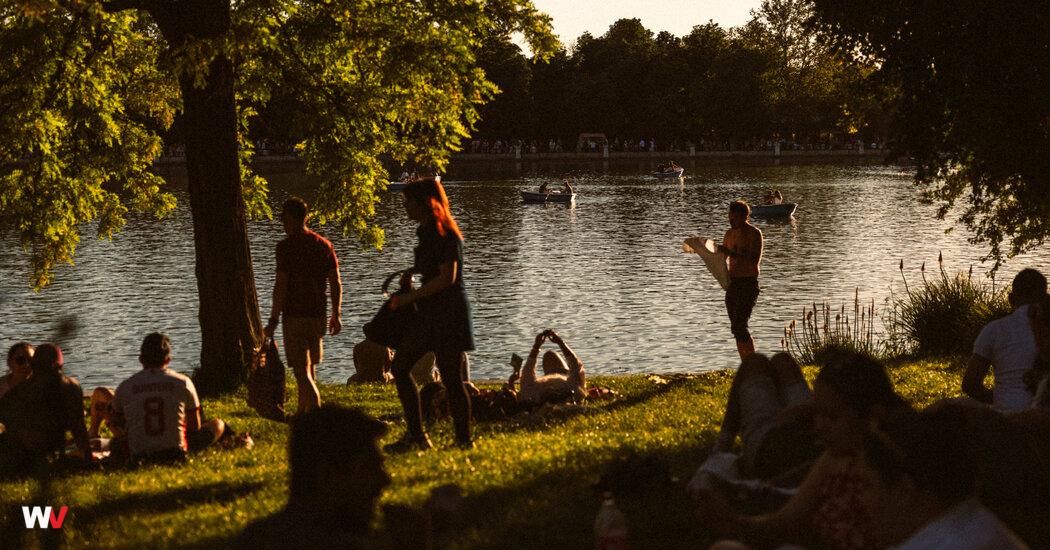
More than 450 years ago, King Philip II of Spain decreed Madrid — a somewhat sleepy mountain town in the middle of the Iberian Peninsula — the capital of his empire. Many historians consider it an odd decision for a ruler whose maritime empire extended across three oceans and five continents and was connected by the largest navy the world had ever seen. Not only is Madrid 220 miles from the nearest Spanish port in Valencia on the Mediterranean, but it’s also 2,000 feet above sea level. A bustling seafaring city like Cádiz would have been a more obvious choice.
And given today’s tourism-driven economy in a country that visitors associate with sunshine and beaches, Madrid’s lack of a sea coast might seem an even greater handicap than it was for Philip. But the city’s role as the center of a once vast maritime realm has eternally linked it with the sea in myriad ways.
Museums, food, massive anchors and beaches: Here’s a guide to Madrid’s seaworthy treasures.
Neptune and Friends
Let’s start with the god of the seas. In the heart of the city, on the Paseo del Prado — just steps from City Hall and Madrid’s great art venues such as the Prado and the Thyssen-Bornemisza — stands a towering and rather hunky 1780s statue of Neptune wielding his trident in a multitiered circular fountain. He appears to be arriving in town on a chariot made of shells, pulled from the frothy depths by sea horses and dolphins. It’s a beloved local monument and the de facto gathering spot for one of Madrid’s two soccer teams (Atlético de Madrid) after big wins.
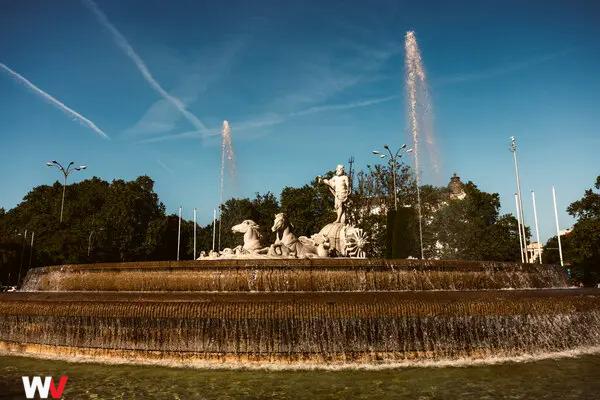
The Neptune Fountain, on the Paseo del Prado, in the heart of Madrid.
Neptune is far from the only seafarer in the city. Parks and plazas are littered with monuments and mementos of famous navigators, admirals, captains, sea battles and an astonishing number of massive anchors. Tritons and dolphins abound in fountains in Retiro Park and in the grand Plaza de la República Argentina, where life-size bronze dolphins leap, leading locals to refer to it as the “plaza of the dolphins.”
Street names include Calle del Almirante (Admiral Street) and Calle del Barco (Boat Street), as well as ones honoring explorers such as Nuñez de Balboa and Juan Sebastián de Elcano, and naval heroes like Álvaro de Bazán and Blas de Lezo. Both a street and a plaza bear the name De la Marina Española and they’re nowhere near each other. There’s even an altar in the shape of a boat in the parish church Nuestra Señora del Carmen y San Luis.