General
Who Abandoned Liberalism First, the Populists or the Establishment?
While American liberalism debates, round and round, whether Trumpism is a form of fascism, conservatives and conservatism’s fellow travelers have their own running debate about what exactly is happening to liberalism these days. One form of this …
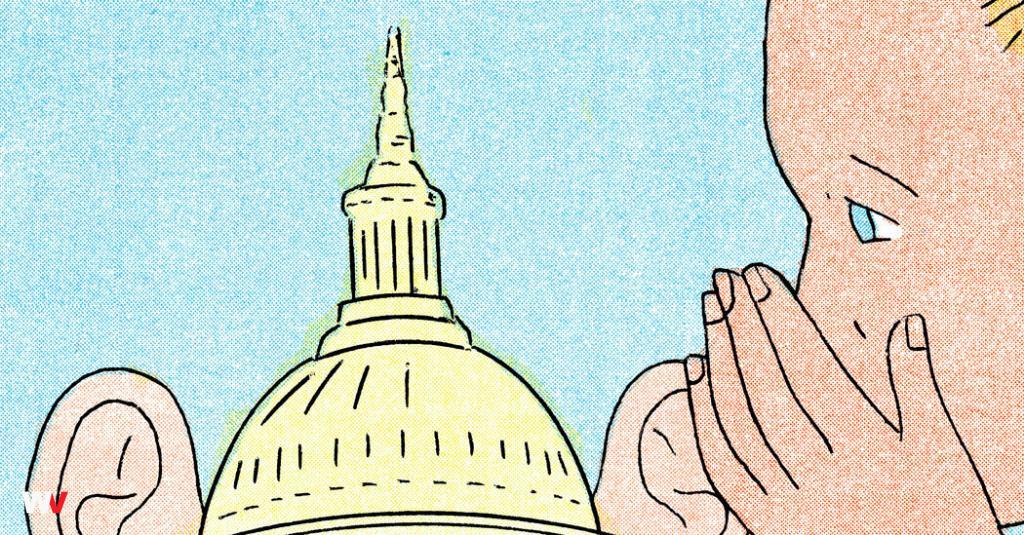
While American liberalism debates, round and round, whether Trumpism is a form of fascism, conservatives and conservatism’s fellow travelers have their own running debate about what exactly is happening to liberalism these days.
One form of this debate, the more familiar form, has focused on wokeness — what it is, whence it comes, is it quasi-religious or ideological or both, is it the fulfillment of liberalism or its betrayal, theories piling atop theories.
But there’s another debate that’s less about the content of liberal politics and more about its organizing structure. This argument relates to wokeness insofar as it tries to explain the pathways through which radical-seeming ideas spread so rapidly from academia through the worlds of philanthropy and education and corporate life. But it’s more interested in how the structure of liberal governance has changed, since the Cold War or Sept. 11 or the ascent of Barack Obama, than in the specific ideas that animate its operations.
The shift that these right-leaning observers are trying to explain is a phenomenon that became particularly apparent in the Trump years and especially in the Covid-19 emergency — the seeming integration of all sorts of institutions, public and private, academic and governmental, in a common political-ideological front.
Think of the way an idea would seem to travel from progressive academia through the world of foundations and nongovernmental organizations, popping up in the policies of a Democratic administration and the language of corporate human resources departments alike, without ever being subject to a normal kind of democratic debate. Or think of the various Covid-era entanglements between activist groups, social media companies, legislators and public health officials, and the related emergence of the liberal censor or commissar as a character across a range of very different institutional spheres — from anti-disinformation activists making demands of social media giants to sensitivity readers screening novels to bureaucrats assessing the D.E.I. statements of applicants for academic jobs.
Two essays from the past year are helpful for understanding the right’s perspective on these phenomena. One of them, by Jacob Siegel for Tablet, focuses on a theory of liberal politics distilled by the term “whole of society,” popularized in the Obama era and recycled thereafter. Here’s a bland gloss on the term, from a handbook of the Organization for Economic Cooperation and Development:
Here is Siegel’s harsher reading of what this formulation means in practice:
Siegel argues that this approach originated with the war on terror and now applies mechanisms of surveillance and institutional coordination originally intended for countering terrorist extremism to a much wider range of perceived dangers — most of them populist and right-wing (like the trucker protesters in Canada having their bank accounts frozen by Justin Trudeau’s government, say), though under certain circumstances a left-wing group might face cancellation or surveillance as well.