

General
What a Blind Photographer Saw at the Paralympics
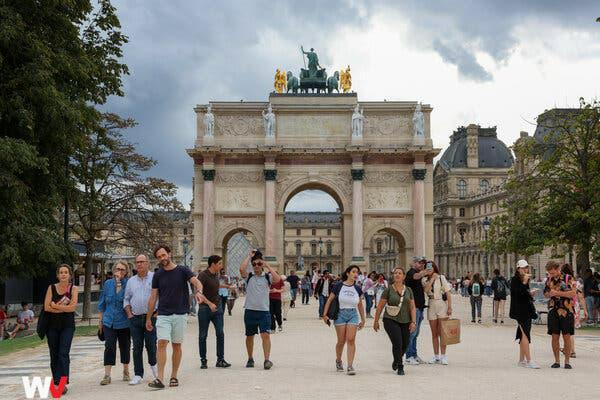
It is late August, and I’m standing in the beautiful Place de la Concorde in Paris trying to plug an Ethernet cable into my camera. The sun is bright, and I can feel the excitement of the crowd buzzing around me. My hands start to shake as I fumble …
It is late August, and I’m standing in the beautiful Place de la Concorde in Paris trying to plug an Ethernet cable into my camera. The sun is bright, and I can feel the excitement of the crowd buzzing around me.
My hands start to shake as I fumble with the cord. I try to make out the color on the light indicator: green means it’s working, red means there’s a problem to troubleshoot. But at first there is no light — or at least not that I can see. It takes me a few minutes to adjust, and then I begin taking photos.
I am a journalism student at the University of Georgia, and I have traveled to Paris to photograph the Summer Paralympics. As a college student on assignment 4,000 miles from home, I knew the experience would be challenging, but my learning curve is steeper than for most.
I was born with albinism, a genetic condition characterized by a lack of pigment in the body. Without pigment, the retina doesn’t develop properly, leading to visual impairment. So as a result of my condition, I am legally blind.
As you might imagine, photojournalism was not an obvious path for me. A blind photographer — it almost sounds like an oxymoron. How could someone whose entire life has been shaped by what I can’t see work in a visual medium?
Credit…Samantha Hurley
My interest in photography started when I was 11. That was the year I got my first cellphone, and I began using it to snap pictures of things I had trouble seeing.





