

General
The Dubious History of America’s Most Famous Monarchist
Over recent decades, a computer programmer and prolific internet commenter has risen from the obscurity of forums and pseudonymous blogs to the pages of this newspaper, as a friend to Vice President JD Vance and as a person who influences many of the …
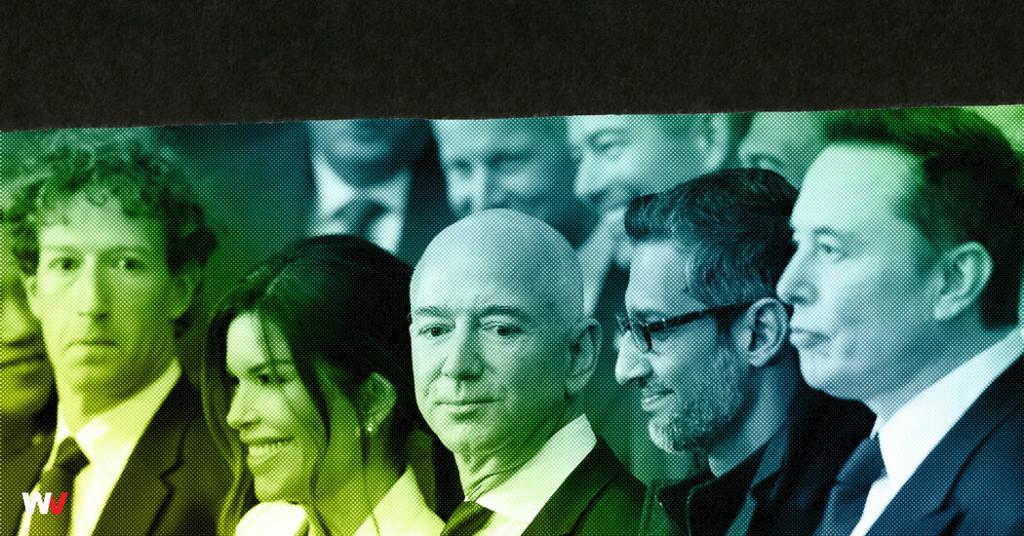
Over recent decades, a computer programmer and prolific internet commenter has risen from the obscurity of forums and pseudonymous blogs to the pages of this newspaper, as a friend to Vice President JD Vance and as a person who influences many of the people who influence President Trump.
Posting as Mencius Moldbug, Curtis Yarvin built a small but influential following among the more reactionary segments of the tech elite, providing them with an elaborate and conspiratorial vision of a nation under the heel of a tyrannical and suffocating liberalism, a broad group of individuals and institutions he calls “the Cathedral.” The path to national renewal, Yarvin argues, is to unravel American democracy in favor of rule by a benevolent C.E.O.-monarch drawn from a cadre of venture capitalists and corporate oligarchs.
With views like these, it is not difficult to understand how Yarvin won the admiration of powerful patrons. He does little more than tell them what they want to hear. If he had been born a minor noble scrounging for influence in the court of Louis XIV, he would have been among the first to exclaim the absolute authority of the king, to tell anyone who would listen that yes, the state, it’s him.
We do not have kings in the American Republic, but we do have capitalists. And in particular, we have a set of capitalists who appear to be as skeptical of liberal democracy as any monarch. They want to hear that they are the indispensable men. They want to hear that their parochial business concerns are as vital and important as the national interest. Aggrieved by the give-and-take of democratic life, they want to hear that they are under siege by the nefarious and illegitimate forces of a vast conspiracy. And hungry for the kind of status that money can’t buy, they want to hear that they deserve to rule. Yarvin affirms their fears, flatters their fantasies and gives them a language with which to express their great ambitions.
Never mind that the actual substance of his ideas leaves much to be desired. Take his illuminating interview with The Times, in which he gives readers a crash course in his overall political vision. He makes a studied effort to appear as learned and erudite as possible. But linger just a little on his answers and you’ll see the extent to which they’re underproofed and overbaked.
Consider his claim that “effective government” requires a strongman. He uses consumer goods as evidence:
If Yarvin believes that Apple is a monarchy, he may not actually understand what a monarchy is. Tim Cook is not the sovereign of the Apple computing company; he serves at the pleasure of its board. Moreover, to say the laptop was “made by Apple” is to elide the extent to which product development, like any other form of high-level industrial production, is a collective and collaborative process. Your MacBook is not forged by a singular will. The idea that you can “thank monarchy” for an iPhone is ridiculous, and the idea that this could be a political prognosis is absurd.