

General
The Church Could Use an American Pope
To convey how all-encompassing the Roman Catholic Church was during the Middle Ages, the historian R.W. Southern once offered a striking analogy: The medieval church, he wrote in 1970, was “a compulsory society in precisely the same way as the modern …
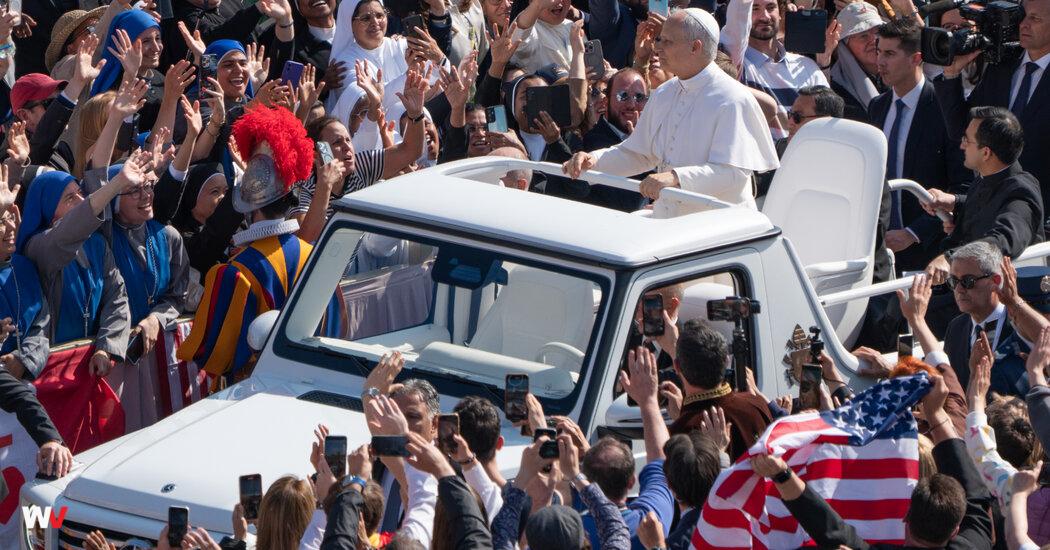
To convey how all-encompassing the Roman Catholic Church was during the Middle Ages, the historian R.W. Southern once offered a striking analogy: The medieval church, he wrote in 1970, was “a compulsory society in precisely the same way as the modern state is a compulsory society.”
Like a modern nation, whose citizens typically belong to it by the accident of birth within its territory and whose obligations to obey its laws and pay taxes are typically not undertaken by choice, the medieval church could expect obedience, allegiance and what we now call “participation” from those who, by another seeming accident — baptism — found themselves within its ranks.
This idea of the Catholic Church not as a voluntary association of individuals but as a total social organism — from which one could escape only by means of excommunication, with its threat of “eternal fire” — is now hard for most of us to imagine. In the post-industrialized West, religious practice has become a choice, even for those who are baptized as infants. Catholicism, like other religions, is essentially subject to the consumer logic of the marketplace, forced to compete with other possible ways of pursuing self-actualization among a like-minded community of believers.
In the United States, of course, the Catholic Church has always operated like this: without state power, amid a variety of other religious options, often fighting for its survival. Though many of us are still reeling from the sheer improbability of Leo XIV’s election as the first American pope, the significance of his Americanness transcends the bare fact of his election. What would once have been considered his uniquely American experience of the faith — as something voluntary, improvised, provisional — has now become the default condition of Catholic life worldwide. In this respect, his origins could prove to be among his greatest assets in leading the church.
Leo XIV was born Robert Francis Prevost in Chicago in 1955. The jokes write themselves — about “da pope,” about imposing deep dish pizza on the Italian peninsula by papal edict, about Leo’s election having been prophesied in 2006 by Dennis Green, the coach of the Arizona Cardinals, who in a memorable rant invited the news media to “crown” the Chicago Bears. But when Cardinal Blase Cupich, the archbishop of Chicago, was asked this month by NBC News about the elevation of an American pontiff, he wept. “The culture of Chicago and the Midwest produced a pope,” he said. “That’s terrific.”
It is terrific. And if anything, Cardinal Cupich’s regional pride (which, as a Michigander, I share) undersells the distinctively American character of Leo’s experience.