General
So Much for Not Taking Trump Literally
In November, the British newspaper The Guardian compared what H.L. Mencken wrote about Warren G. Harding with a contemporary portrait of Donald Trump: The core of Harding’s support, according to Mencken, was “small town yokels, or low political serfs …
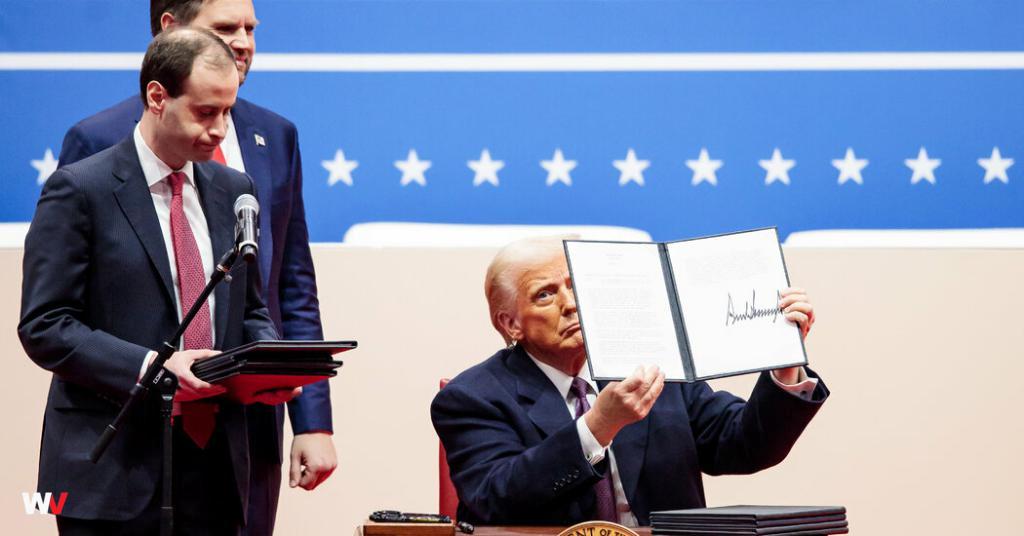
In November, the British newspaper The Guardian compared what H.L. Mencken wrote about Warren G. Harding with a contemporary portrait of Donald Trump:
The core of Harding’s support, according to Mencken, was “small town yokels, or low political serfs, or morons scarcely able to understand a word of more than two syllables, and wholly unable to pursue a logical idea for more than two centimeters.”
Harding, however, was no Trump: The president, newly elected to a second term, has a mean if not sadistic streak, an exorbitant taste for revenge, a charismatic persona and, to put it mildly, a flair for publicity.
Now the question — after a frenzied week of pardons, executive orders, threatening phone calls and emergency declarations — is: Where is this man taking America?
Pippa Norris, a political scientist at Harvard, argued in an email that Trump has returned to 1600 Pennsylvania Avenue at a time when the country’s political system is particularly vulnerable:
As a result, Norris argued, “America faces clear risks of accelerated institutional backsliding from electoral democracy into an electoral autocracy.”
Weakened institutions, democratic backsliding and a demoralized left are, for Trump, an ideal combination, giving him a kind of home-field advantage.
As Norris put it, Trump joins those politicians who
Trump has returned to office fully equipped to push the national government in a radically new direction. In order to get a sense of how far this might go, I asked a range of scholars to evaluate the early developments in the new administration.