
General
Power restored in Spain, Portugal but reason for blackout remains a mystery
Spanish Prime Minister Pedro Sánchez says “no hypothesis is being ruled out” as he vows to investigate and uncover the cause behind the massive blackout that gripped much of the Iberian Peninsula on Monday.
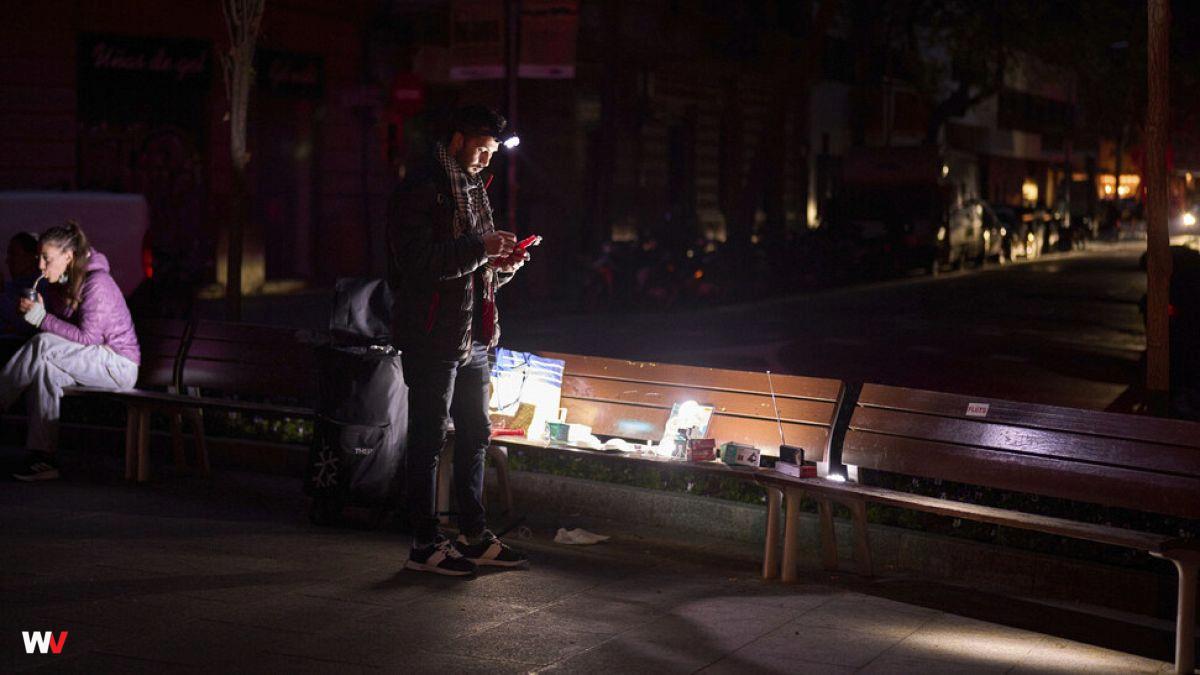
The reason behind the extensive blackouts in Spain and Portugal remained unclear on Tuesday, with some isolated disruptions persisting after the majority of power was restored.
One of the most significant blackouts in Europe grounded flights, paralysed train services, disrupted mobile communications, and caused ATMs to shut down across the Iberian Peninsula on Monday.
By 11 am CET on Tuesday, the Spanish electrical system was reported to be operating normally, according to electricity operator Red Eléctrica. The Portuguese grid operator REN confirmed that power had been restored to all 6.4 million customers.
As normalcy began to resume, Spanish authorities had not yet offered further clarification on why the country, with a population of 49 million, experienced a loss of 15 gigawatts—equivalent to 60% of its national demand—in just five seconds.
On Tuesday, Prime Minister Pedro Sánchez stated that the government’s priorities were to restore Spain’s electrical system and to investigate the causes of the blackout to prevent a recurrence of such an event.
Foul play ruled out
Eduardo Prieto, the director of services for system operations at Spain’s electricity operator, reported two significant consecutive “disconnection events” prior to the blackout on Monday. He indicated to reporters that further investigation is required.
Spain’s meteorological agency, AEMET, stated that it had not observed any “unusual meteorological or atmospheric phenomena,” and no abrupt temperature changes were noted at its weather stations.
Portugal’s National Cybersecurity Centre confirmed that there was no evidence suggesting the outage was caused by a cyberattack. Additionally, Teresa Ribera, an executive vice president of the European Commission, dismissed the possibility of sabotage.
Probe into potential blackout related deaths

The Spanish news agency EFE has reported that authorities are looking into five fatalities, including three individuals from the same family, which may be connected to the power outage.
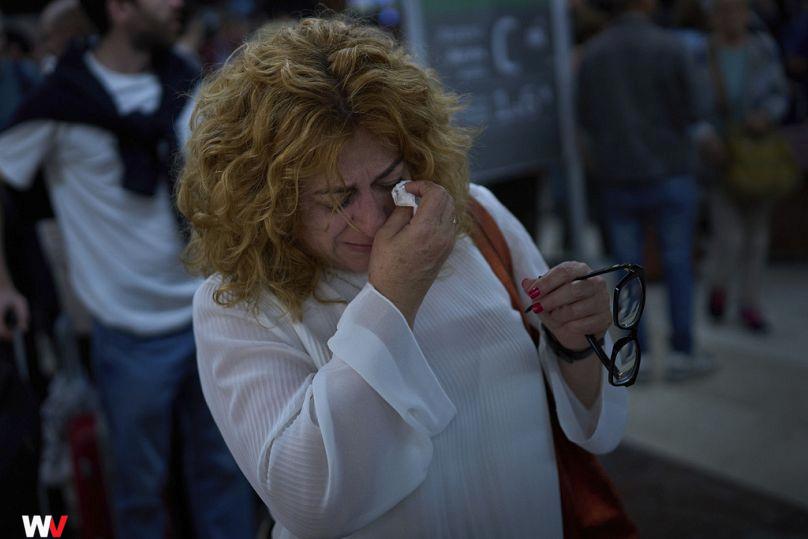
According to EFE, the three family members lost their lives in Galicia due to suspected carbon monoxide poisoning from a generator, a woman in Valencia died due to issues with an oxygen supply device, and another individual perished in a fire ignited by a candle in Madrid.
Travel and tennis resume
The Madrid Open tennis tournament resumed following a blackout that led to the postponement of 22 matches. A busy schedule on Tuesday saw second-ranked Iga Swiatek progress to the quarterfinals.
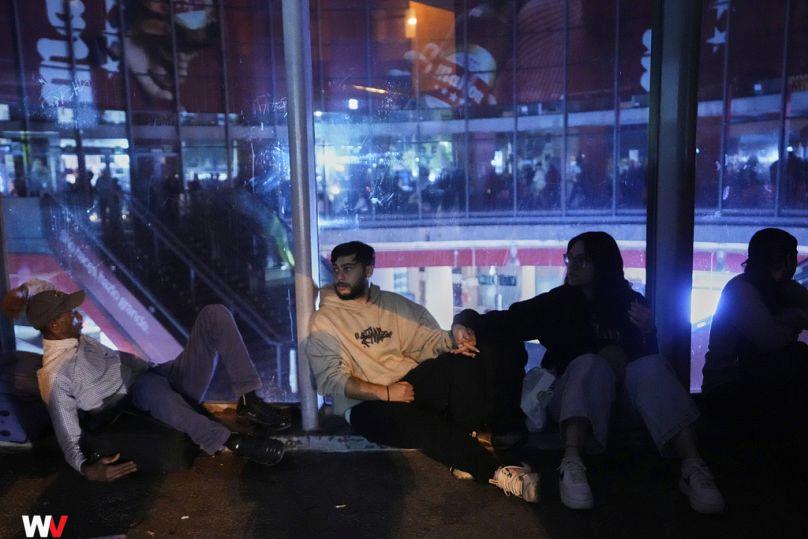
At Spain’s largest train stations, numerous travellers gathered on Tuesday to board trains or to reschedule their journeys. At Madrid’s Atocha station, hundreds waited near screens for updates, with many having spent the night at the station, wrapped in blankets supplied by the Red Cross.

As of 11 am on Tuesday, the subway services in Madrid were completely restored. Meanwhile, in Barcelona, the system was functioning normally; however, certain commuter trains remained suspended in the afternoon due to “electrical instability,” as reported by Rodalies Catalunya on X.
In various regions of Spain, commuter and mid-distance services continued to be either suspended or operating at reduced capacity.
Emergency responders in Spain indicated that approximately 35,000 passengers were rescued on Monday after being stranded along railways and in underground stations.
The blackout significantly disrupted transit systems, causing sports centres, train stations, and airports to serve as temporary shelters.