General
On a Cold, Dark Inauguration Day, a Message From the Birds
Just before dark on New Year’s Eve, I filled all the bird feeders, and I didn’t skimp on the good stuff: black nyjer thistle for the finches, two kinds of suet for the woodpeckers, whole peanuts for the crows and the blue jays, a high-protein …
Just before dark on New Year’s Eve, I filled all the bird feeders, and I didn’t skimp on the good stuff: black nyjer thistle for the finches, two kinds of suet for the woodpeckers, whole peanuts for the crows and the blue jays, a high-protein woodland mix dense with shelled peanuts and sunflower hearts for everybody. The birds would wake to a New Year’s feast. I thought of it as the avian equivalent of black-eyed peas and greens, which the humans in the house would be eating for good luck later in the day. In 2025 we will be needing all the luck we can get.
I confess I wasn’t thinking only of the birds when I set out that banquet. According to birding tradition, the first bird you see on New Year’s morning is your theme bird for the year. It’s a game, really, not a true tradition, but it can be instructive to ponder what that first bird’s traits might teach us about the world or ourselves, and I was seeding the field for a fine first bird. A crow for wit and wile, perhaps? A wren for curiosity? A house finch for sociability or a goldfinch for renewal?
There is so much natural food in our yard — drupes and berries and grubs and the like — that I don’t hang out bird feeders except during winter. Even then, visits to our feeders are scant, except in the early mornings. If I took care to put my glasses on before I pulled the curtains open, I would see my first bird well enough to identify it. Some years I forget, and my first bird is a blur of wings and a departing rump.
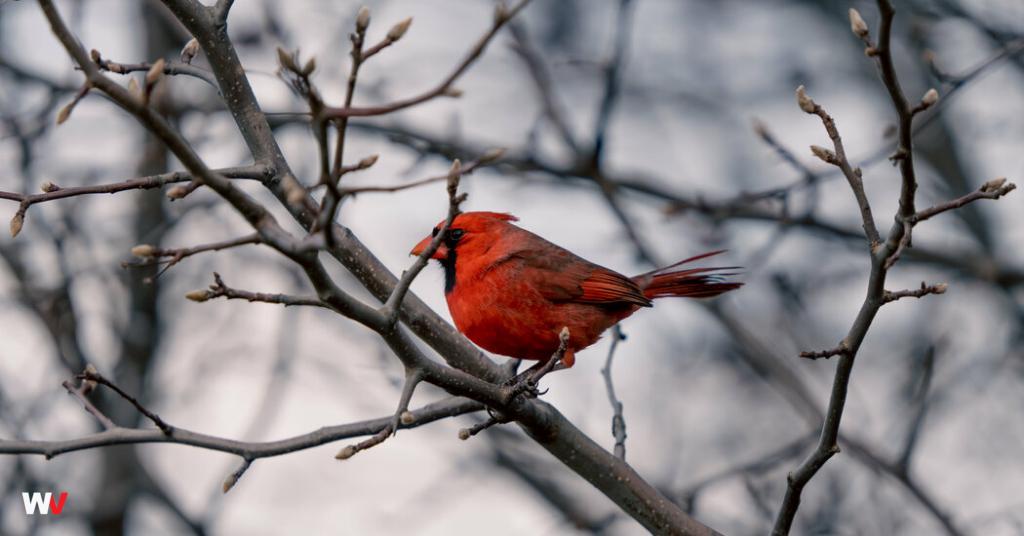
On the very coldest mornings, birds tend to be both still and quiet, conserving energy to keep warm. Last year I looked for an hour before I saw my first bird. This New Year’s Day dawned very cold, too, and the wind, though light, was bitter. I saw no birds when I opened the bedroom curtains, but I had better luck peering through the glass of the back door: Two northern cardinals — a male and a female — were sheltering in a dead sapling beside our deck.
The tree died two years ago in a sudden drop in temperature after a long warm spell that had sent sap rising as in springtime. We leave the snag standing because our wild neighbors have so many uses for it. For squirrels and opossums, it’s a ladder onto the deck, where there is often spilled birdseed. That morning the redbirds were using its trunk as a windbreak. In any ecosystem, wild creatures always have as many uses for death as for life.
Male cardinals’ vibrant red color, black mask and jaunty crest are beloved among even those who have little interest in birds, but I prefer the more muted colors of the females. This one was impossible to photograph among the drab branches of the dead tree, but her mate was keeping watch over her, and she was likewise keeping watch over him.