

General
Michael Longley, 85, Northern Irish Poet of Nature and ‘the Troubles,’ Dies
“Ceasefire,” his most famous poem, invoked the “Iliad” in exploring his country’s sectarian strife. But his work wasn’t Homeric in length: “Michael was a miniaturist.”
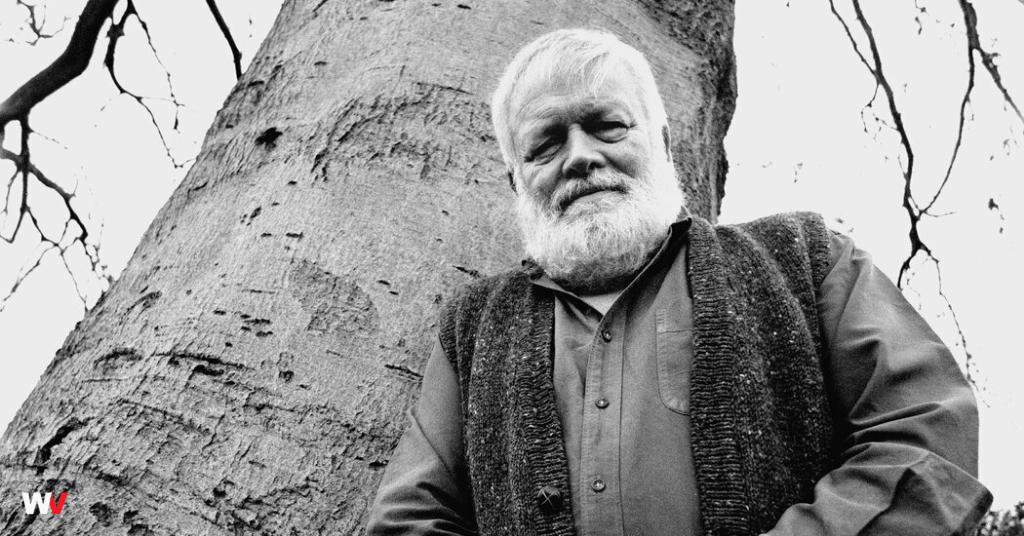
Michael Longley, the last survivor of a remarkable triumvirate of Northern Irish poets that included Seamus Heaney and Derek Mahon, who was celebrated for the meditative beauty of his compact lyrics, many of which alluded to mythology and nature, died on Jan. 22 in Belfast, Northern Ireland. He was 85.
His wife, Edna Longley, said he died a hospital from complications following hip surgery.
Described by his friend Mr. Heaney as “a custodian of griefs and wonders,” and by President Michael D. Higgins of Ireland as “a peerless poet,” Mr. Longley had “a deep curiosity and a keen observational eye for the role of objects in our sensuous and imaginative lives,” John Paul Waters, an associate professor of English and Irish literature at New York University, said in an interview. (Mr. Longley’s appearance at N.Y.U. in May 2024, at Mr. Waters’s behest, was his final reading in the U.S.)
“He wrote about the Troubles,” Mr. Waters continued, invoking the term used to characterize the sectarian strife in Northern Ireland from the late 1960s until the Good Friday Agreement in 1998. “But his passion was for writing about the natural world.”
The classical tradition, specifically in Greek and Latin literature, was a key feature of Mr. Longley’s poetry. As he said in a speech in 2022, “Homer has haunted me for more than 60 years.”
This was clearly a useful way of being possessed. It was the lens through which Mr. Longley examined the Northern Irish situation.
He “had an uncanny ability to allow myths that might have seemed less than pertinent to be tellingly on point, particularly in his many repurposings of Homer,” the poet Paul Muldoon wrote in the foreword to Mr. Longley’s 2024 poetry collection, “Ash Keys.”