General
Live. Von der Leyen says €90bn loan for Ukraine will happen ‘one way or another’
Ursula von der Leyen, António Costa and a host of leaders from across the EU are in Kyiv on Tuesday to show their support for Ukraine as the country marks the fourth anniversary of Russia’s full-scale invasion.

The European Union’s €90 billion loan for Ukraine will happen “one way or another”, Ursula von der Leyen has said in a visit to Kyiv that was largely overshadowed by Hungary’s last-minute decision to veto the financial programme.
“This word cannot be broken,” the president of the Euroepan Commission said on Tuesday, referring to the agreement reached by the 27 EU leaders in December.
“We will deliver on the loan one way or another,” she said. “Let me be very clear, we have different options, and we will use them.”
Von der Leyen spoke next to European Council President António Costa and Ukrainian President Volodymyr Zelenskyy.
Costa called on Hungary to “immediately” lift its veto.
Meanwhile, French President Emmanuel Macron has told partners in the Coalition of the Willing to “lift caveats” on their support for future security guarantees to Ukraine.
Follow our live blog below for the latest as Ukraine marks this grim milestone.

 ${title}

EU can’t promise date for Ukraine accession – von der Leyen
Ursula von der Leyen said on Tuesday that the EU cannot guarantee a date by which Ukraine will become a full-fledged member of the bloc as Volodymyr Zelenskyy reiterates his country wants a “fast track”.
The Ukrainian President has said he aims for his country to be ready to join the EU in 2027, but the European Commission chief said this afternoon that the bloc cannot agree to a specific date because the process is “merit-based”.
“I must say Ukraine is outstanding in the speed at which it fulfils the necessary reforms,” she told reporters during a press conference. “I understand very well that for you a clear date is also important. The date you set is your benchmark that you want to match. You know that from our side, dates by themselves are not possible, but of course the support that you can reach your goal is absolutely clear on our side.”
Speaking alongside her, Zelenskyy said that “it’s true that we want fast track for membership”, arguing that Russian president Vladimir Putin will try to block Ukraine’s accession to the EU, as he is doing with NATO.
“We don’t want to have the same what we have now – maybe it will not be in the future – but what we now have with NATO. Because Russia will block it by themselves. They don’t see Ukraine like an independent country, and they don’t (consider) us part of the European family.”
“But we are ready for fast track, we are ready for fast track for reforms. And we do it, I think, the parallel way.”
16:33 GMT+1
€90 billion loan will happen ‘one way or another’, says Ursula von der Leyen
The press conference of Ursula von der Leyen, António Costa and Volodymyr Zelenskyy has just started.
Von der Leyen addressed the Hungarian veto on the €90 billion loan for Ukraine, saying the word given by EU leaders in December “cannot be broken”.
“We will deliver on the loan one way or another,” she said. “Let me be very clear, we have different options, and we will use them.”
16:26 GMT+1
Croatia has capacity to meet Hungary and Slovakia’s oil needs – Plenković
Andrej Plenković has just said that Croatia can secure the oil supplies Hungary and Slovakia need.
Context: Hungary is blocking the EU’s 20th package of sanctions against Russia as well as its €90 billion loan to Ukraine, accusing Kyiv of sabotaging a pipeline that allows Hungary to import cheap oil from Russia.
In a post on X, Plenković, who visited Kyiv on Tuesday, wrote: “I also underlined that, through JANAF, Croatia has the capacity to secure oil supplies sufficient to meet 100% of the needs of refineries in Hungary and Slovakia, fully in line with EU and US sanctions regimes.”
I took part in the Coalition of the Willing meeting in Kyiv, hosted by 🇺🇦 President @ZelenskyyUa.
I emphasized that Croatia supports a just and sustainable peace, and that Ukraine should not agree in peace negotiations to any de jure renunciation of its occupied territories.… pic.twitter.com/F0Ux9zuOmW
— Andrej Plenković (@AndrejPlenkovic) February 24, 2026
16:19 GMT+1
Hungarian veto is ‘tantamount to a breach of loyal cooperation’, says Justice Commissioner
We’ve just heard from Michael McGrath, the European Commissioner for Justice, who has also weighed in on Hungary’s decision to veto the €90 billion loan for Ukraine.
“To say that we’re disappointed at the current juncture would be an understatement, particularly given the sensitivity of this day, marking the fourth anniversary of the full-scale invasion,” McGrath said after a ministerial meeting in Brussels.
“We expect all leaders of the European Union to honour the commitments they have made. And the position here is clear,” he added.
“We do believe that not respecting and honouring commitments is indeed tantamount to a breach of loyal cooperation.”
Asked whether Hungary’s action should lead to the suspension of voting rights under Article 7, McGrath said that was a decision “at the discretion” of member states.
Hungary has for years been subject to the procedure over its rule-of-law backsliding, but it has remained in the first stage, where no practical consequences are taken.
16:07 GMT+1
Watch: Hungary’s veto ‘quite frankly, makes me sick’, says Swedish minister
Hungary's decision to veto the €90 billion loan for Ukraine is "reckless", "unacceptable" and "quite frankly, makes me sick", says Jessica Rosencrantz, Sweden's minister for EU affairs. pic.twitter.com/y785iH6hjg
— euronews (@euronews) February 24, 2026
15:53 GMT+1
Only Kyiv and Mocow can, ‘in good faith’, reach a peace deal – G7 leaders
The leaders of the G7 have issued a statement to reaffirm their “unwavering support” for Ukraine on the fourth anniversary of Russia’s full-scale invasion.
The signatories include Canada’s Mark Carney, France’s Emmanuel Macron, Germany’s Friedrich Merz, Italy’s Giorgia Meloni, Japan’s Sanae Takaichi, the UK’s Keir Starmer, and the US’ Donald Trump.
They expressed their “continued support” for the peace efforts shepherded by Trump, and noted their willingness to provide security guarantees under the Coalition of the Willing format, adding: “We acknowledge that only Ukraine and Russia, working together in good faith negotiations, can reach a peace agreement.”
Additionally, they said that they are committed to working together to ensure nuclear safety in Ukraine, notably through fundraising for the “rehabilitation at the earliest of the Chornobyl containment arch and to prevent any radiological incident that would have serious humanitarian and environmental consequences for the entire continent.”
Finally, they said that they support initiatives aimed at ensuring “the immediate, safe and unconditional return” of Ukrainian children.
15:12 GMT+1
Peace talks ‘must involve all relevant parties’, Paris and London say
We now have the co-chairs’ statement on the Coalition of the Willing meeting that took place a bit earlier.
France and the UK said they welcomed the US ongoing efforts on peace negotiations, stressing that this “must involve all relevant parties when their interests are at stake”.
Reminder: Europe has largely been sidelined from the peace talks that started a year ago when Donald Trump resumed contact with Vladimir Putin despite repeated calls by Ukraine and Europe that they ought to be included. The US expects Europe to take on the bulk of the security guarantees that will follow any ceasefire.
In their statement, Paris and London also called on Russia to engage in the talks “in a meaningful way, and to agree to a full, unconditional ceasefire”, reiterating they stand ready to provide “multi-layered security guarantees” – including a multinational force that would be deployed in non-contact areas.
Members of the Coalition also reaffirmed their commitment to “ramp up economic pressure on Russia” and condemned Moscow’s “relentless appalling assault on Ukrainian cities and civilian infrastructure”.
They also committed “further assistance to Ukraine’s energy infrastructure”.
14:54 GMT+1
Von der Leyen and Costa visit energy facility damaged by Russia
Ursula von der Leyen shared a photo of herself with Council President António Costa walking along an icy, muddy road at an energy infrastructure site that had sustained damage from Russian attacks.
We have visited an energy infrastructure site damaged by Russian missile strikes.
We know Russia is using the freezing cold as a weapon of war.
We are helping Ukraine resist and fight back.
We have provided 3 bn € in energy support, and 11,000 generators since the start of… pic.twitter.com/D7GSX7UFbu
— Ursula von der Leyen (@vonderleyen) February 24, 2026
14:50 GMT+1
Macron calls on partners to ‘lift caveats’ on security guarantees to speed up work
Emmanuel Macron said the work on security guarantees “is being finalised” and urged other members of the Coalition of the Willing to “lift caveats” they still have.
The French president opened his remarks to the Coalition meeting by saying that he is “very sceptical to say the least on the fact that we will deliver a short-term peace” and urged more support to Ukraine and increased pressure on Russia.
On security guarantees, he said the work is being finalised but that it’s “very important” to follow up on the work done during the 6 January meeting.
“I encourage all colleagues to lift caveats in order to facilitate the planners’ job,” Macron said. “It’s super important we finalise everything we agreed on in concrete terms in order to get credible for a long and robust peace and a sustainable one, but as well because probably we will have to preempt and accelerate some of the key pillars of what we scheduled.”
“But it’s very important we provide in the days to come, full clarity in operational issues regarding this point.”
14:35 GMT+1
Ukraine needs energy systems, air defence, and the €90 billion loan, Zelenskyy says
On the Coalition of the Willing call, Volodymyr Zelenskyy spoke after Keir Starmer and called for help “to renovate energy systems”.
“We had a terrible winter,” he said.
Russia has been targeting civilian energy infrastructure in recent months, leaving large swathes of Ukraine without electricity or heating amid sub-zero temperatures.
Zelenskyy also called for more air defence equipment, especially PAC-3 and PAC-2 missiles used with US-made Patriot systems.
Reminder: Washington halted all donations to Ukraine last year and European partners are now buying US-made equipment Kyiv needs through NATO’s PURL programme.
The Ukrainian leader also said he is counting on the next package of EU sanctions against Russia, which is currently being blocked by Hungary.
“And we, of course, count not to have many challenges with the €90 billion (loan),” he added. “The decision was great, but we need this money here in Ukraine”.
Hungary is also currently vetoing the loan despite agreeing to it at a leaders’ meeting in December after securing an exemption under which it will not have to financially contribute to the repayments. Budapest accuses Ukraine of sabotaging a pipeline that allows Hungary to import cheap oil from Russia.
Finally, he once again reiterated that he wants Europe to be around the peace talks table.
14:18 GMT+1
Zelenskyy is ‘threatening and pressuring Hungary’, Orbán says in fresh attack
Hungarian Prime Minister Viktor Orbán, whose double veto has overshadowed the European Union’s collective response to Russia’s war, has published a new message on social media attacking Ukrainian President Volodymyr Zelenskyy.
“Hungary has stood for peace from the very beginning,” he wrote.
“Yet even today, on the anniversary, President Zelenskyy is threatening and pressuring Hungary because we refuse to be dragged into the war, refuse to send money to Ukraine, and will not give up affordable Russian energy.”
Orbán drew a direct link between the energy dispute and the upcoming elections in Hungary, where he is trailing in the opinion polls.
“It is now also clear that the entire Hungarian opposition has sided with Ukraine,” Orbán says. “Their goal is chaos, fuel shortages, and higher prices ahead of the elections. They stand with Zelenskyy, not with the Hungarian people.”
Four years ago, the Russia–Ukraine war began.
Four years of senseless killing, with hundreds of thousands of lives lost.
For four years, European and Hungarian families have been paying the economic consequences of this war.Hungary has stood for peace from the very beginning.… pic.twitter.com/kWHVbrQqxC
— Orbán Viktor (@PM_ViktorOrban) February 24, 2026
14:14 GMT+1
‘We need to shift the narrative,’ Starmer tells Coalition of the Willing
Members of the Coalition of the Willing have to up pressure on Russia, increase support to Ukraine and shift the narrative Moscow is trying to project, British Prime Minister Keir Starmer said today at the opening of a 90-minute call with 35 other representatives of the alliance backing Ukraine.
“Whatever Putin tells himself and his people, Russia is not winning and we must shift the narrative,” Starmer told his counterparts.
Russia, he added, has suffered high numbers of casualties and made few territorial gains in four years of fighting, all while seeing its oil revenues dwindle and its deficit soar.
On the pressure side, he called for “greater focus and determination on the shadow fleet” of ageing oil tankers Russia uses to circumvent sanctions and export its oil, while on the support to Ukraine side, he urged more donations especially of air defence and energy systems.
14:02 GMT+1
€90 billion loan not yet doomed, Brussels insists
The European Commission insists the €90 billion loan for Ukraine is not dead despite Hungary’s last-minute veto, and political and technical discussions are ongoing to resolve the crisis.
“We are working to make sure that, indeed, all the leaders honour their commitments,” Paula Pinho, the Commission’s chief spokesperson, said on Tuesday.
Pinho highlighted that, despite political disagreements, the EU has managed to unanimously approve 19 “far-reaching” rounds of sanctions against Russia since February 2022.
“Sometimes, we underestimate the effort,” she said.
The 20th package of sanctions, which includes a full ban on services for Russian oil tankers, has also been blocked by Hungary.
“Let there be no mistake: we continue committed to delivering both on the €90 billion Ukraine loan that was agreed at the highest level at the European Council last December, and we continue to work towards an agreement on the 20th package of sanctions, as we did for the past 19 packages,” Pinho said.
“We remain confident that this time again, for the 20th time, we will be able to deliver.”
13:56 GMT+1
‘There is no emergency situation,’ Brussels says of Druzhba dispute
The European Commission says that none of the 27 member states is currently suffering from an energy supply crisis.
Both Hungary and Slovakia have blamed Ukraine for interrupting oil deliveries through the trans-Ukrainian Druzhba pipeline, which was damaged by a Russian drone strike in late January. Budapest and Bratislava have described the situation as “blackmail”, a charge rebutted by Kyiv.
“No country is suffering from any kind of supply emergencies, and energy is being received in Ukraine,” a Commission spokesperson said on Tuesday afternoon.
“As regards Slovakia and Hungary, they have their oil reserves, so there is no emergency situation in any of our member states in any way. And we’re not foreseeing any short-term supply issues either.”
The Commission, however, could not provide any updates regarding the resumption of deliveries through the pipeline, with no timeline yet available for its reopening.
13:30 GMT+1
Kyiv sanctions entities linked to ‘occupation administrations’
Ukraine has imposed new sanctions on 29 Russian entities, 15 Russian organisations and bodies of the “so-called occupation administrations”, President Volodymyr Zelenskyy has announced.
“They support Russian aggression and the occupation of Ukrainian territories, spread Russian propaganda, distort history and facts, and steal our documents from archives, as well as cultural treasures from museums and reserves on the temporarily occupied Crimean Peninsula,” he wrote in an X post.
“We are also working to synchronise sanctions across international jurisdictions. All relevant information will be shared with our partners for further action,” he added.
Russians have a long-standing tradition of using historical falsehoods, manipulation, and silence as weapons. But there is no Russian weapon that we have not learned to destroy, and we will overcome this ideological weapon of theirs as well – sanctions are one of the instruments.…
— Volodymyr Zelenskyy / Володимир Зеленський (@ZelenskyyUa) February 24, 2026
13:17 GMT+1
Russian casualties of four years of war estimated at 1.2 million
More than 1.2 million Russian soldiers have either been wounded or killed since the start of the war four years ago, according to Western analysts.
If true, this would constitute the highest number of Russian combat casualties since the Second World War.
French Foreign Minister Jean-Noel Barrot said earlier today that about 1,000 Russian soldiers are currently dying every day on the frontline, all while Russia achieves “no territorial gains”.
According to an investigation by Russian news outlet Mediazona, together with the BBC and a team of volunteers, at least 200,186 Russian troops have lost their lives.
Moscow has so far publicly acknowledged only about 6,000 deaths.
13:04 GMT+1
How the political groups voted on the Ukraine resolution
The European Parliament’s resolution supporting Ukraine was approved by a large majority, but some of the political groups have seen divisions among their members.
The far-right Patriots for Europe (PfE) split. The majority of its lawmakers abstained, including President Jordan Bardella’s National Rally and the Italian League, but much of the group voted against the text, including MEPs from Austria, Belgium, Poland and Hungary.
The Left group, meanwhile, split into three parts: Nordic MEPs voted in favour, Italian and Spanish ones against, and the French and Irish members abstained.
Other political groups were more united. All endorsed the resolution except the far-right Europe of Sovereign Nations, which voted against it.
Only a handful of abstentions were recorded among the European People’s Party, Socialists and Democrats, Greens/EFA and European Conservatives and Reformists. All of Renew Europe voted in favour, while almost all non-attached MEPs opposed the resolution.
12:45 GMT+1
Large majority approves symbolic European Parliament resolution supporting Ukraine
After the debate, the European Parliament doubled down on its support for Ukraine by approving a non-binding resolution with 437 votes in favour, 82 against and 70 abstentions. A few dozen MEPs from the far right and far left of the hemicycle opposed the resolution.
The text strongly condemns Russia’s war of aggression against Ukraine, describing it as a blatant violation of international law and the United Nations Charter and considers Russian and Belarusian leaders fully responsible for war crimes, also mentioning the involvement of the Iranian and North Korean regimes.
Lawmakers said that they will continue not to recognise any occupied Ukrainian territory as Russian, while endorsing security initiatives for Ukraine, including the proposal for a “reassurance force” by Ukraine’s Western allies combined with security guarantees. The resolution also states that any future peace agreement between Ukraine and Russia must be backed by credible security guarantees for Ukraine, comparable to Article 5 of NATO and Article 42(7) of the Treaty on European Union, which demand that signatories assist each other in case of a military attack.
The Parliament also recommended accelerating Ukraine’s integration into the European single market and increasing military, political, and diplomatic support for the country.
At the same time, lawmakers have backed stronger sanctions against Russia and Europe’s continued decoupling from Russian energy sources, calling for the gradual elimination of all Russian energy imports, including all petroleum products, uranium, enriched uranium, nuclear fuel and related services, as well as the permanent decommissioning of the Nord Stream pipelines.
Parliament also wants to extend sanctions against Russian institutions and officials involved in war crimes, a ban on entry into the Schengen area for Russian military personnel involved in the war, and the designation of the Wagner Group and its successor entities as terrorist organisations.
12:37 GMT+1
Swedish minister: Hungary’s veto ‘makes me sick’
Sweden’s Minister for EU Affairs, Jessica Rosencrantz, said ahead of the General Affairs Council meeting in Brussels that she is disappointed about Hungary blocking the EU’s new sanctions package as well as the bloc’s €90 billion loan to Kyiv.
“I would say it is reckless on the Hungarian side to use Ukraine as a political punching bag in their own national elections. It is also unacceptable that Hungary is now blocking a decision that they had actually previously agreed to,” Rosencrantz said.
The minister added that Sweden will work to increase support for Ukraine on the anniversary and voiced her frustration with the Hungarian vetoes.
“To do all this on a day that marks four years since the full-scale Russian invasion — that, quite frankly, makes me sick,” Rosencrantz said.
12:28 GMT+1
Watch: Zelenskyy calls for a ‘clear date’ of Ukraine’s EU accession
Volodymyr Zelenskyy calls on the EU to implement the €90 billion loan for Ukraine, currently vetoed by Hungary, and provide a “clear date” for his country’s accession.
If there’s no date, Vladimir Putin “will find a way to block Ukraine for decades by dividing you,” he said. pic.twitter.com/rq9GTEZ4Lm
— euronews (@euronews) February 24, 2026
12:26 GMT+1
‘All objectives of the special military operation will be achieved’ – Moscow
Maria Zakharova, the spokesperson for Russia’s foreign ministry, has posted a statement on Telegram in which she says that Russia will continue its assault on Ukraine until “all objectives of the special military operation” – the term it uses for its full-scale invasion – “will be achieved” including the “demilitarisation and denazification” of the country.
She reiterated Russia’s position that a long and lasting peace will only be possible after “the root causes of the conflict” are addressed and insisted that the invasion was justified, citing the right to self-defence enshrined in the UN Charter.
12:20 GMT+1
French Response takes on latest Moscow claims on arming Ukraine with nuclear weapons
French Response, the X account linked to France’s Foreign Ministry that takes a combative approach to debunking misinformation online, is tackling the latest claims from Moscow that Paris and London are aiming to arm Ukraine with nuclear weapons.
The press bureau of the Russian Foreign Intelligence Service (SVR) said in a statement cited by Russia’s TASS news agency on Tuesday that France and the UK, which are Europe’s sole nuclear powers, “are actively working over the issue of providing Kyiv with a weapon of this kind” through the “covert transfer of relevant European-made components, equipment and technologies”.
“The Westerners’ main efforts are focused on making Kyiv’s possession of nuclear weapon look like it was developed by the Ukrainians themselves,” the SVR added.
French Response rejected these latest claims in a post on X.
“Five years into its ‘three-day war’, Russia would really prefer you focus on French and British nukes,” it wrote. “Nuclear brinkmanship won’t hide the overwhelming international support for Ukraine on the fourth anniversary of your failed ‘three-day war’.”
Five years into its ‘three-day war’, Russia would really prefer you focus on French and British nukes. https://t.co/ksvBbvPXYe
— French Response (@FrenchResponse) February 24, 2026
12:19 GMT+1
Parliament’s political groups support Zelenskyy – with one exception
After Zelenskyy’s speech, the leaders of the European Parliament’s political groups took the floor for the debate.
Almost all of them have thanked Ukrainian President for his words and expressed their support for the war-torn country and concluded their speeches with the “Slava Ukraini” (Glory to Ukraine) motto.
European People’s Party MEP Michael Gahler, replacing the group’s chair Manfred Weber, attacked Hungary’s Viktor Orbán and Slovakia’s Robert Fico for their attitude to Ukraine.
“Your disgraceful attitude will go down in European history books, labelling you as quislings even without occupation”, he says, referring to the two countries’ opposition to a new package of sanctions for Russia and their dispute with Ukraine for the flows of Russian gas. “The traitors are with Moscow. We are with you, Ukraine”, he said.
Socialists and Democrats’ Iratxe García Pérez, Renew Europe’s Valérie Hayer and Greens/EFA’s Terry Reintke also accused Orbán of playing into Russia’s hands.
“He has become Putin’s cheap servant. He has not only betrayed Ukraine, he has betrayed all of us,” Reintke said.
Even European Conservatives and Reformists co-leader Nicola Procaccini fired a shot at Orbán, albeit in a veiled way.
“History will pay homage to Ukrainian patriots, while it will provide contempt to whoever is turning their backs to Ukraine, to the freedom, the sense of honour,” he said.
French MEP Jordan Bardella, leader of the far-right Patriots for Europe, praised Ukraine’s resistance and criticised Vladimir Putin’s war of aggression. He claimed the need to “support Ukraine without permanently weakening our own nations”, and linked the boost to European defence to the crisis affecting French farmers, which some of his colleagues did not appreciate.
The only discordant voice in today’s debate emerged from the far-right Europe of Sovereign Nations. Slovak MEP Milan Uhrík said: “We are against the continuation of the support of Ukraine. We do not want to send any more money, any more weapons there and listen to any more propaganda.”
His speech was met with boos and shouts from the rest of the lawmakers.
12:11 GMT+1
Europe has offset US complete halt in donations to Ukraine – Kiel Institute
The total volume of aid to Ukraine in 2025 remained stable year-on-year despite the US’s decision to halt its support, mainly due to “markedly expanded support” from Europe, the Kiel Institute for the World Economy said earlier this month.
The German think tank noted that while the US played a central role in providing both military and non-military aid to Ukraine between 2022 and 2024, allocating on average €17.3 billion per year in military aid and €13.3 billion in financial and humanitarian aid in real terms, this more or less stopped after Donald Trump’s return to the White House.
Last year, US assistance consisted of a single military aid package worth €0.4 billion.
But this drop was offset by contributions from EU member states and institutions as well as Iceland, Norway, Switzerland and the UK, who stepping up their support considerably.
“Relative to the 2022 to 2024 annual average, military aid allocated by European countries increased by 67% in real terms, while humanitarian and financial aid rose by 59%,” according to the Kiel Institute.
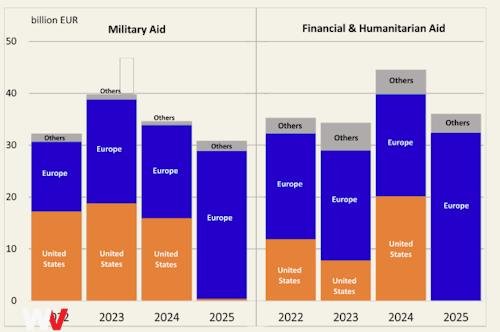
Credit image: Kiel Institute.
11:51 GMT+1
What is the Coalition of the Willing?
The Coalition of the Willing is a grouping of some 35 nations, including many European countries, Australia, Japan and New Zealand, who are working together to establish security guarantees for Ukraine following an eventual ceasefire.
Co-chaired by France and the UK, it held its inaugural meeting on 17 February 2025, just days after US President Donald Trump resumed Washington’s contact with his Russian counterpart, Vladimir Putin.
Tuesday’s meeting will be their 15th meeting in that format. No US representative is expected to attend.
France and the UK have both committed to deploying troops on the ground in non-contact areas following a ceasefire. Other guarantees by allies would also involve a high-tech mechanism to monitor a ceasefire led by the US and a legally binding obligation to assist Ukraine in the event of a renewed Russian attack.
Another layer of security guarantees is Ukraine’s accession to the European Union, for which the Ukrainian leadership hopes to be ready in 2027.
11:44 GMT+1
‘No country can annex its neighbour,’ EU institutions say in joint statement
The presidents of the three EU institutions, Ursula von der Leyen (Commission), António Costa (Council) and Roberta Metsola (Parliament), have published a joint statement marking the fourth anniversary of Russia’s full-scale invasion of Ukraine.
The message pays tribute to the bravery of the Ukrainian people and recaps the multiple strands of support delivered by the EU over the past four years, namely military, financial and energy aid. It also vows to hold Russia accountable for its war of aggression.
“Respect for sovereignty and territorial integrity is the cornerstone,” the statement reads. “No country can annex its neighbour. Borders cannot be changed by force. The aggressor cannot be rewarded.”
11:33 GMT+1
Who is in Kyiv today?
Apart from the President of the European Council António Costa and President of the European Commission Ursula von der Leyen,the leaders of Denmark, Estonia, Finland, Iceland, Latvia, Lithuania, Croatia, Norway, and Sweden are also in Kyiv.
Zelenskyy’s press secretary said the full programme of the day will not be made public in advance due to security issues.
Serhii Nykyforov said that the foreign leaders will visit an energy infrastructure facility destroyed by Russian shelling. A meeting of the Coalition of the Willing and the Ukraine-Nordic-Baltic Summit are also taking place on Tuesday.
Notably absent are representatives from the Trump administration.
In the video address dedicated to the fourth anniversary of Russia’s full-scale invasion, Volodymyr Zelenskyy has appealed to Donald Trump to visit Kyiv.
“I really want to come here with the president of the United States one day. I know for certain: only by coming to Ukraine, and seeing with one’s own eyes our life and our struggle, feeling our people and the enormity of this pain – only then can one understand what this war is really about.”
A trip to Ukraine might make it clear to Trump “who the aggressor is here and who must be pressured”, Zelenskyy said.

11:30 GMT+1
EU ministers hold minute of silence in Brussels
Ministers for European Affairs held a minute of silence to commemorate the victims of Russia’s war in Ukraine at the start of their meeting in Brussels.
The General Affairs Council meets each month to discuss European affairs.
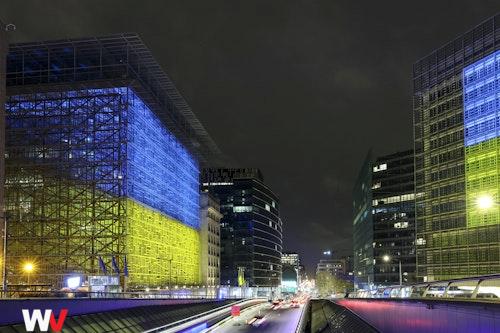
This time, the ministers are preparing for the March EU summit, and they are also discussing recent vetoes by Hungary on support for Ukraine. Overnight, the Council building was lit in the Ukrainian national colours, just like other EU buildings in Brussels.
11:25 GMT+1
Watch: Kaja Kallas accuses Hungary of breaching principle of sincere cooperation
'Really regrettable." Hungary's last-minute decision to veto the EU's €90 billion loan to Ukraine goes against the principle of sincere cooperation, says High Representative Kaja Kallas. pic.twitter.com/TJzDzEm9cc
— euronews (@euronews) February 24, 2026
11:23 GMT+1
Peace must involve strong Ukrainian armed forces and security guarantees – Rutte
At NATO HQ in Brussels, Secretary General Mark Rutte and Head of Ukraine’s Mission to NATO, Alyona Getmanchuk, commemorated the fourth anniversary of Russia’s invasion of Ukraine with a short ceremony.
Ambassador Getmanchuk paid tribute to the “extraordinary resilience” of the Ukrainian people for standing “firm, bravely and unbroken for four long bloody years” of war. She said “many around the world didn’t believe” Ukraine would be able to resist the Russian army in all its might.
But, she said, the “courage of President Zelenskyy’s refusal to leave the country broke Putin’s calculation and inspired the country to resist” the Russian army. She also praised the “bravery” of her country’s armed forces and the “resilience” of the civilian population.
Meanwhile, Rutte recommitted NATO’s support for Ukraine throughout the war. “This war is about a sovereign people’s right to forge its own path”, he said in his statement. “It’s about freedom – yours and ours.”
“When the fighting eventually stops, the peace has to hold. With strong Ukrainian forces ready to deter and defend, and security guarantees from Ukraine’s partners: Europe, Canada and the United States.”
11:15 GMT+1
‘Please continue to defend our European way of life,’ says Zelenskyy
We bring you now the final lines from Volodymyr Zelenskyy’s speech to the European Parliament.
“Please continue to defend our European way of life. Please support Ukraine. Please support our diplomacy for peace and be effective. Every result you achieve is a line that Putin cannot cross,” he tells MEPs.
“Thank you for all these years. Thank you so much. Slava Ukraini.”
11:10 GMT+1
Hungary says the EU should ‘work toward peace’ and support Trump’s efforts
Speaking to journalists upon arriving at the General Affairs Council in Brussels, Hungary’s Minister for European Affairs, János Bóka, said that the fourth anniversary of the start of the full-scale invasion is also a warning for the EU to work toward peace.
“This is a warning sign to the institutions and member states of the European Union that they should work more seriously for peace than before and support efforts that offer real hope of success,” he said. “Currently, there is such an initiative — President Trump’s peace initiative — which Hungary fully and unconditionally supports.”
Minister Bóka added that he will call on EU institutions and member states to support Hungary and Slovakia in their dispute with Ukraine over the Druzhba pipeline.
11:09 GMT+1
Zelenskyy backs Schengen ban on former Russian soldiers
Zelenskyy has backed the idea of banning the entry of Russian soldiers who have fought in Ukraine into the passport-free Schengen area.
“We must continue applying the full range of protection against Russia, from strong sanctions to real support for life after Russian strikes. Each of you understands what fills Putin’s wallet with money and allows him to drag out this war,” he told MEPs.
“So there must be no place in the free world for Russian oil, for Russian tankers, banks (or) for any Russian war criminals. The time has come to fully ban all participants in Russia’s aggression from entering Europe.”
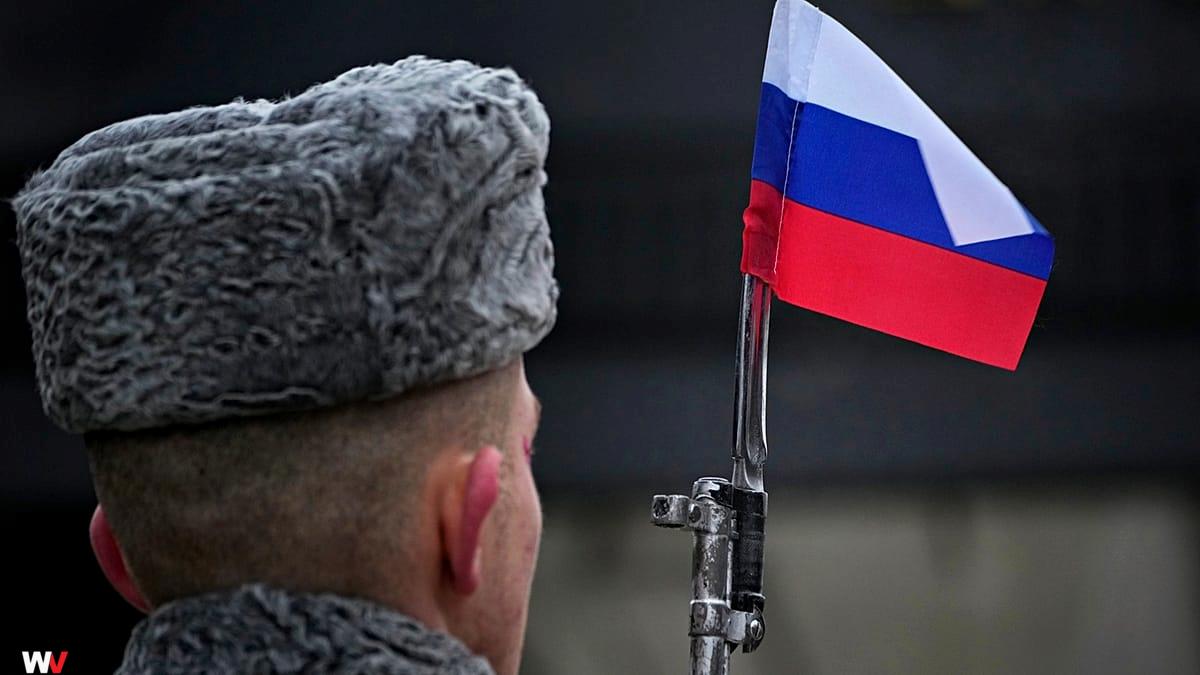
The idea of a Schengen ban on former Russian combatants has been under discussion since Estonia brought it to the table last month. “We do not want war criminals and saboteurs to roam our streets,” High Representative Kaja Kallas said on Monday.
EU considers entry ban on Russian soldiers who fought in Ukraine
“There can be no path from Bucha to Brussels,” the Estonian foreign minister said as he called for an EU-wide entry ban on former Russian soldiers. #EuropeNews
11:02 GMT+1
Empy seats in the European Parliament during Zelenskyy’s speech
Almost all the MEPs present in the room have expressed their support for Volodymyr Zelenskyy after watching his speech broadcast live to the hemicycle.
While the event has been significantly better-attended than an average plenary session, some empty seats could be spotted in the right-wing side of the Parliament.

11:00 GMT+1
Putin ‘standing in the way’ of peace – Starmer
In London, British Prime Minister Keir Starmer has just delivered a few remarks ahead of a Cabinet meeting on the war in Ukraine.
He said the meeting of the Coalition of the Willing, scheduled to take place via video conference from 12.00 CET, will aim to take the work on security guarantees for Ukraine following a ceasefire “further forward”.
“In terms of getting to that just and lasting peace, it is Putin who’s standing in the way,” he said, adding that Ukraine’s partners must “double down” on their support for the war-torn country and continue to up their pressure on Russia.
He noted that the conflict, which is the deadliest Europe has seen since WWII, has impacted British people “over and above”, notably through a surge in energy prices.
10:53 GMT+1
‘Russians must learn that Europe is a nation of independent nations’, says Zelenskyy
Zelenskyy has encouraged Europeans to show unity and courage in the face of Russian aggression.
“We can see how Russia shows contempt for Europe,” he told MEPs.
“Russia must know that Europe is not just a land for the villas of Russian oligarchs. It’s not a museum for the lovers of Russian officials to admire beauty, or a place of leisure for Russian killers,” he added.
“Russians must learn that Europe is a nation of independent nations and millions of people who do not tolerate humiliation and will not accept violence.”
10:55 GMT+1
Zelenskyy urges ‘clear date’ for Ukraine’s EU membership
Zelenskyy urges his audience to agree a “clear date” for his country to join the European Union as part of the ongoing peace negotiations. Otherwise, he warned, Vladimir Putin will seek to divide the bloc and pit member states against each other.
“It’s important for us to receive a clear date for joining the EU. It’s very important, as part of the diplomatic process right now (aimed) at ending the war,” he says. “And this is not just a wish, it’s a clear understanding of how Putin will act.”
“If there is no date, if there is no such guarantee, he will find a way to block Ukraine for decades by dividing you, by dividing Europe. We must protect ourselves from this.”
Ukraine’s accession process has been paralysed by Hungary’s veto since the summer of 2024.
10:46 GMT+1
Standing ovation for Zelenskyy in the European Parliament
European lawmakers gave Ukrainian President Volodymyr Zelenskyy a standing ovation after he addressed them remotely from Kyiv.
MEPs are taking part in a special session convened on Tuesday to mark the sombre occasion.
11:01 GMT+1
Metsola: ‘We have not let Ukraine down’
European Parliament President Roberta Metsola delivered an introductory statement before giving the floor to Ukraine’s President Volodymyr Zelenskyy.
“Today, we honour the bravery of the Ukrainian people. We reaffirm our concrete support. […] we have not let Ukraine down,” she said, recalling the start of Russia’s full-scale invasion four years ago.
““On 24 February 2022, as tanks rolled across European borders and war descended on our continent, Russia thought they could take Ukraine in days,” she said. “Ukrainians proved them wrong.”
“Metsola also made clear that EU support for Ukraine has been “not solely based on altruism”.
““We act because we know what is at stake for all of us”, she said, claiming she is proud of what the Union has done so far and promising more help.
““We will keep stepping up our support. Later today, we will sign into law a €90 billion loan to shore up essential public services and keep Ukraine’s defences strong”, she said, referring to the European Parliament’s approval of the EU budget-funded loan, which is currently blocked by Hungary.
10:40 GMT+1
€90 billion loan ‘must be implemented’, Zelenskyy says
Zelenskyy is now speaking about the European Union’s €90 billion loan to Ukraine, which has been suddenly blocked by a last-minute veto from Hungary.
“This is a real financial guarantee for our security and our resilience,” he tells MEPs. “It must be implemented. And I thank everybody who’s working to make it happen.”
The loan is meant to cover Ukraine’s financial and military needs for 2026 and 2027. The country has said it needs a fresh injection of foreign aid as early as April.
10:40 GMT+1
UK unveils its largest sanctions package against Russia
Britain on Tuesday unveiled what it is describing as its biggest package of sanctions against Russia “since the early months of the invasion in 2022”.
The new package targets pipeline company PJSC Transneft, which London says is responsible for transporting over 80% of Russian oil exports, as well as “Russia’s dark web of illicit oil traders”, including 175 companies in the “2Rivers” oil network, one of the largest shadow fleet operators globally and a major trader of Russian crude oil.
Also targeted are 49 entities and individuals involved in sustaining Russia’s war machine, three civil nuclear energy companies and two individuals involved in trying to secure contracts for new Russian nuclear installations overseas, and nine Russian banks that process cross-border payments.
10:47 GMT+1
Transatlantic cooperation isn’t an ‘easy task’, Zelenskyy says
In his virtual speech, Ukrainian President Volodymyr Zelenskyy calls on Europeans and Americans to stand together in the face of Russia’s “ruthless” war.
“Today we must be just as determined as we were when the invasion began,” he says.
He then admits that maintaining transatlantic cooperation is not “an easy task”.
10:26 GMT+1
Orbán hits back at Costa
Hungarian Prime Minister Viktor Orbán has just published his reply to European Council President António Costa after Costa accused him of breaching the principle of sincere cooperation for suddenly vetoing the €90 billion loan to Ukraine.
“I am one of the most disciplined and consistent members of the Europan Council,” the Hungarian leader says. “You also certainly see the absurdity of the situation: we take a decision financially favourable to Ukraine that I personally disapproved, then Ukraine creates an energy emergency situation in Hungary, and you ask me to pretend nothing happened.”
“This is not possible,” he adds. “I am not in a position to support any decision whatsoever favourable to Ukraine until they return to normality.”
✉️ Reply to @eucopresident António Costa: pic.twitter.com/mJjHFRIdn3
— Orbán Viktor (@PM_ViktorOrban) February 24, 2026
10:21 GMT+1
Roberta Metsola opens special plenary
Roberta Metsola, the president of the European Parliament, has now opened the special plenary session dedicated to the fourth anniversary of Russia’s war of aggression.
10:20 GMT+1
Double Hungarian veto sends tensions soaring
Hungary’s decision to simultaneously veto the €90 billion assistance loan to Ukraine and the 20th package of sanctions against Russia has sent tensions soaring.
High Representative Kaja Kallas and European Council President António Costa have both accused Hungarian Prime Minister Viktor Orbán of breaching the principle of sincere cooperation.
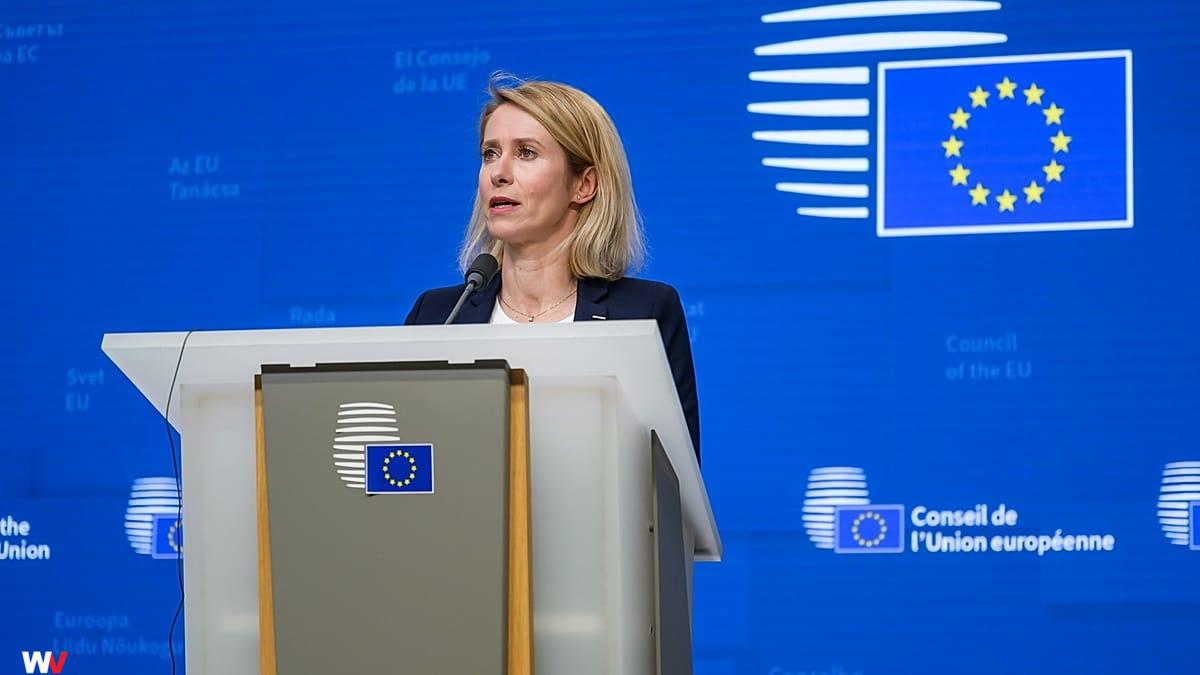
EU accuses Hungary of disloyalty for vetoing €90bn loan to Ukraine
Hungary’s decision to veto the €90 billion loan for Ukraine has received strong rebukes from other EU countries, which see it as an act of disloyalty. #EuropeN…