General
Key Takeaways From America’s Secret Military Partnership With Ukraine
An investigation by The New York Times has revealed that America was woven into the war far more than previously known.
The war in Ukraine is at an inflection point, with President Trump seeking rapprochement with the Russian leader, Vladimir V. Putin, and pressing for an end to the fighting.
But for nearly three years before Mr. Trump’s return to power, the United States and Ukraine were joined in an extraordinary partnership of intelligence, strategy, planning and technology whose evolution and inner workings have been known only to a small circle of American and allied officials.
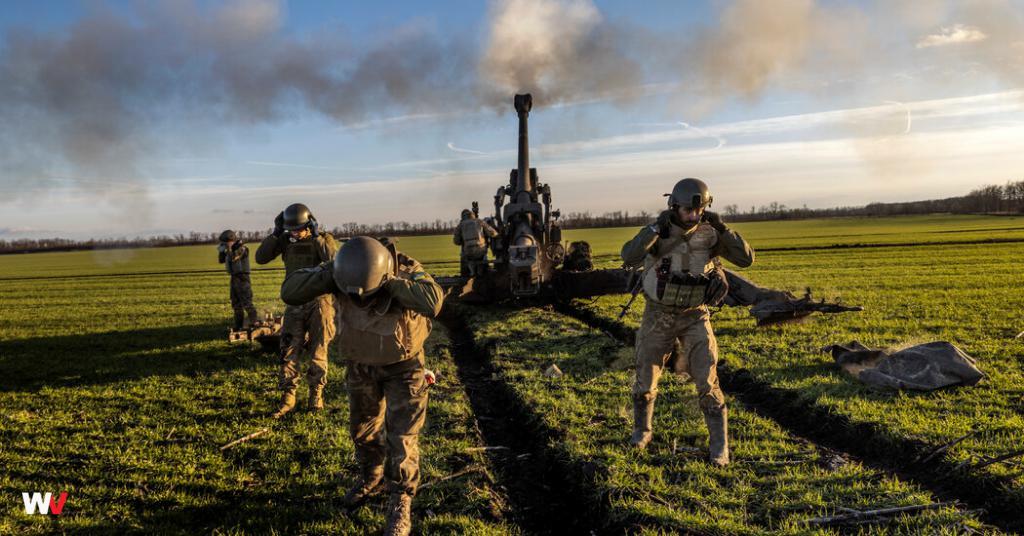
With remarkable transparency, the Pentagon has offered a public accounting of the $66.5 billion in weaponry it has supplied to Ukraine. But a New York Times investigation reveals that America’s involvement in the war was far deeper than previously understood. The secret partnership both guided big-picture battle strategy and funneled precise targeting information down to Ukrainian soldiers in the field.
Here are five takeaways from the investigation.
A U.S. base in Wiesbaden, Germany, supplied the Ukrainians with the coordinates of Russian forces on their soil.
The idea behind the partnership was that America’s close cooperation with Ukraine would compensate for Russia’s vast advantages in manpower and weaponry. To guide the Ukrainians as they deployed their ever-more-sophisticated arsenal, the Americans created an operation called Task Force Dragon.
The secret center of the partnership was at the U.S. Army garrison in Wiesbaden, Germany. Each morning, U.S. and Ukrainian military officers set targeting priorities — Russian units, pieces of equipment or infrastructure. American and coalition intelligence officers searched satellite imagery, radio emissions and intercepted communications to find Russian positions. Task Force Dragon then gave the Ukrainians the coordinates so they could shoot at them.
Military officials worried that it might be unduly provocative to call the targets “targets.” Instead they were referred to as “points of interest.”