General
Jacques Roubaud, Poetic Master of Form and Whimsy, Dies at 92
He was trained as a mathematician, but he gained fame in France, and won major prizes, for his modern verse.
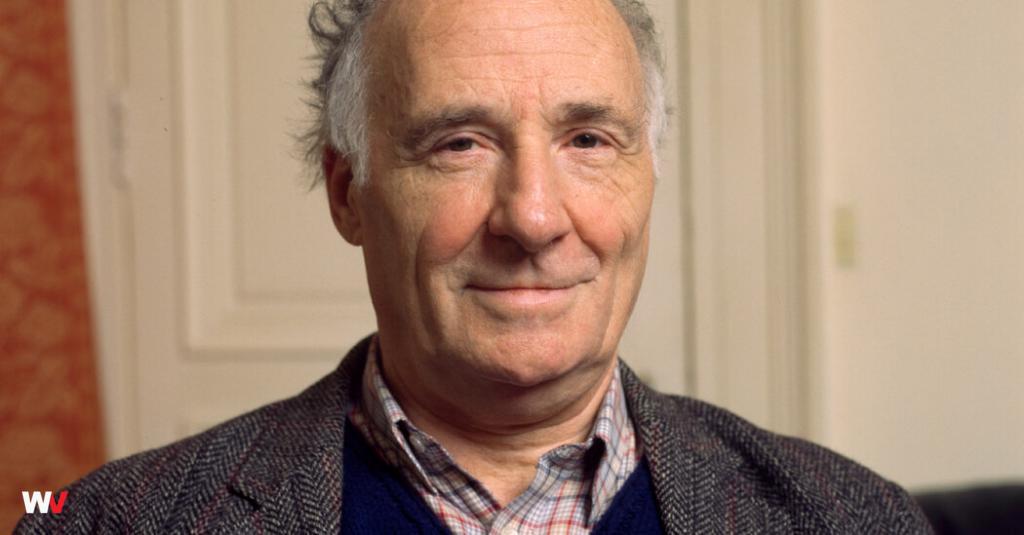
Jacques Roubaud, a poet and mathematician whose formalist rigor and mind-bending imagery earned him France’s major poetry prizes, along with a place as one his country’s masters of contemporary verse, died in Paris on Dec. 5, his 92nd birthday.
His death, in a hospital, was confirmed by the poet and scholar Jean-François Puff, who collaborated with Mr. Roubaud on one of his many books.
His death was also signaled by the celebrated literary group of which Mr. Roubaud was an early member, the Oulipo, which announced in the newspaper Le Monde that Mr. Roubaud was “henceforth excused from its meetings, by reason of death.”
Those words, combining a conventional formula with a startling predicate, suggest the tenor of Mr. Roubaud’s own subversive poetic work. Oulipo, an anagram for French words meaning “Workshop for Potential Literature,” was founded by the ex-Surrealist Raymond Queneau, author of the famous madcap novel “Zazie in the Metro.”
Mr. Queneau recruited Mr. Roubaud for the Oulipo in 1966, and Mr. Queneau’s project, melding formal constraint with imagination’s free rein, fit the poet’s own outlook — often whimsical, but tempered by a mathematicians’ discipline and interest in form. Mr. Roubaud was a mathematics professor at the University of Paris-Nanterre from 1970 to 1991.
Mr. Roubaud once wrote that “an Oulipian author is a rat who himself builds the maze from which he sets out to escape.” The maze for Mr. Roubaud was often old verse forms like the sonnet, which he worked throughout his career to resurrect.