

General
In War-Torn Ukraine, a Manicure Can Be Its Own Kind of Protest
A Times journalist reported on scores of Ukrainian women who find solace in salons.
Times Insider explains who we are and what we do and delivers behind-the-scenes insights into how our journalism comes together.
I have been known to bite my nails in times of stress, and I got my first professional manicure at age 36. So this year, as I prepared for a new role at The New York Times, the state of my fingernails remained pretty much the last thing on my mind.
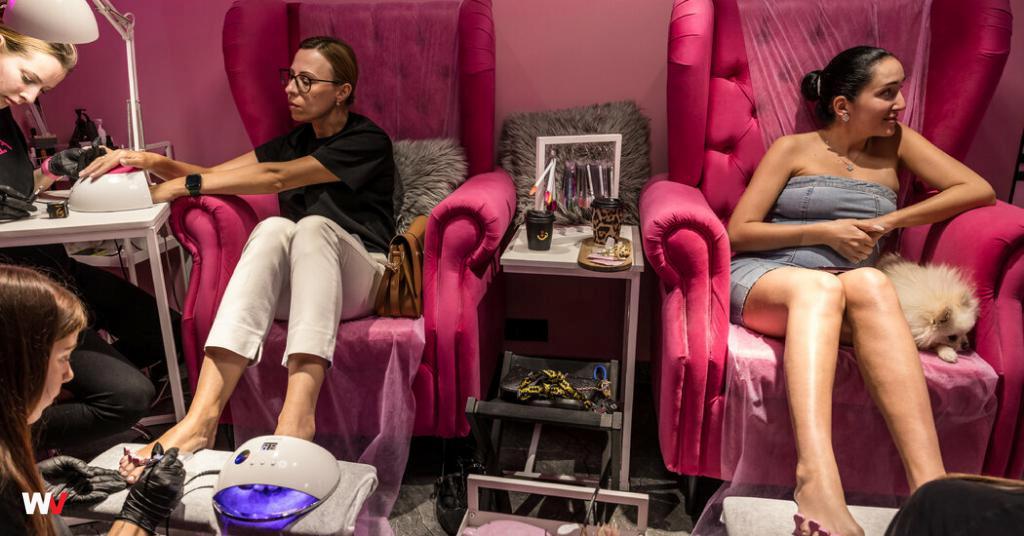
In need of a change, I decided to leave the newspaper’s Investigations desk in New York City and move to the International desk in London to help cover the war in Ukraine. Before I left, Adrienne Carter, The Times’s Europe editor, told me about her first visit to Kyiv last year. Almost every woman she met, she said, had amazing nails, despite the fact that they were living amid air-raid sirens and power outages.
“I’ll do that nails story,” I told her. “That’s totally in my wheelhouse.”
It’s the sort of bravado one typically shows a new boss. Still, I was confident. I may not have known the best way to push back a cuticle, and I had never been to Russia or Ukraine, but I had covered war. Most notably, I chronicled the war in Afghanistan for The Chicago Tribune for more than five years.
And I knew the war stories I liked to tell: not just those of soldiers on the front lines, but ones about people adjusting to adversity while living their everyday lives. I like to write about women and children, and how the very act of living as normally as possible can be its own kind of protest during a conflict.
These stories, I believe, can help create empathy. Not everyone understands the importance of a 155-millimeter shell in Ukraine, or battlefield movements that can sometimes feel as bloodless as a game of Risk. But slice-of-life stories — about manicures, or finding love, during wartime — may make readers think about what it would be like if war were to suddenly upend their lives.
When I arrived in Ukraine for the first time in July, the nails article was one on a list of stories I wanted to pursue. But I almost felt embarrassed by it, for two reasons: One, I had to tell local journalists, or fixers, who spend much of their time interviewing soldiers with my colleagues on the front lines, that I needed them to take me to nail salons. The assignment did not feel particularly hard-core. And two, I knew what I would face in the salons: scrutiny over the lack of effort I had put into my own appearance, as I juggled working and moving overseas.