
General
How to Dangerously Misread a Very Important Verdict
Since Monday, when a jury found Daniel Penny not guilty in the death of Jordan Neely on a New York City subway, the conversation has threatened to go off the rails. Penny was the man who stepped up when Neely caused a commotion on the F train …
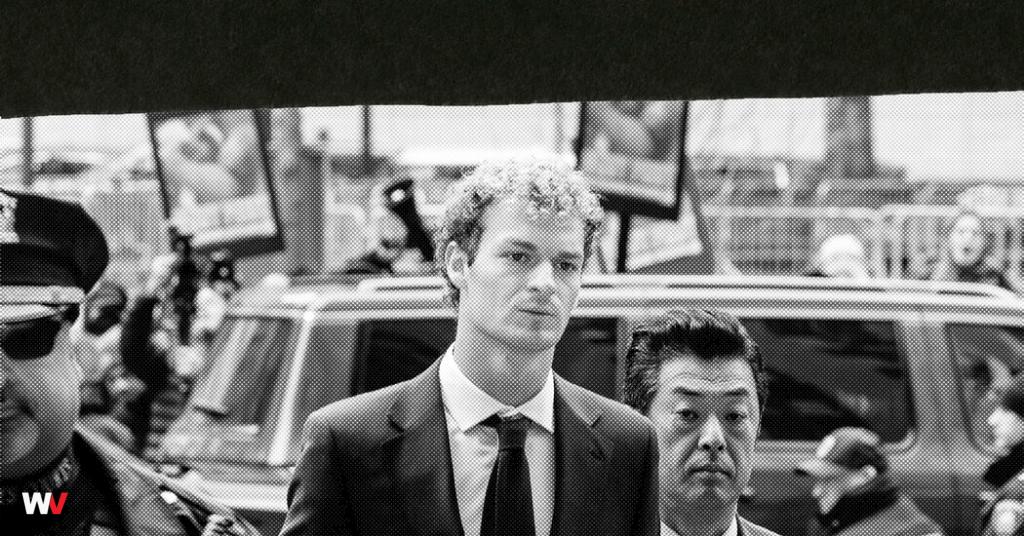
Since Monday, when a jury found Daniel Penny not guilty in the death of Jordan Neely on a New York City subway, the conversation has threatened to go off the rails.
Penny was the man who stepped up when Neely caused a commotion on the F train, shouting at passengers, “I’m fed up. I don’t mind going to jail and getting life in prison. I’m ready to die.” Penny put him in a chokehold and held him for about six minutes. Neely died from compression to his neck, according to the medical examiner.
It should have been a story about the horror of a mentally ill person abandoned by the city and left to fend for himself in subway tunnels or on street corners, or about how scary it can be for those around him to navigate the wreckage, or about how one 24-year-old Marine veteran tried to protect a group of strangers, taking action that ended in unintended tragedy.
But Penny is white and Neely, 30, was Black. So instead it became a story of race — and all the more so after the jury’s verdict — a variation of Daniel Pantaleo going free after choking Eric Garner in 2014. But that’s not what happened here, and I wish those describing Penny or his acquittal as racist might consider things from another vantage point.
Chivona Newsome, a founder of Black Lives Matter of Greater New York and a recent congressional candidate, said, “They will not find a white man guilty of killing a Black man in modern-day America.” Her brother and fellow founder, Hawk Newsome, declared that “the K.K.K., the Klansmen, the evil in America, got another victory,” and after the verdict made a call to “Black vigilantes.” Supporters of Black Lives Matter and the Rev. Al Sharpton’s National Action Network were at the courthouse for Penny’s trial every day, chanting, among other things, “If we don’t get no justice, they don’t get no peace.” The NAACP declared that “the acquittal of Daniel Penny in the death of Jordan Neely has effectively given license to vigilante justice to be waged on the Black community without consequence.” Tim Wise, a senior fellow at the African-American Policy Forum and a prominent speaker on antiracism, called Penny a “racist, classist, ableist murderer.”
The claim that Penny acted out of racism implies that if he had seen a white man scaring subway passengers in that way, he either would not have restrained the man at all or would have done so for a shorter time.