General
How the Liberal Cathedral Cracked Up
Imagine showing the scenes inside the Capitol at Monday’s inauguration to a visitor from the distant, misty past of 2021. Imagine them watching as the leaders of the same American tech industry that just four years ago united to de-platform Donald …
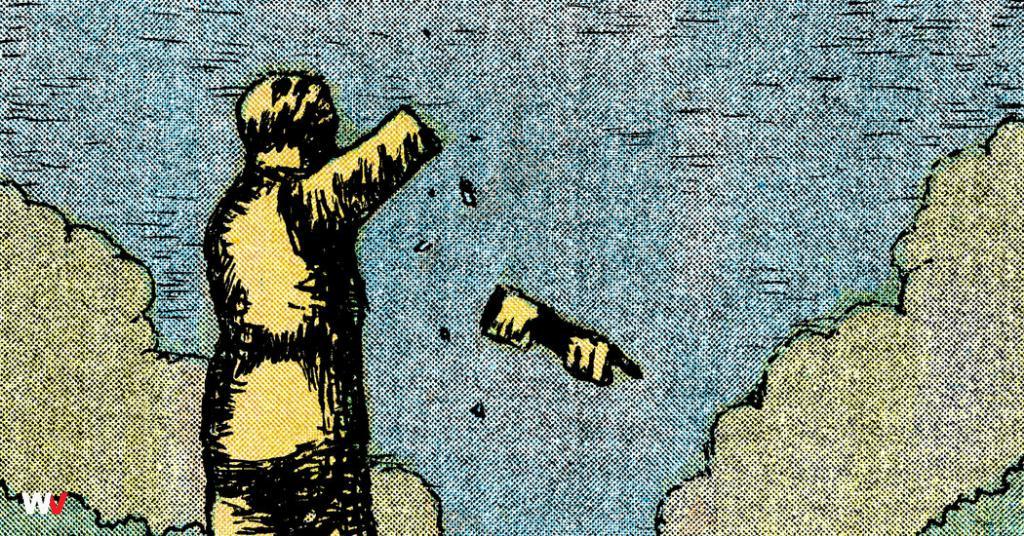
Imagine showing the scenes inside the Capitol at Monday’s inauguration to a visitor from the distant, misty past of 2021. Imagine them watching as the leaders of the same American tech industry that just four years ago united to de-platform Donald Trump now crowded close around him, competing for his favor. Then think about how one might explain the larger change behind these scenes — the rapid movement from the era of “woke capital,” from a seeming alignment of all major American institutions on the side of progressive ideology to a Trumpian restoration in which the right’s culturalgains seem much larger than Trump’s electoral majority.
Even as the lords of Silicon Valley came to kiss the presidential ring, my colleague David Marchese was interviewing Curtis Yarvin, an eccentric intellectual of the outsider (now insider?) right. Yarvin is best known as a critic of democracy and a champion of digital-age monarchy, but one of the ideas that originally won him readers is less prescriptive, more diagnostic: It’s his analysis of what he called “the Cathedral,” the interlocking elite opinion-shaping institutions of our society, which tend to move in concert (leftward, in his view, always leftward) despite lacking any form of centralized control.
In one sense this sounds like a banal analysis: Of course elite institutions tend to share some sort of consensus; of course cultural gatekeepers converge on similar ideas.
But there are different degrees of consensus and convergence, and Yarvin’s argument seemed especially timely in the 2010s because the Cathedral he described seemed to become more and more intensively itself: More ideologically uniform across different institutions (universities, foundations, media, tech companies, corporate H.R. departments), more ambitious and radical in the ideas that it embraced, more lock step in the way those ideas were propagated and more inquisitorial (“Have you committed a disinformation, my child …?”) in the control it seemed prepared to exercise, through the social media companies especially, over American discourse and debate.
A lot of right-wing “post-liberal” thought, not just Yarvin’s monarchical ideas, gained adherents in this environment. There was a sense that to recognize the existence of the Cathedral was to see through liberalism itself — to realize that liberal neutrality was essentially mythical, that supposedly liberal institutions were already functionally post-liberal, that politics was an imitation game and the right needed to learn from progressive power. And what should it learn? Simply this: That the point of entering into political conflict is always to pursue hegemony, to shape and rule rather than to merely coexist.
My own view, elaborated in an essay for First Things in 2022 on the revival of Catholic integralism, was that part of this insight was correct. There is no such thing as a purely liberal society, and general liberal norms and procedures are usually filled in by a specific cultural consensus and guided by an establishment with a shared perspective on the world. Man does not live by proceduralism alone, and even within liberal parameters, any worldview that takes its own truth claims seriously — be it secular progressivism or conservative Christianity or accelerationist transhumanism — will naturally seek some form of culture-shaping power and, when the opportunity is there, hegemony as well.