
General
Hanging trains and hip taco joints: Why you should take the European Sleeper to Dresden this winter
I visited Dresden on the European Sleeper – here’s why you should try it this winter.
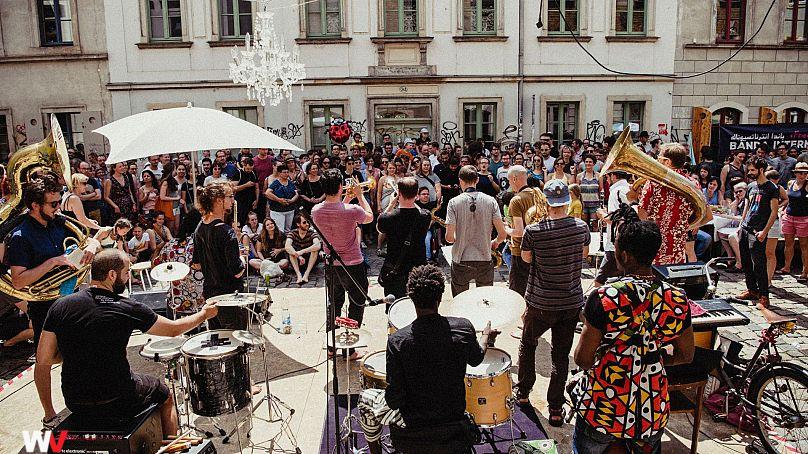
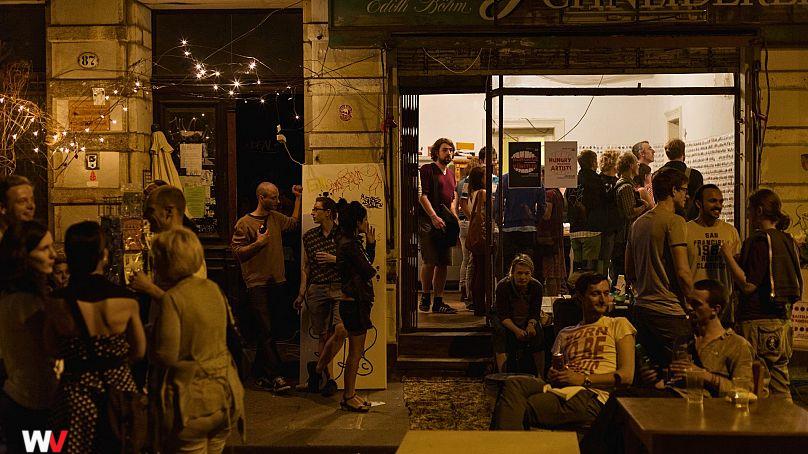
DJs play thumping sets inside tiny taco joints as the fruity smell of shisha drifts past Turkish barbers and trendy crowds gather outside arthouse cinemas.
Across the Elbe river, Dresden’s New Town has a completely different atmosphere to its historic core.
Thanks to a new night train connection, this Bohemian east German enclave has never been more accessible.
Launched earlier this year, the Good Night Train by Belgian-Dutch start-up European Sleeper takes you from Brussels to Dresden in around eight hours.
I tested out the route on my return trip back to England. Here’s how it compared to flying – and why you should book a seat to explore this underrated city.
Why you should travel to Dresden on the European Sleeper
There’s no denying that the Good Night Train is a no-frills experience – but it’s a good choice for tolerant types who don’t mind forgoing some creature comforts.
The social aspect is one of the many things I enjoy about the Sleeper.
As I get to know my fellow passengers, Laura – a friendly Belgian who is one of the women in my female three-bed cabin – tells me how she loves sleeper trains and even finds their rattling movement soothing.
- Reims, Girona, Brescia: Top detour destinations where you won’t be adding to overtourism
- Hospitality is a labour of love in Georgia: Here are my top tips for food, drink and hotels
It’s not for everyone: as the carriages clang and judder their way along the tracks, even my trusty earplugs and eye mask can’t tempt sleep.
And climbing down the ladder from my middle bunk in the darkness to visit the toilet isn’t ideal either. But the bathrooms themselves are acceptable – nothing like the horrors I’ve encountered on overnight services in India.

This cabin is a more ‘deluxe’ option, costing around €108 compared to couchettes from €69 or seats from €49.
I appreciate the thoughtful touches, such as drinking water in plant-based containers, a handy shelf by the bed, and a complimentary pack of cards – I spotted three ladies playing a spirited game.
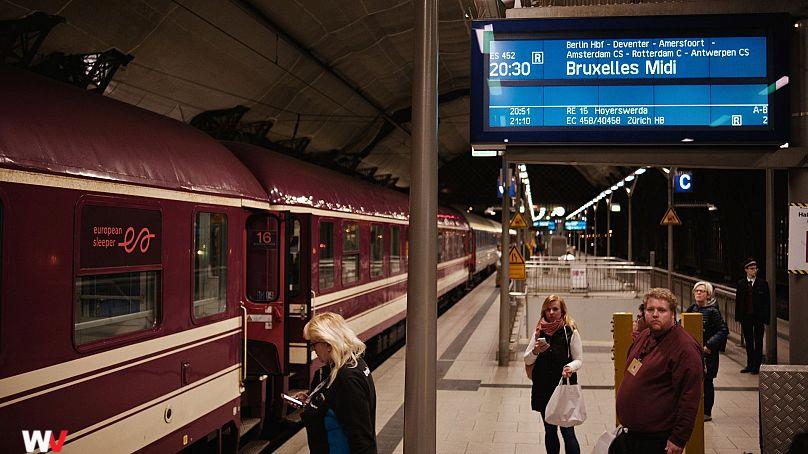
How does the European Sleeper compare with flying?
Compared to my flight to Gdańsk, the Polish city where I’d started my trip, catching the Sleeper has undeniable advantages.
There’s no faffing with liquids, no long airport queues or sitting around in busy terminals. Instead I’d begun my journey at a quiet station, after a short evening walk from my hotel.
Best of all? Trains are much more sustainable. And while flying is quicker, there’s something more authentic about travelling through countries rather than skipping over them.
As I tuck into my light breakfast – included in the sleeper compartment fare – I enjoy watching the hazy late-summer sunshine gather over Belgian fields.
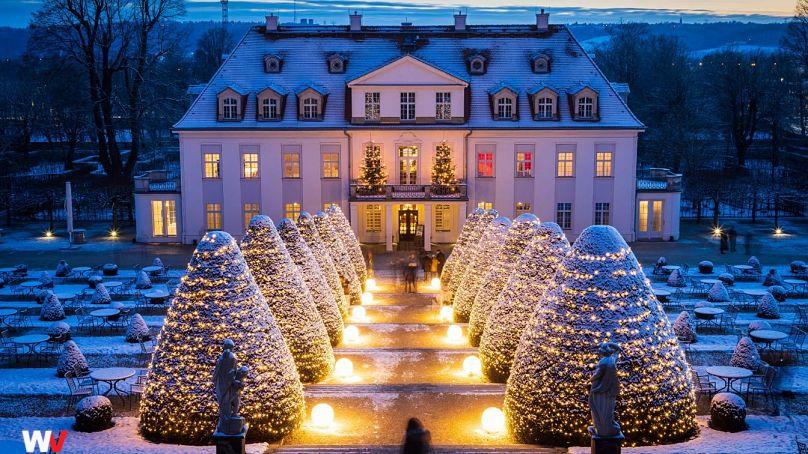
Saxony: A wonderland of twee towns, palaces and castles
Dresden is the capital of Saxony in east Germany, where lavish palaces and castles abound.
You can visit twee towns like Meissen, renowned for porcelain-making, and delve into the magical woodcarving heritage of the Ore Mountains – especially magical around the festive season.
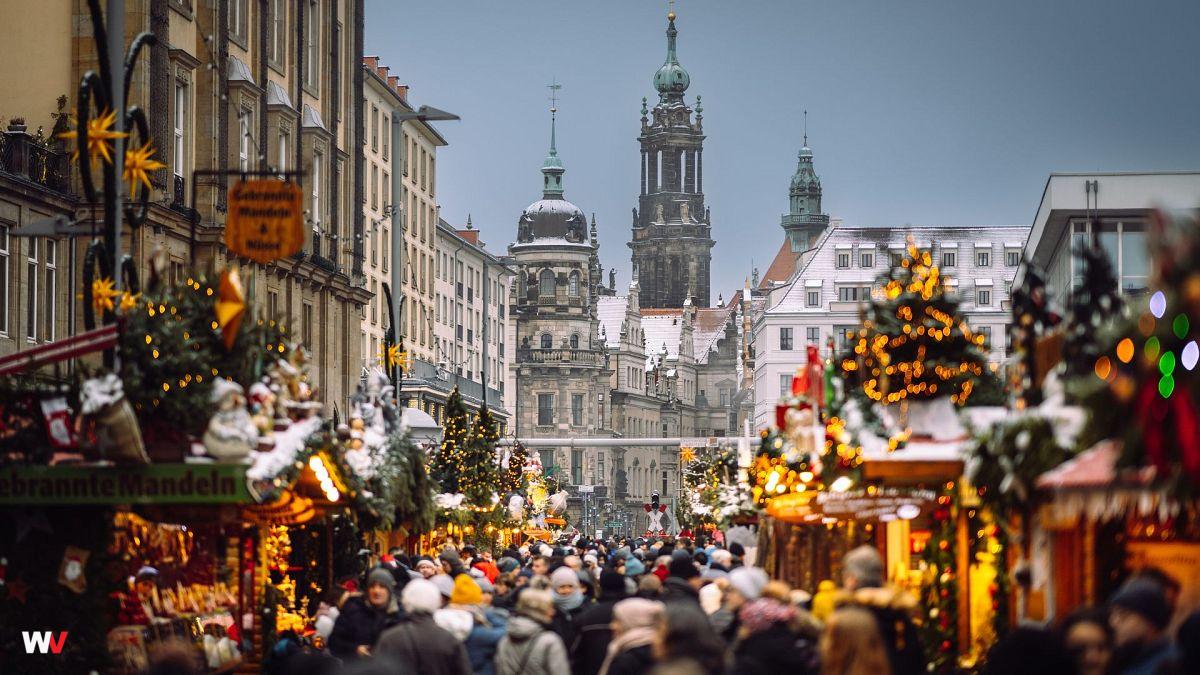
These local crafts make their way into Dresden’s Striezelmarkt, which dedicates each of the Advent weekends to one of the traditions of the area.
Perhaps the region’s best-known attraction, though, is otherworldly Saxon Switzerland, where the Bastei Bridge cuts through towering sandstone pinnacles.
I imagine this region is delightfully atmospheric in the run-up to Christmas.
- From bar crawl bans to Airbnb crackdowns: How is Czechia tackling overtourism?
Discover Dresden’s arty side
Exploring Dresden’s New Town, I especially love the area’s Art Courtyard Passage: a little nexus of muralled buildings, courtyard galleries and buzzy restaurants strung with fairy lights.
The area also boasts Pfunds, dubbed the ‘world’s most beautiful dairy shop’. This 19th-century jewel is covered in ornate, hand-painted majolica tiles.
Pfunds is just one of 22 stops on Stadtrundfahrt Dresden, a hop-on-hop-off sightseeing bus.
My favourite stop? Loschwitz, a riverside enclave of red-brick turrets and timber-framed cottages, with cosy taverns and bakeries like Kaffee Wippler.
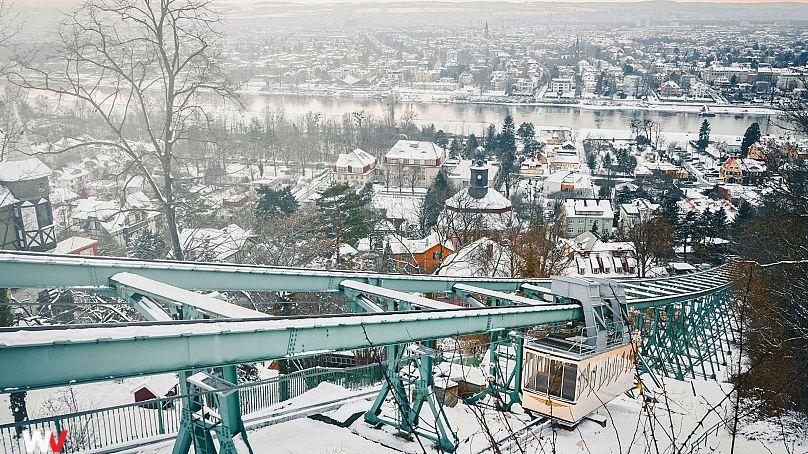
Loschwitz hosts two funiculars, including the unusual Dresden Suspension Railway: a ‘hanging train’ that has been running since 1901, the same year as its better-known twin in Wuppertal.
As you ascend the mountains, you’ll discover panoramic views of red roofs peeking from tree-clad slopes and the city beyond.
You’ll also spy the ‘Blue Wonder’, a 19th-century cantilever truss bridge that remains an engineering marvel.
If you fancy a more relaxing excursion, board Dresden’s legendary ‘White Fleet’ of 19th-century steamships, which offer a variety of river cruises and day trips.
Whatever you choose, whether you stick to the city or venture beyond, a visit to Dresden aboard the European Sleeper won’t disappoint.