General
Germany Bans Islamic Group, Accusing It of Supporting Hezbollah
The authorities also searched dozens of properties linked to the Islamic Center Hamburg, which has long faced accusations of being a front for the Iranian government.
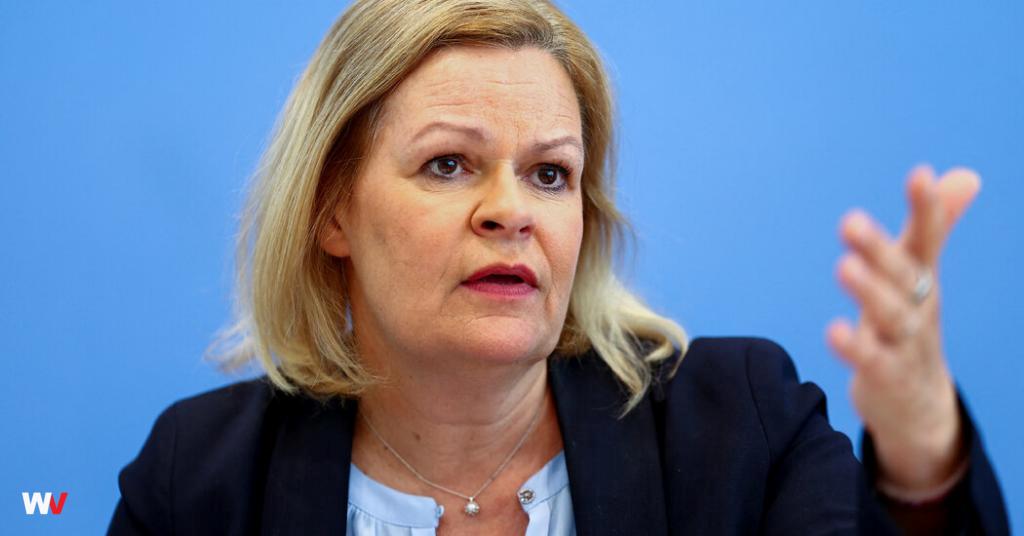
Germany banned the Islamic Center Hamburg on Wednesday, saying that it is an extremist organization that supports Hezbollah and acts as a front for Iran’s supreme leader.
The German authorities have been investigating the Shiite Muslim group — also known as the I.Z.H., an abbreviation of its German name — for years, including what they say are links to Hezbollah, the Iran-backed militia that Germany outlawed in 2020.
The group promotes an Islamist extremist ideology, Nancy Faeser, Germany’s interior minister, said in a statement announcing the ban. She also accused the I.Z.H. and its affiliates of supporting Hezbollah and spreading antisemitism.
Her ministry said the authorities had begun court-ordered searches of 53 properties linked to the I.Z.H. across Germany, including in Berlin and Hamburg, and were seizing the organization’s assets. The government will also shut down four Shiite mosques, including what is known as the Blue Mosque in Hamburg, which is the group’s headquarters.
The mosque is considered one of the main centers of the Shiite Muslim community in Europe, according to the Hamburg authorities.
The interior ministry described the I.Z.H. as a direct representative of Iran’s supreme leader and said that it seeks to bring about an Islamic revolution in Germany.
The I.Z.H., which was founded in 1953, could not be reached by phone and did not immediately respond to an emailed request for comment. The group has denied the accusations against it in the past. It failed last year in a legal challenge to the German government’s characterization that it was controlled by Iran.
The group said in a statement in October that it “condemns all forms of violence and extremism and has always been committed to peace, tolerance and interfaith dialogue.”
The interior ministry said the searches and ban were linked to evidence found in searches of dozens of locations in November, when cash, laptops and cellphones were confiscated.