General
Germans Agree to Borrow More for Military, in Sharp Response to Trump
The agreement between Friedrich Merz, the likely next chancellor, and his potential coalition partners also includes big new infrastructure spending.
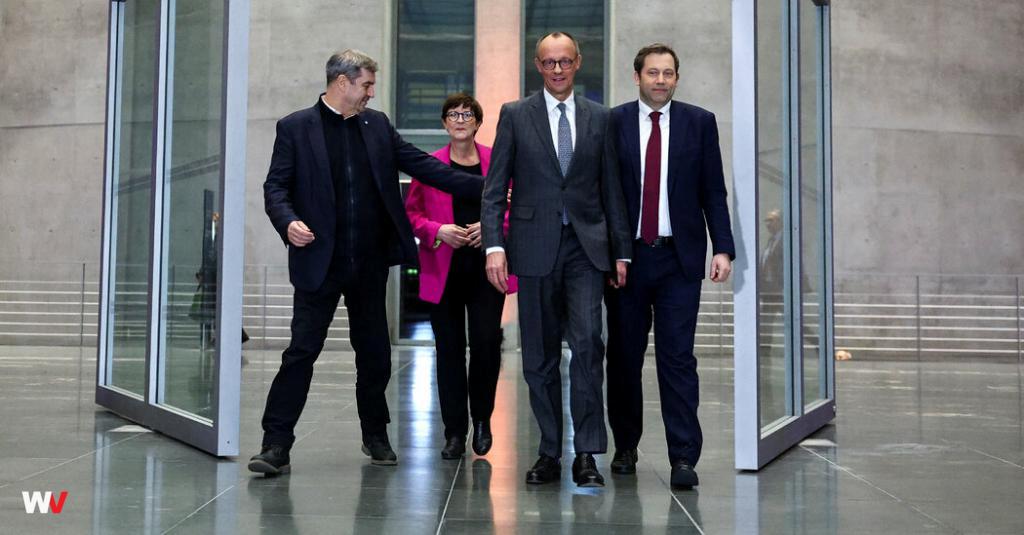
Ever since the Berlin Wall fell and the country reunited, the world could count on Germany to keep budget deficits relatively low, military spending even lower, and politics at a plodding pace.
The next German government is smashing all those traditions before it even takes office.
Friedrich Merz, the leader of the center-right Christian Democrats and the man almost certain to be Germany’s next chancellor, and leaders of his likely coalition partners, the center-left Social Democrats, said on Tuesday that they had agreed to relax limitations on German borrowing to increase military and infrastructure spending by hundreds of billions of dollars.
The agreement, which is subject to approval in Parliament, is a rapid-fire attempt to counterfears that stalk mainstream German political parties: a surge in the far right domestically, an aggressive Russia on Europe’s doorstep, and the abrupt withdrawal of America’s guarantees for German security.
The deal also represents a first step toward an aggressive early agenda for Mr. Merz that breaks with his more fiscally conservative campaign promises — but that aspires to show voters that the centrist coalitions that have long governed Germany can shed a culture of political sluggishness at an urgent moment.
Its centerpiece is a pair of measures meant to circumvent Germany’s limits on federal borrowing, known as the “debt brake,” which have proved an obstacle to its attempts to beef up its military and to spark growth in a stagnant economy.
“In view of the threat to our freedom and to peace on our continent, the mantra for our defense has to be, ‘whatever it takes,’” Mr. Merz said in a Tuesday evening news conference.