General
Fashion Has Given Up on Being ‘Woke.’ And That’s OK.
Fashion Weeks in New York, Milan and Paris have been unapologetically decadent this year. Beige is out, red is in. Real fur is back. Eighties maximalism is elbowing aside ’90s minimalism. Sean Monahan, a trend forecaster, calls it the “boom boom …
Fashion Weeks in New York, Milan and Paris have been unapologetically decadent this year. Beige is out, red is in. Real fur is back. Eighties maximalism is elbowing aside ’90s minimalism. Sean Monahan, a trend forecaster, calls it the “boom boom” aesthetic.
Admittedly, opulence is kind of the point when you are creating and selling beautiful, expensive things. But for the past decade, fashion was trying to be socially and environmentally conscious as well. However sincere the motivation — many people, especially on the creative side of fashion, share progressive values — making the world a more diverse, equitable, inclusive and sustainable place didn’t always sit well with luxury, either practically or aesthetically.
Now all that seems to be over, and maybe that’s OK. The fashion industry had aligned with liberal-left movements leading up to and following Donald Trump’s 2016 victory, but it’s hard to argue that the endorsement of Kamala Harris by Vogue magazine and its editor Anna Wintour last year moved the needle for anyone. It might have even made the Democrats seem out of touch to some voters.
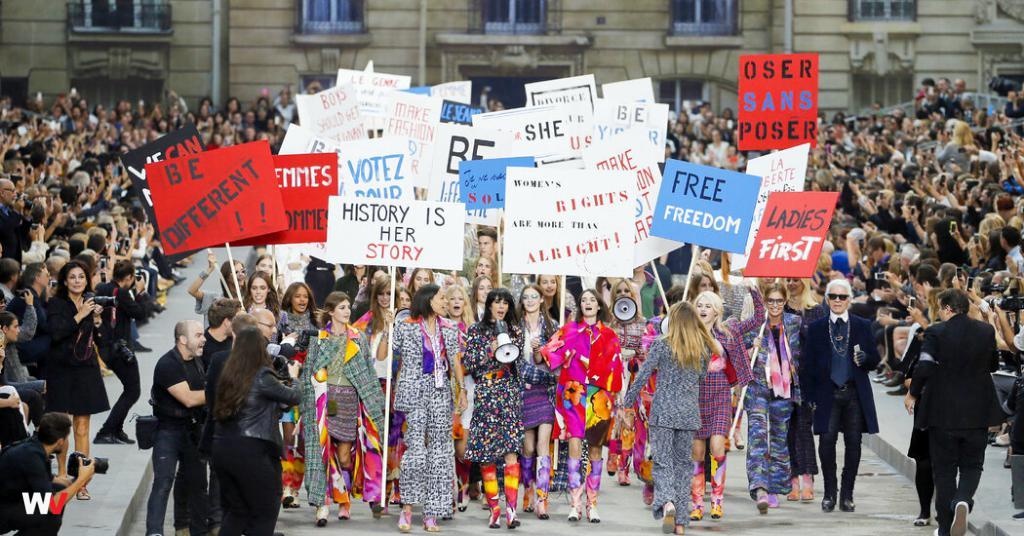
Activism and fashion have always been an uneasy mix. Back in 2014, the designer Karl Lagerfeld staged a Chanel ready-to-wear show in Paris where models cosplayed a protest, holding signs that read, “Women’s rights are more than all right,” “History is her story” and “Make fashion not war.” If it felt anodyne and frivolous (it’s not as if any of the signs made pointed statements about, say, abortion), Mr. Lagerfeld told the website Fashionista at the time that this was exactly the point: “I like the idea of feminism being something lighthearted, not a truck driver for the feminist movement.”
The next year, the New York show for Kerby Jean-Raymond’s label Pyer Moss took on a far more serious tone, opening with a 12-minute film about police brutality against Black men. Family members of victims sat in front, pushing the important fashion people that those seats are typically reserved for to the second or third row. They watched models walk the runway in white boots inscribed with Eric Garner’s last words, “I can’t breathe.”
Fashion continued advancing political messages as the 2016 election approached. That September, with Hillary Clinton running for president on the Democratic ticket, Maria Grazia Chiuri presented her debut collection for Christian Dior as its first female creative director. It featured T-shirts that read, “We should all be feminists” (borrowing the title of a book by Chimamanda Ngozi Adichie), tucked into extravagant but by runway standards easygoing tulle skirts. You can still buy the T-shirts for $920. You can definitely still be a feminist without owning one.