

General
Exhibition Recreating Anne Frank’s Secret Annex to Open in New York
For the first time, the Anne Frank House in Amsterdam will replicate the cramped rooms where Frank and her family spent two years hiding to evade Nazi capture.
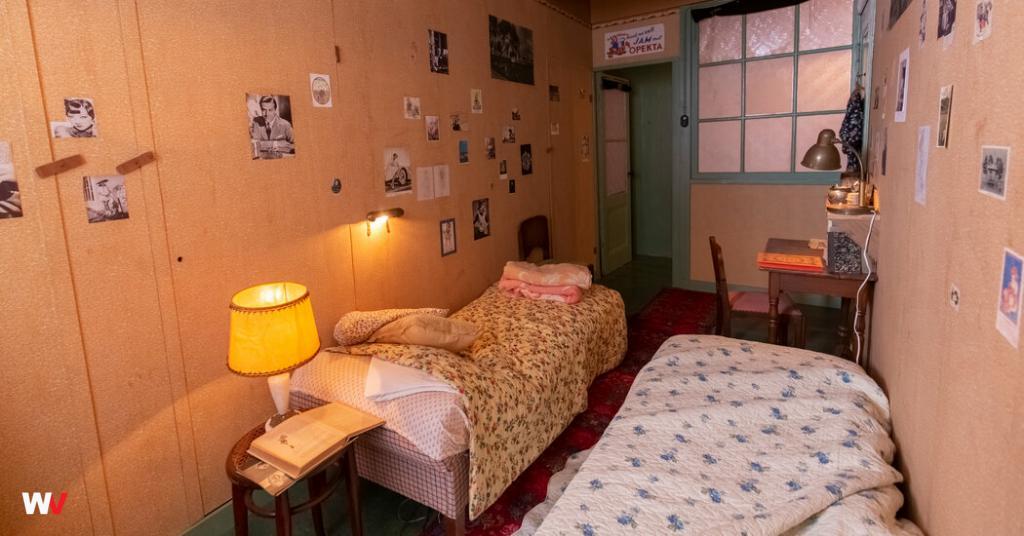
It will soon be possible to experience in New York City the haunting atmosphere of the secret annex, the warren of narrow, shadowy rooms where Anne Frank wrote her diary. On Wednesday, the Anne Frank House in Amsterdam, the museum containing the annex where Frank, her family and four other Jews took refuge from the Nazis, is to announce the winter opening of “Anne Frank the Exhibition,” which will feature the first full-scale re-creation of the hiding place on foreign soil.
The result of a partnership between the Anne Frank House and the Center for Jewish History, the installation will open on Jan. 27, 2025 — International Holocaust Remembrance Day — in the center’s building on Union Square in Manhattan. On view through April 30, the show will replicate the cramped spaces that Frank and the others inhabited from July 1942 until August 1944, when the Nazis discovered them. Anne Frank, then 15, died several months later in the Bergen-Belsen concentration camp; only Otto Frank, her father, survived the Holocaust.
“We are probably one of the most visited historical sites in Europe, and many people, 1.2 million visitors every year, come to see this place,” Ronald Leopold, the Anne Frank House’s executive director, said in a phone interview. “But we do realize that so many more people do not have the opportunity to travel to Amsterdam.” For those, he added, the New York show, for which tickets are now on sale online, “provides a connection to the story about Frank that has the same kind of emotional impact.”
Although the installation, which is expected to draw huge crowds, will be a meticulous reconstruction, it will differ in one important respect. While the Amsterdam annex is empty, as Otto Frank wished — “It’s a place about absence,” Leopold said — the New York space will look lived in, including some furnishings once owned by the Franks before the war and recovered by Otto Frank afterward.
“We feel that this will bring audiences who are not necessarily familiar with the story closer to that history and closer to Anne Frank,” he said.