Future
Elon Musk’s $1 Million Giveaways Test the Bounds of Election Law
Legal experts question the billionaire’s plan to hand out huge payments in battleground states as part of a get-out-the-vote drive.
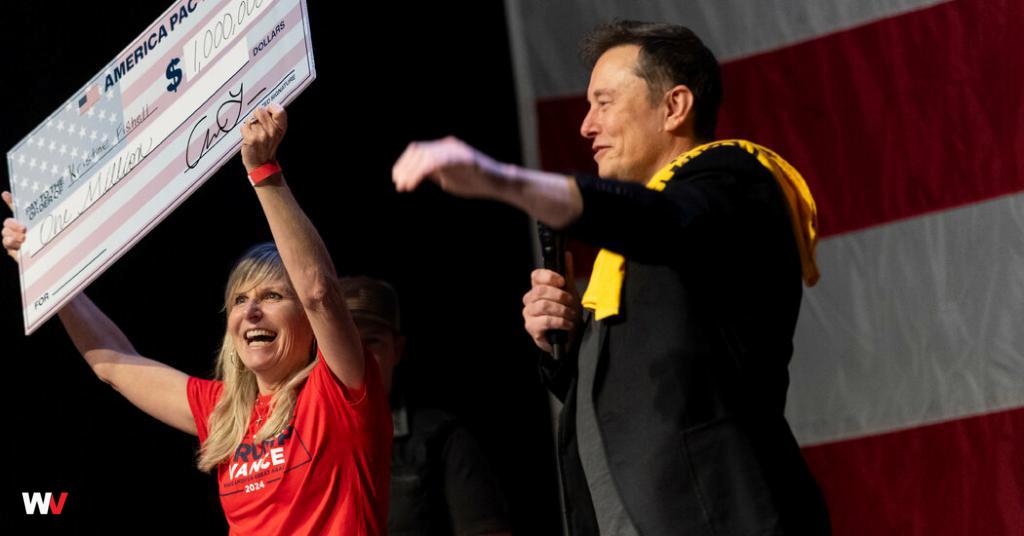
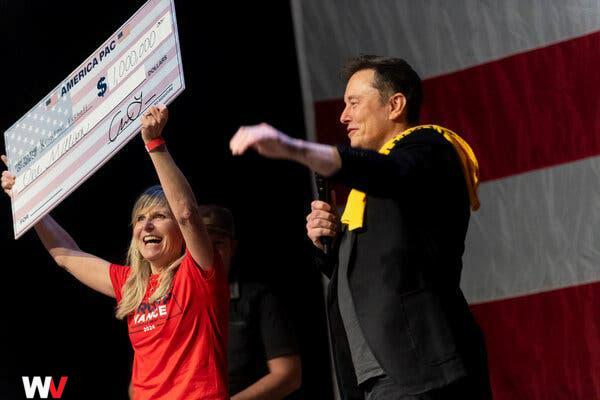
Elon Musk’s promise to give $1 million to Pennsylvania voters who sign a petition has raised new questions about his approach to the election. Credit…Michael Swensen/Getty Images
Musk’s new election ploy
Elon Musk made a name and a fortune for himself by questioning the status quo and bending rules. It’s an approach that helped Tesla and SpaceX achieve new breakthroughs and behemoth valuations.
But his new lottery-style ploy to bolster turnout among conservative voters in November — dangling million-dollar payouts in Pennsylvania, and soon elsewhere — has some legal experts worried.
What Musk is doing: The tech billionaire is essentially gamifying the process of getting out the vote. He has ratcheted up payouts related to a petition that his America super PAC put together, to $1 million a day to a “randomly” selected signer.
Two people have already won. Musk plans to expand the sweepstakes to registered voters in seven battleground states this week.
Legal experts aren’t sure the scheme is permissible. Federal law makes it a crime to pay, offer to pay or accept payment for registration to vote or for voting. There are some exceptions, such as driving people to the polls.
Some lawyers questioned Musk’s tactic:
-
Brendan Fischer, a campaign-law expert who thought a previous version of the payouts was acceptable, told The Times that this iteration “comes much closer to the legal line,” given that the payout is conditioned on registering to vote.
-
Rick Hasen of the U.C.L.A. School of Law wrote on his blog that the scheme was “clearly illegal,” since the petition signer must be a registered battleground-state voter.
-
Gov. Josh Shapiro of Pennsylvania, a Democrat and formerly the state’s attorney general, said on “Meet the Press” on Sunday that “when you start flowing this kind of money into politics, I think it raises serious questions.”
Others are not so sure. Brad Smith, a former chair of the Federal Election Commission, told The Times that because Musk isn’t paying people to register, but instead paying them to sign a petition — even if it’s open only to registered voters — the mogul “comes out OK here.”